
9 Newspaper Research Habits That Help You Find Better Family History Clues
Learn 9 newspaper research habits for genealogy, including name searches, social columns, business ads, legal notices, research logs, and family story ideas.
Old newspapers can help family historians find more than vital events. Useful newspaper research habits include starting with one ancestor, searching name variations and initials, looking beyond birth, marriage, and death notices, keeping a research log, following friends and neighbors, researching businesses and occupations, using legal notices for brick walls, organizing clippings, and turning discoveries into family stories. NewspaperArchive can help researchers search small-town newspapers, social columns, obituaries, advertisements, school notices, and legal items to uncover details about ancestors and their communities.
I wish I could say every newspaper discovery starts with a perfect search plan.
It usually doesn’t.
Sometimes I’m looking for an obituary and end up finding a school notice. Sometimes I search a full name and only find the person listed by initials. Sometimes the best clue is not even about my ancestor directly. It is about a neighbor, a guest at a reception, a business partner, or someone who keeps showing up beside the family name.
That is what makes old newspapers so useful for family history. They do not just tell us the big dates. They show us the little details that made up a life.
If you want to get more from newspaper research, the answer is not always to search harder. Sometimes it is to search differently.
Here are 9 newspaper research habits that can help you find better family history clues, organize what you discover, and turn old clippings into real family stories.
Quick Answer: How can newspapers help with family history research?
Newspapers can help family historians find more than birth, marriage, and death dates. Old newspapers may include obituaries, social columns, school notices, business advertisements, legal notices, church news, local events, photographs, and everyday mentions of ancestors. These details can help you build timelines, identify relatives and neighbors, discover occupations, solve research questions, and write stronger family stories.
A good newspaper search starts with one person, but it rarely ends there. Search names, initials, locations, businesses, churches, schools, and nearby people. Then save each clipping with the newspaper title, date, page number, and the reason it matters.
If you are ready to try it with your own family, start with one ancestor’s name in NewspaperArchive and see what appears. Then try the same search with initials, a location, or a keyword like “school,” “church,” “married,” “visited,” or “estate.”
9 Newspaper Research Habits at a Glance
Newspaper Research Habit | What to Do | What to Look For | Why It Helps |
|---|---|---|---|
1. Start with one ancestor | Focus your search on one person before branching out. | Obituaries, marriage notices, school news, church mentions, local items. | Keeps the search focused and helps you build a timeline. |
2. Search more than one version of a name | Try initials, nicknames, abbreviations, married names, and alternate spellings. | Articles where people are listed as W. B. Hamilton, Mrs. Samuel Hamilton, Wm. Hamilton, or by surname only. | Older newspapers often used names differently than we do today. |
3. Look beyond birth, marriage, and death | Search for everyday mentions in local news. | School notices, visitors, club meetings, church events, illness updates, travel notes. | These small items can show daily life, relationships, and community ties. |
4. Keep a newspaper research log | Track searches, keywords, newspapers, dates, and results. | Notes about what worked, what failed, and what to try next. | Prevents repeat searches and helps you spot patterns. |
5. Follow friends, neighbors, and associates | Pay attention to people who appear near your ancestor. | Guest lists, wedding parties, society columns, club rosters, witnesses, neighbors. | These people can lead to maiden names, relatives, migration clues, and new records. |
6. Search for businesses and occupations | Look for work-related clues. | Advertisements, employment notices, store openings, business partnerships. | Jobs and businesses add context and may reveal addresses, products, partners, and status. |
7. Use legal and local notices for hard questions | Search around a problem, not just a name. | Guardianships, probate notices, land sales, court items, divorce notices, public notices. | Legal notices can point to records and relationships you might not find elsewhere. |
8. Save and organize every useful clipping | Create a system for keeping newspaper finds. | Clippings labeled by person, surname, place, topic, or research question. | Makes it easier to return to evidence and use it in family stories. |
9. Turn one clipping into a story | Write a short explanation of what the clipping reveals. | A notice with personality, emotion, conflict, connection, or a surprising detail. | Family history is easier to share when it starts with one clear discovery. |
1. Start With One Ancestor
It is tempting to search every family surname at once.
I get it. One clipping leads to another, and before long, you are nowhere near the person you meant to research. That kind of searching can be fun, but it can also leave you with a pile of clippings and no clear story.
Start with one ancestor.
Choose one person and build a basic timeline before you search:
Birth
Marriage
Children
Places lived
Occupation
Church or community involvement
Death and burial
Then use newspapers to fill in the blanks.
Obituaries are often a good first stop because they can include several family history clues in one place. They may name parents, spouses, children, siblings, residences, churches, burial locations, and sometimes details about personality or values.
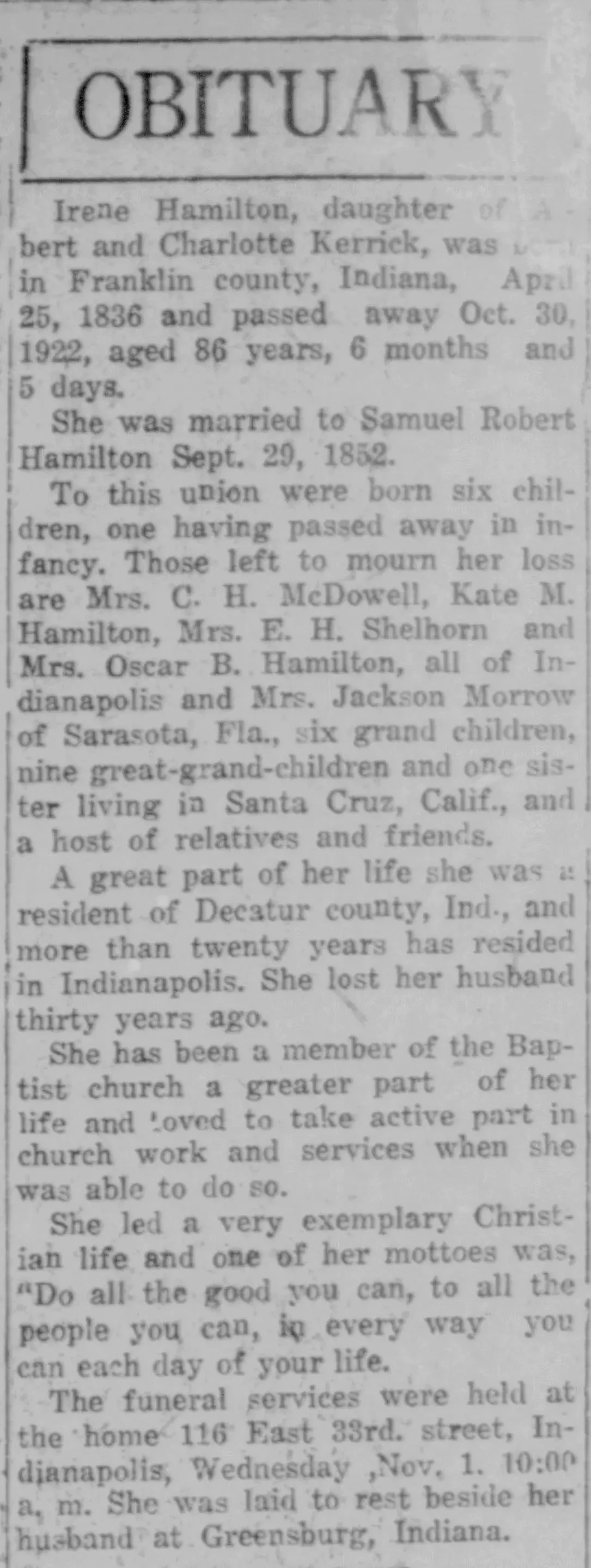
In the obituary for Irene Hamilton, the newspaper gives her birth date, birthplace, husband’s name, children, residences, church membership, funeral location, burial place, and even one of her mottos: “Do all the good you can, to all the people you can, in every way you can each day of your life.”
That is more than a record. That is a starting point for a family story.
A strong obituary like this can help you decide what to search next. You might look for her marriage notice, her husband’s obituary, church mentions, children’s marriages, or articles from the towns where she lived.
For more help with obituary research, read: Obituary Search Checklist - What to Try When Nothing Comes Up.
2. Search More Than One Version of a Name
One of the quickest ways to miss newspaper articles is to search only one version of a name.
Old newspapers did not always use full names. A man might be listed with initials. A woman might appear under her husband’s name. A first name might be abbreviated. A surname might be misspelled. OCR can add another layer of confusion when faded or crowded print is converted into searchable text.
Try searches like:
William Hamilton
W. B. Hamilton
W B Hamilton
Wm. Hamilton
Mr. Hamilton
Mrs. Samuel Hamilton
Hamilton Greensburg
Hamilton church
Hamilton school
Hamilton obituary
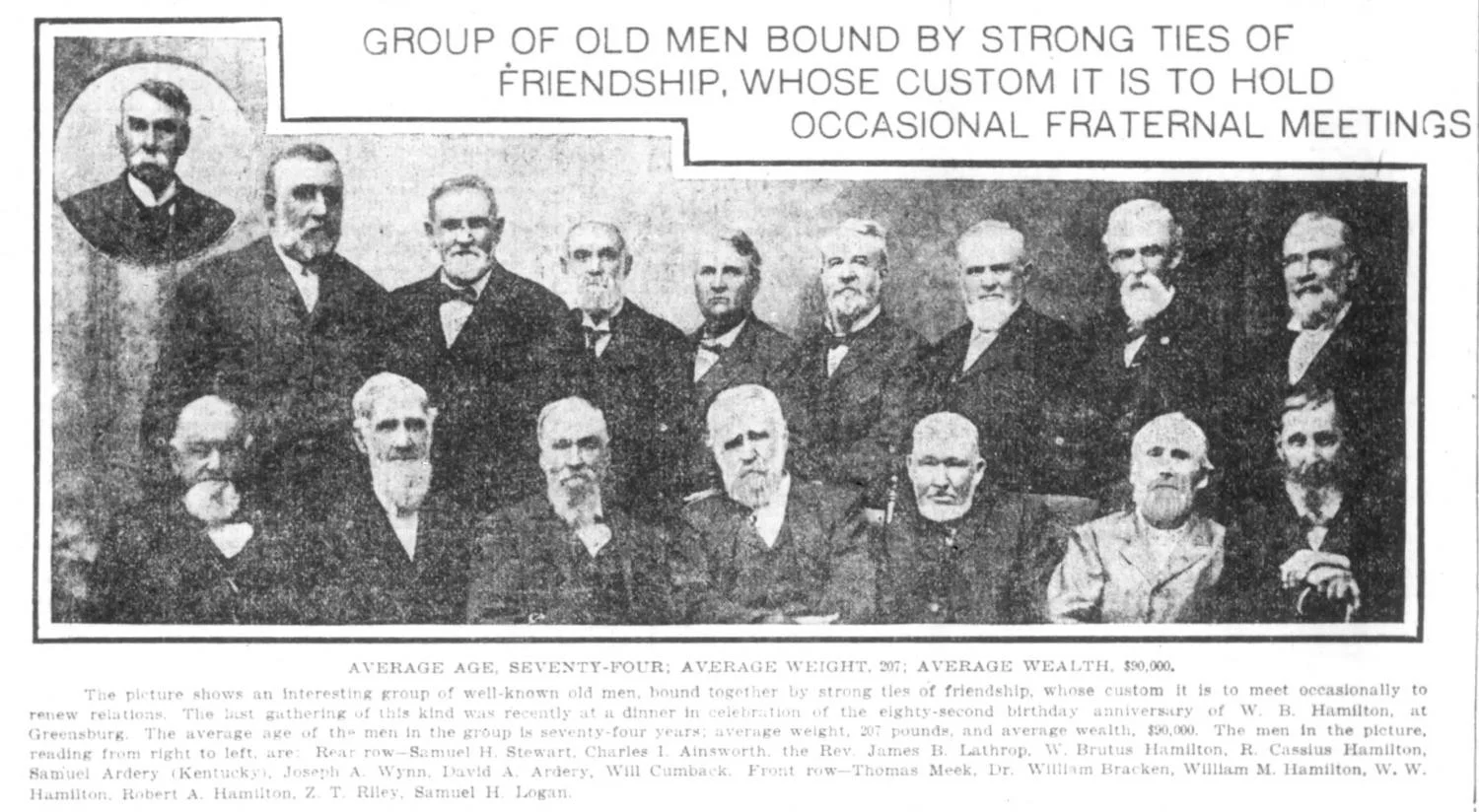
The article about a group of old friends shows exactly why initials matter. Some men are listed with full names, while others appear as W. B. Hamilton, W. W. Hamilton, and Z. T. Riley.
If you only searched full first names, you could miss them completely.
This is also why it helps to keep a list of every name version you find. Once a newspaper uses a certain format, search that version again.
For more search help, read: The Name Game: 15 Smart Ways to Search Name Variants in Historical Newspapers.
3. Look Beyond Birth, Marriage, and Death
Birth announcements, marriage notices, and obituaries matter. I will never tell anyone to skip them.
But newspapers can do something traditional records usually cannot. They can show the smaller pieces of a life.
They may tell you:
Where someone taught school
Who came to visit
Which church they attended
What club they joined
When they moved
When they were sick
Where they worked
Who attended their party
What business they owned
What people lived in their circle
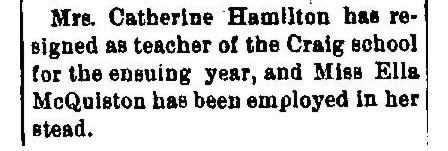
The notice about Mrs. Catherine Hamilton is only a few lines long, but it tells us she had been teaching at the Craig school and resigned before the next school year.
That one small clipping gives you several search paths:
Catherine Hamilton
Craig school
Local school records
Teacher employment
Community mentions
Other women teaching in the same area
The person hired after her
This is the kind of item that might not look exciting at first glance. But for a family historian, it adds a real-life detail. She was not just a name on a chart. She was a teacher.
For a broader family history search strategy, read: 25 Things You Can Learn About Your Ancestors from Old Newspapers.
4. Keep a Newspaper Research Log
A research log does not sound exciting. I know.
But newspaper research can get messy fast.
You may search the same name in several ways, across multiple towns, with different date ranges. You may find nothing with a full name, then find something useful with initials. You may search one newspaper and forget to search the paper in the next county.
A simple log helps you remember:
The ancestor’s name
Name variations searched
Newspaper title
City and state
Date range
Keywords used
Results found
Searches that did not work
Follow-up ideas
For example, if you found an ancestor listed as W. B. Hamilton in one newspaper article, your log should include that version of the name. Later, when you search again, you will remember not to rely only on “William Hamilton.”
A log also helps you avoid repeating the same unsuccessful searches. Just as important, it shows you where the gaps are.
If your newspaper searches are starting to blur together, Why You Should Be Using a Newspaper Research Log can help you keep track of what you searched, what worked, and what to try next.
5. Follow Friends, Neighbors, and Associates
Sometimes the clue you need is not in an article about your ancestor.
It is in an article about the people around them.
Genealogists often call this the FAN club: friends, associates, and neighbors. Newspapers are one of the best places to find those people because local papers loved printing names.
Reception guests.
Wedding guests.
Club members.
Church committees.
Schoolmates.
Business partners.
Neighbors.
Out-of-town visitors.
Those names can matter.
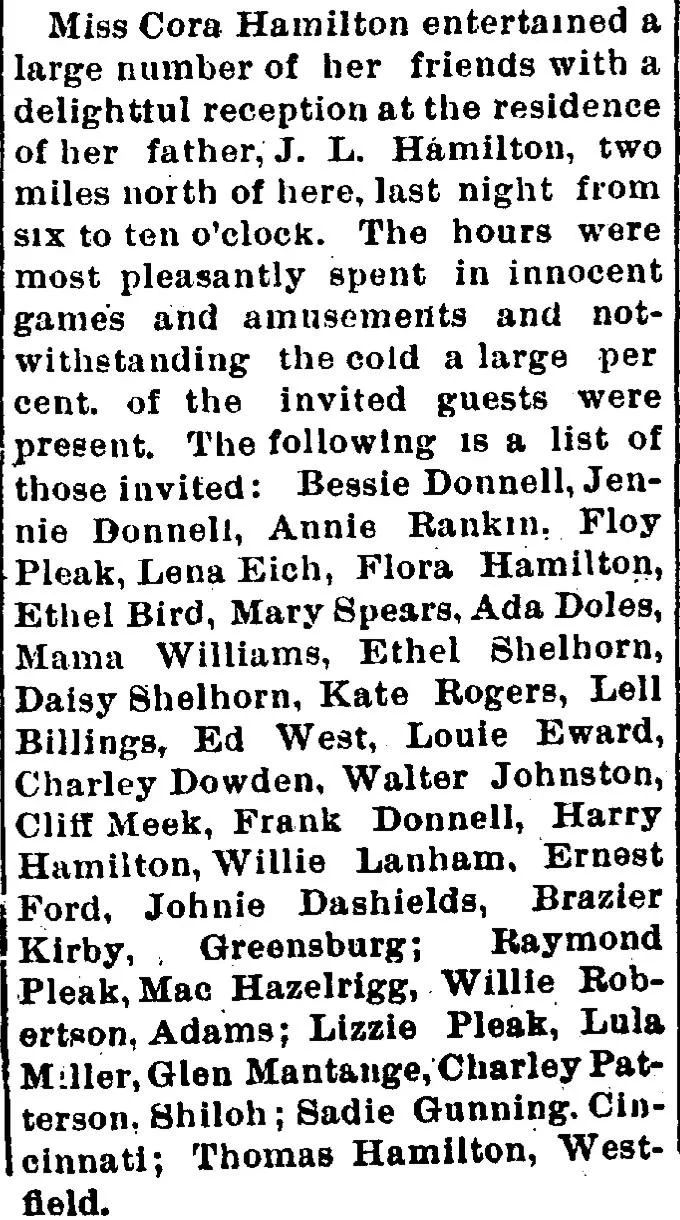
The article about Miss Cora Hamilton’s reception is packed with names. It lists young people from the area, along with a few locations such as Greensburg, Shiloh, Cincinnati, and Westfield.
For family history research, this is not just a party notice.
It is a social map.
You could use this one clipping to ask:
Which guests were relatives?
Which names appear near the Hamilton family in other records?
Were any of these people future spouses?
Did the same names appear in church, school, or wedding notices?
Why were people from nearby towns included?
Can the locations help explain family movement?
When the same names appear again and again near your ancestor, pay attention. Those people may lead you to a maiden name, a sibling, a migration clue, or a community connection you did not know to look for.
Love social columns? Read Social Sleuthing: How to Find Your Ancestors in Society Columns.
6. Search for Businesses and Occupations
If you know what your ancestor did for a living, newspapers can help you add detail.
If you do not know, newspapers may help you find out.
Search for:
Business names
Job titles
Store names
Street addresses
Partnerships
Advertisements
Sales notices
Professional listings
Local business columns
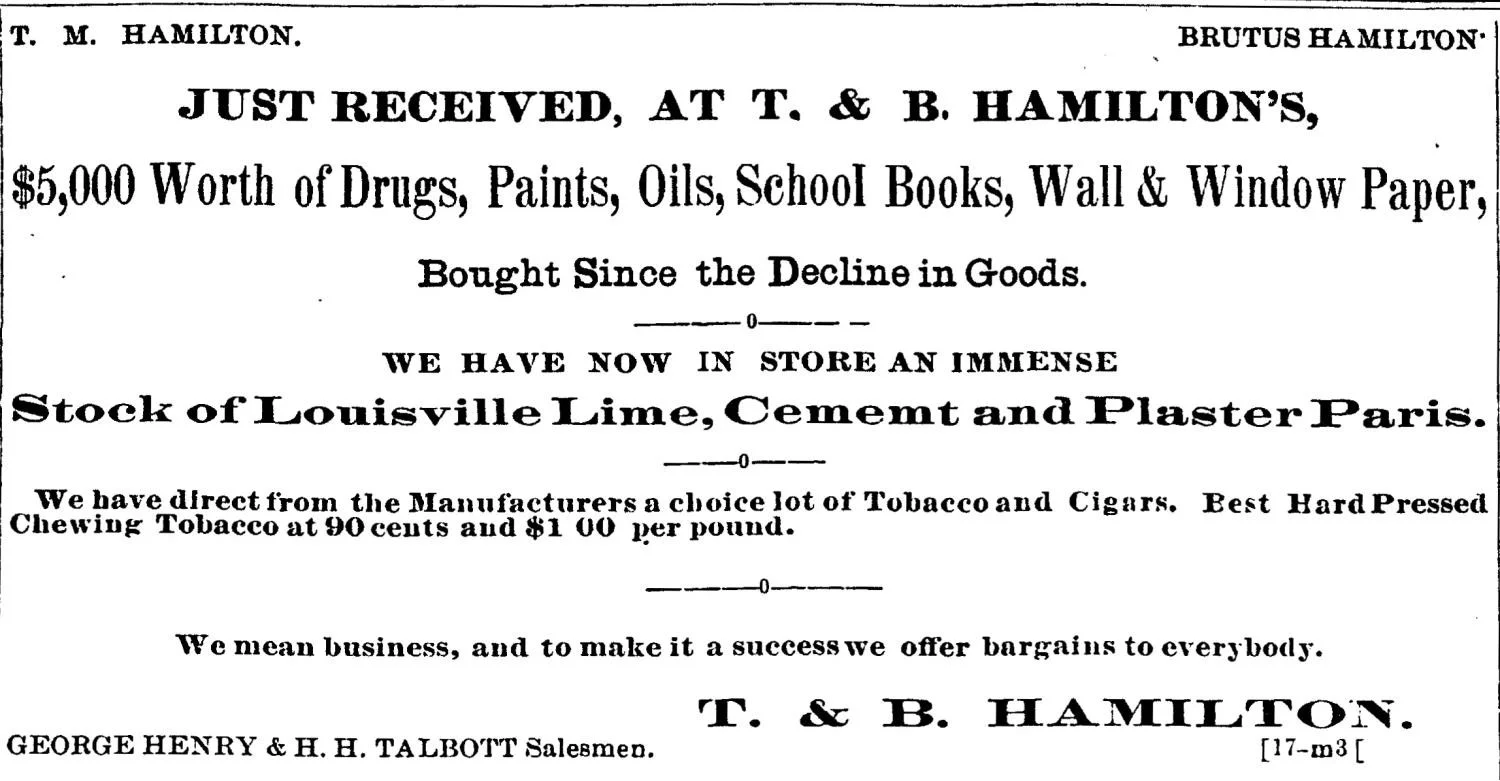
The T. & B. Hamilton advertisement is a wonderful business clue. It names the business, identifies T. M. Hamilton and Brutus Hamilton, lists goods sold, and even names salesmen George Henry and H. H. Talbott.
That is a lot of information for one ad.
Advertisements can help answer questions like:
What kind of business did the family run?
Who were the partners?
What products did they sell?
Where did they fit into the local economy?
Did the business change over time?
Did employees or salesmen have family connections?
Business ads can also add texture to a story. Instead of writing “he was a merchant,” you can show what filled the shelves: drugs, paints, oils, school books, wallpaper, lime, cement, tobacco, and cigars.
Want more occupation search ideas? Read How to Find Your Ancestor’s Occupation in Historical Newspapers.
7. Use Legal and Local Notices for Hard Questions
Some newspaper clues are uncomfortable, blunt, or strange to modern readers.
That does not mean they are not useful.
Older newspapers often printed legal notices, guardianships, court items, probate notices, divorce filings, public disputes, and local gossip in a very direct way. These items can point to records that may not appear in a simple name search.
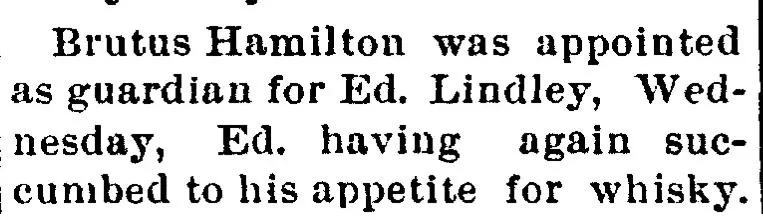
The 1892 notice about Brutus Hamilton being appointed guardian for Ed Lindley is brief, but it raises useful research questions.
Why was a guardian needed?
Was there a family relationship?
Was this connected to a court record?
Did Brutus Hamilton appear in other legal notices?
What else was happening in the community at that time?
This is where newspaper research can help with harder questions. You are not only searching for an ancestor’s name. You are searching around a situation.
Try keywords like:
guardian
estate
probate
administrator
divorce
court
land sale
sheriff sale
notice
minor heirs
appointed
petition
If your newspaper search turns up a divorce notice, court item, or public separation, How to Find Divorce Records in Newspapers: What Most People Miss can help you know what to look for next.
8. Save and Organize Newspaper Finds Before You Lose the Thread
The worst newspaper clipping is the one you know you found but cannot find again.
Save the clipping.
Save the citation.
Save why it mattered.
A useful clipping note should include:
Person or family name
Newspaper title
City and state
Date
Page number
Search terms used
Why the clipping matters
Follow-up searches to try
You can organize clippings by:
Surname
Individual ancestor
Location
Record type
Topic
Research question
Story idea
If you use NewspaperArchive, you can save clippings into folders. Think about creating folders by surname, family line, or project. If you are working on one person at a time, create a folder for that ancestor and save everything there until you are ready to sort.
The most important part is not having the perfect system. It is having a system you will actually use.
A better search process makes your saved clippings easier to manage. Learn more in How to Search NewspaperArchive and Find People Faster.
9. Turn One Clipping Into a Story
A newspaper clipping becomes more meaningful when you explain why it matters.
You do not have to write a full chapter. Start with a few sentences.
Ask:
Who is named?
Where did it happen?
What does it reveal?
What question does it answer?
What question does it raise?
Why would a descendant care?
The article about the group of older men bound by friendship is a great example of a clipping that could become a story.
It includes a photograph, names, a gathering, ages, and the idea that these men made a habit of meeting together to renew their friendship. That is more than a list of names. It is a glimpse of community, memory, and connection.
You could write:
This is the kind of clipping I love because it does more than name W. B. Hamilton. It places him in a circle of longtime friends, men who gathered together, remembered old times, and were considered interesting enough to make the newspaper. It is a reminder that friendship, community, and belonging are all part of family history too.
That is enough to begin.
Family history does not always need a dramatic discovery. Sometimes it needs one clipping, one explanation, and one reason the detail should not be forgotten.
Sometimes one clipping is all it takes to start seeing your ancestor as a real person. How Old Newspapers Tell Your Grandfather’s Story shows how those small newspaper details can become a story worth saving.
How Small-Town Newspapers Change the Search
Small-town newspapers are especially valuable for family history because they often printed the kind of details larger city papers skipped.
They might mention a teacher resigning, a reception guest list, a church supper, a business sale, a family visit, or a local appointment. These short items may not feel important at first, but they can place an ancestor in a specific community at a specific time.
They can also connect people.
That matters because family history is rarely just one person. It is neighbors, churches, schools, businesses, friends, relatives, and local events all overlapping.
When searching small-town newspapers, try combining:
Surname + town
Surname + school
Surname + church
Surname + business
Surname + neighbor’s name
Initials + town
Married name + town
Street name + surname
County name + surname
NewspaperArchive is especially helpful for this kind of searching because small-town papers often preserve the everyday details that make family stories feel real.
FAQs About Newspaper Research for Family History
What should I search for first in old newspapers?
Start with one ancestor’s full name and the town or county where they lived. Then try name variations, initials, married names, and keywords connected to their life, such as school, church, marriage, obituary, business, estate, or visited.
Why can’t I find my ancestor in old newspapers?
You may be searching the wrong name format, location, or date range. Try initials, nicknames, alternate spellings, maiden names, married names, and nearby towns. Also, remember that OCR errors can make printed names harder to find.
What newspaper sections are best for genealogy?
Obituaries, marriage announcements, birth notices, society pages, local news, church columns, school news, business advertisements, legal notices, probate notices, and court items can all be useful for genealogy research.
How do I organize newspaper clippings for family history?
Save each clipping with the newspaper name, city, state, date, page number, ancestor’s name, and a short note explaining why it matters. You can organize clippings by surname, person, location, topic, or research question.
Can small newspaper mentions really help my family tree?
Yes. A short newspaper mention can confirm a location, identify an occupation, reveal a social connection, name relatives, point to a church or school, or suggest another record to search. Small clippings often lead to bigger discoveries.
Final Thoughts: Better Newspaper Research Starts Small
You do not have to search every ancestor at once.
Start with one person.
Try more than one version of the name.
Look beyond the major life events.
Pay attention to the people nearby.
Save what you find.
Write down why it matters.
That is how newspaper research becomes more than collecting clippings. It becomes a way to rebuild the lives, communities, and stories behind the names in your family tree.
The next useful clue may not be a front-page headline. It may be a teacher notice, a guest list, a business ad, a legal item, or a photograph with initials in the caption.
Try one search today in NewspaperArchive and see what one clipping can tell you.
Key Takeaways
Newspaper research works best when you focus on one ancestor at a time.
Always search initials, nicknames, abbreviations, married names, and alternate spellings.
Small-town newspapers often include everyday details that do not appear in traditional records.
Social columns, business ads, school notices, and legal items can all lead to family history clues.
A research log helps you track searches, avoid duplicate work, and find patterns.
Every useful clipping should be saved with a citation and a short note explaining why it matters.
One newspaper clipping can become the beginning of a family story.