Oklahoma Newspaper Archives: How to Find Ancestors, Local History, and Family Records
Search Oklahoma newspaper archives for pre-statehood records, obituaries, social columns, and legal notices that reveal family history details found nowhere else.
Oklahoma newspaper archives include pre-statehood Indian Territory papers, post-statehood community records, and detailed local coverage from towns across the state. Researchers can find obituaries, marriage and birth announcements, legal and probate notices, delinquent tax lists, allotment references, and social columns that name ordinary residents. NewspaperArchive offers searchable access to Oklahoma newspapers from cities and smaller communities across the state, making it useful for tracking families through the Territory period, the 1907 statehood transition, and the early twentieth century.
Searching Oklahoma newspaper archives can reveal the moments your ancestors actually lived through, recorded in real time by the papers that covered their communities.
Oklahoma's history has layers that most states don't. Before it became a state in November 1907, much of the region was Indian Territory, and the newspapers published there captured a world in transition. After statehood, papers across the state documented the oil boom, rural community life, and the migrations that defined the early twentieth century.
If your family lived in Oklahoma, passed through it, or left during hard times, there is a good chance they appeared in print more than once. The question is knowing where to look.
Start with a surname and a county. You may find more than you expect.
Quick Answer
Oklahoma newspaper archives include obituaries, marriage announcements, legal notices, social columns, and pre-statehood Indian Territory records that capture family details not found in official sources. To find ancestors, search by surname and county, try community column keywords like "visited" or "returned home," and don't overlook legal and tax notices, which frequently name individuals, relatives, and property across multiple townships.
What Makes Oklahoma Newspaper Archives Unique
Oklahoma research has a layer that most other states simply don't offer: the pre-statehood period.
Oklahoma did not become a state until November 16, 1907, making it the 46th state in the Union. Before that date, much of the region was Indian Territory, and newspapers were already publishing there. Papers from Vinita, Muskogee, Guthrie, and other communities documented everyday life, business, court proceedings, and social events years before Oklahoma officially existed as a state.
That matters for genealogy research for several reasons.
Families who arrived in Indian Territory before statehood often left fewer official records than families who settled in established states. Newspapers sometimes fill that gap. A wedding announcement, a land notice, or a social column mention from 1902 or 1905 can place a family in a specific community during a period when other records are sparse.
The wedding notice below was published in the Vinita paper in March 1902, five years before statehood. It names the bride, the groom, the attendants, the officiating ministers, the church, and the groom's business in Texas. In a few short paragraphs, it connects two families, two states, and a specific community in Indian Territory.
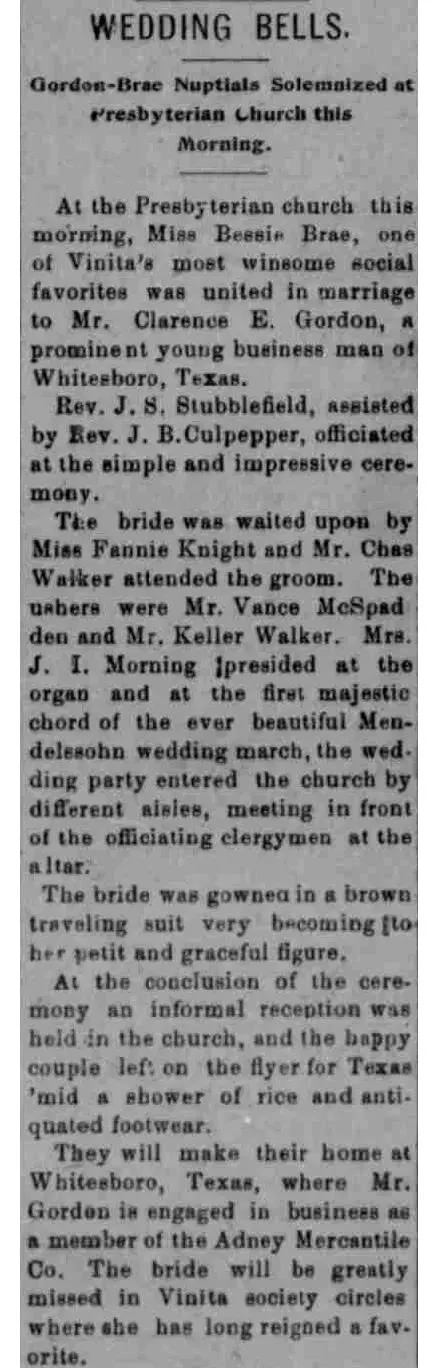
That kind of detail is exactly what researchers need when official records from the Territory period are difficult to locate.
Families who passed through the Midwest before settling in Oklahoma may have left records in multiple states. Illinois newspaper archives can be especially useful if your family's path ran through Chicago or the industrial corridor.
What You Can Find in Oklahoma Newspaper Archives
Oklahoma newspapers are rich in both formal notices and informal community mentions. Depending on the paper, the location, and the era, you might find:
Obituaries and death notices, often listing surviving family members and locations
Marriage and engagement announcements with family and community details
Birth notices, especially in early twentieth-century papers
Legal notices, including probate, estate settlements, and land transactions
Tax and delinquency notices naming individuals by township
Allotment references tied to Indigenous land records
Business advertisements and employment mentions
Social columns tracking visits, arrivals, departures, and illnesses
Church and school news
Court records and public notices
These aren't all equally prominent. Some of the most useful records for genealogy appear in sections researchers often skip entirely.
The Importance of Small-Town Oklahoma Newspapers
While papers in Oklahoma City and Tulsa covered major events and obituaries extensively, smaller community papers often captured far more personal detail.
A social column in a small-town Oklahoma paper might mention that a woman returned from visiting her sister in Arkansas, that a man left for Oklahoma City to spend the weekend with his parents, or that a family was preparing to relocate entirely. None of those moments would appear in official records. All of them can help a researcher track a family's movements, relationships, and connections.
The "City Briefs" column below, from the Ada Weekly News in December 1920, names more than a dozen people in a single short section. It places individuals in specific towns, records visits to relatives, notes a family's move to Arkansas, and captures the kind of everyday social activity that fills in the gaps between major life events.
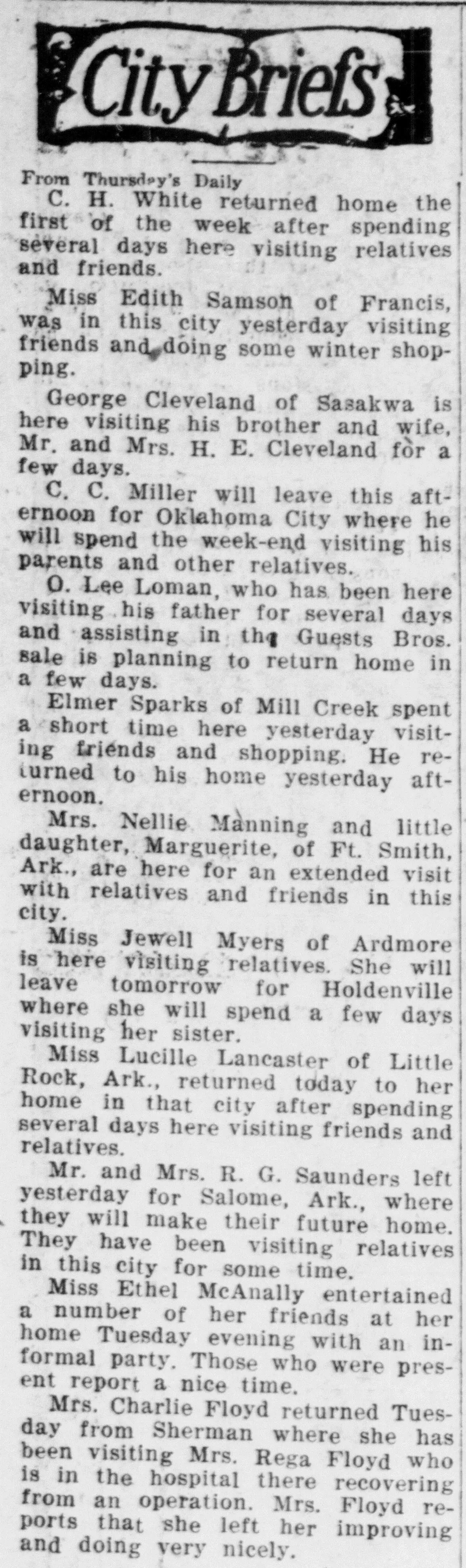
Columns like this appear in small-town papers across the state. They were never meant to be genealogy records, but that is exactly what they have become.
Communities worth searching for this kind of coverage include Vinita, Muskogee, Ada, Guthrie, Tahlequah, Wagoner, and other smaller communities where local papers frequently recorded visits, community events, business updates, and family news.
How to Search Oklahoma Newspaper Archives
Oklahoma research rewards a slightly different approach than searching other states.
Search by surname and county, not just city. County-level papers often covered multiple small communities. Instead of searching only Oklahoma City, try counties like Pontotoc, Sequoyah, Wagoner, or areas surrounding communities with strong local newspaper coverage. County papers often documented multiple small towns and rural residents. The family you're looking for may have lived in a township that never had its own paper but appeared regularly in the county seat's newspaper.
Use community column keywords. In small-town papers, the richest family mentions often appear in social columns, not obituaries. Try searching for a surname alongside terms like "visited," "returned home," "has been spending," "entertained," or "removed to." These phrases appear constantly in Oklahoma social columns and can surface mentions that a standard name search would miss.
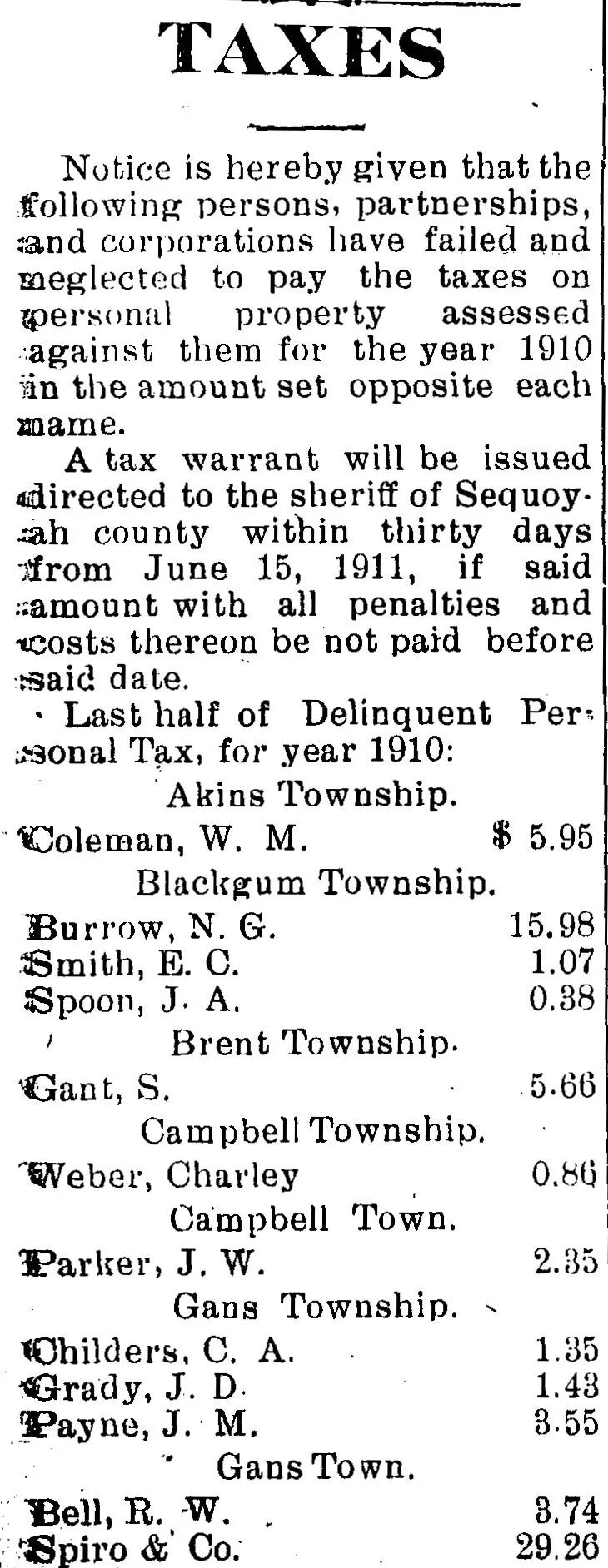
Don't skip legal and tax notices. Oklahoma newspapers regularly published detailed legal notices that named individuals and families directly. Probate filings, estate settlements, and delinquent tax lists can place a person in a specific township at a specific time. The tax notice below, from the Star-Gazette in Sequoyah County in 1911, lists residents by township alongside the amounts they owed. A researcher who finds a family surname in that list now knows the exact township where that person held property four years after statehood.
Search around the 1907 statehood window. Families living in Indian Territory during the final years before statehood went through a significant transition. Searching newspapers from 1904 to 1910 can help you track how a family moved from Territory records into state records and what community they were part of during that shift.
If the same strategies that work in Oklahoma also apply when your research crosses state lines, searching Indiana newspaper archives can help you follow a family that moved between the Midwest and Oklahoma.
Follow allotment references. Oklahoma's land allotment system, tied to the Five Civilized Tribes and other Indigenous nations, means that property records and newspaper mentions are often connected. An allotment reference in a newspaper, like the Oscar Morris allotment mentioned in the Muskogee Times-Democrat oil well story below, can connect a newspaper mention to land records and family history in ways that are unique to Oklahoma research.
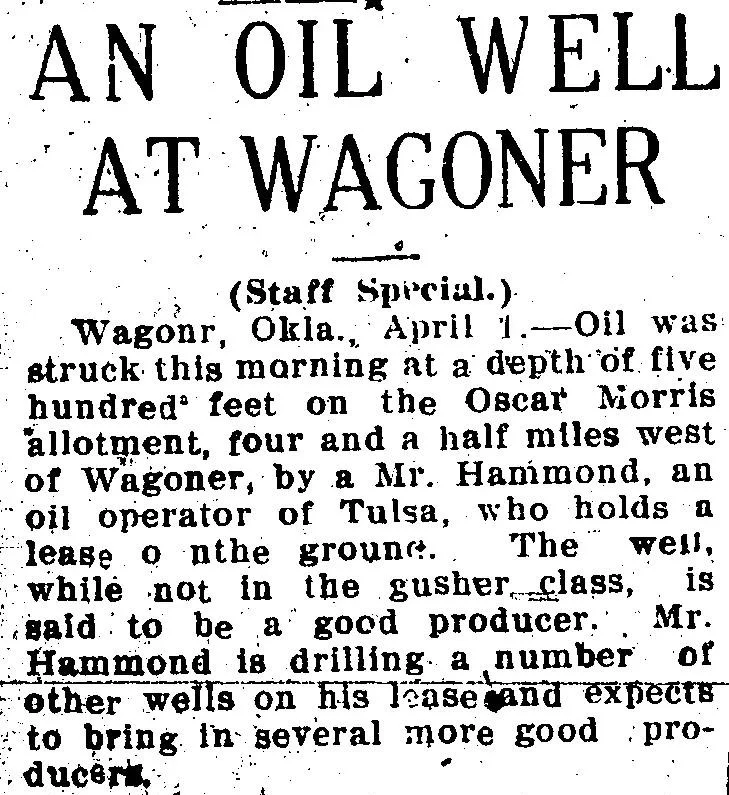
Track families across the oil era. From roughly 1905 through the 1930s, Oklahoma newspapers covered the oil industry extensively. Workers, landowners, and business operators appeared in print regularly. If your ancestors were in eastern Oklahoma or the Tulsa area during this period, oil-related mentions, lease references, and business notices may help you trace them.
Oklahoma Cities and Local Papers to Explore
Where you search in Oklahoma can change what you find significantly.
Tulsa and northeastern Oklahoma often provide strong coverage of business activity, oil development, and growing communities during the early twentieth century.
Oklahoma City and central Oklahoma offer coverage tied to statehood, government growth, and everyday community reporting. Papers from Guthrie remain especially valuable for research around the transition into statehood.
Eastern Oklahoma and former Indian Territory contain some of the richest newspaper material in the state. Communities like Vinita, Muskogee, Tahlequah, and Wagoner documented everyday life before and after statehood.
Smaller communities across Oklahoma frequently provide the most personal details through social columns, church news, school reporting, and local notices that named ordinary residents.
One Detail Can Connect the Whole Story
A single newspaper mention can open an entirely new direction in your research.
A wedding announcement from a pre-statehood Vinita paper tells you the bride's community standing, the groom's business and hometown, the names of the wedding party, and where the couple planned to live. That single clipping connects an Oklahoma family to a Texas family and gives you four or five new names to search.
A delinquent tax list tells you exactly which township a person lived in and confirms they held personal property there during a specific year. That placement can help you find other records.
A social column mention that someone "left yesterday for Oklahoma City where he will spend the weekend visiting his parents and other relatives" tells you where the parents lived, confirms a family relationship, and gives you a new location to search.
None of these are dramatic discoveries on their own. Together, they build the kind of detailed picture that official records rarely provide.
A single clipping that places a family in Oklahoma can also point you toward where they came from. If your research leads back to the Midwest, Ohio newspaper archives may help you trace the earlier part of the story.
FAQs About Oklahoma Newspaper Archives
What records can I find in Oklahoma newspaper archives? Oklahoma newspapers include obituaries, marriage and birth announcements, legal and probate notices, delinquent tax lists, social columns, business advertisements, and community news. Many of these record types name individuals, relationships, and locations that don't appear in official government records.
Are there Oklahoma newspapers from before statehood? Yes. Oklahoma did not become a state until November 1907, but newspapers were publishing in Indian Territory well before that date. Papers from communities like Vinita, Muskogee, Tahlequah, and Guthrie covered events, announcements, and community life during the pre-statehood period. These papers can be especially valuable for researchers whose families arrived in the Territory before official state records began.
How do I find ancestors in small-town Oklahoma newspapers? Search by surname and county rather than just city. Look for social columns, often labeled "City Briefs," "Local News," "Personals," or "Neighborhood Notes," and try keywords like "visited," "returned home," or "entertained." These columns named ordinary residents constantly and are easy to overlook in a standard search.
What is the best way to search Oklahoma newspapers by county? Start with the county seat newspaper for the area where your ancestor lived. County papers typically covered multiple townships and small communities within the county. If you know a township but not a specific town, searching the county seat paper will often turn up mentions even for residents who lived far from the city center.
Start Searching Oklahoma Newspaper Archives
Oklahoma's newspaper history starts earlier than most researchers expect. If you have a name, a county, or even just a family story that points to the Territory years, search NewspaperArchive and see what the local papers recorded before and after statehood.