
The Mistakes Most People Make When Searching Name Variations in Old Newspapers
Searching name variations in old newspapers takes more than creativity. Here are the most common mistakes researchers make and how to fix them before you give up on finding someone.
Researchers searching historical newspapers for ancestors often miss records because of avoidable mistakes: searching only formal names when nicknames were commonly used, trusting initials without accounting for missing Jr. or Sr. designations, limiting searches to one geographic area, not recognizing common name abbreviations like Wm. or Sam'l., and searching women under their own names when historical papers routinely listed them under their husbands' names. NewspaperArchive offers searchable access to millions of pages from small-town and regional newspapers, and understanding these search patterns helps researchers find records that a straightforward name search would miss entirely.
You have searched every spelling you can think of. You have tried the full name, the short name, the maiden name. You have checked three different databases. Nothing.
Before you decide your ancestor simply is not there, it is worth asking a different question. Not "what name should I try next?" but "what am I doing that is making them harder to find?"
Most name search problems are not really about the name. They are about the assumptions researchers bring to the search. The assumption that a name will appear the way you expect it to. That a woman will be findable under her own name. That a person will show up in the paper closest to where they lived. That the text on the page will match what was actually printed.
This post is about those assumptions, and what happens when you let them go.
If you want a full list of name variation strategies, the Name Game post covers 15 specific approaches. This post is the companion to that one. It focuses on what goes wrong before you even get to the strategy.
Quick Answer
The most common mistakes when searching name variations in historical newspapers include searching only exact spellings, overlooking nicknames and initials, ignoring women's married names, staying in one geographic area, and not accounting for OCR errors or name abbreviations. Fixing these mistakes often surfaces records that seemed missing entirely.
Try a few of these name variation searches in NewspaperArchive as you read. Start with the name you know, then test a nickname, an initial, an abbreviation, or a nearby town. Small changes in the search box can bring up newspaper matches you may have missed before.
In This Post
Part One: Search Mistakes (how you are looking)
Part Two: Identity Mistakes (what you do with what you find)
A quick-reference summary table
Frequently asked questions
Part One: Search Mistakes
These are the mistakes that happen before you even look at a result. They are about how you search, where you search, and what you expect to find.
Mistake 1: Searching Only the Name You Know
Most researchers start with the name they recognize from a family tree or a census record. That makes sense. But old newspapers used names the way people actually used them in daily life, which was rarely the same as how a county clerk recorded them.
John T. Cunningham of Martinsville, Indiana, is a good example. Search for John Cunningham, and you might find him. Search for J.T. Cunningham, and you might find him again. But if you never thought to search for Dola, you would miss a whole category of records entirely.
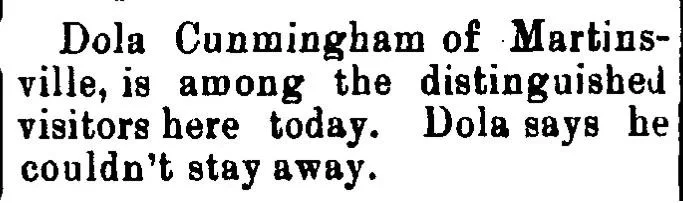
That small item from the Greensburg Daily Review in 1899 names Dola Cunningham of Martinsville as a visitor in town. No mention of John. No mention of J.T. Just Dola, the nickname his community actually used. A researcher who only knew him as John or J.T. would scroll right past it.
Nicknames were used freely in small-town papers. Fannie for Frances. Archie for Archibald. Lizzie for Elizabeth. Dola, in this case, for John. Before you decide a record does not exist, ask whether you know what your ancestor was actually called by the people around them.
Mistake 2: Trusting Initials to Tell the Full Story
Initials show up constantly in historical newspaper records, and they rarely give you enough to work with on their own.
This 1920 item from the Greensburg Standard mentions Ira B. and Richard Ray Hamilton returning home from Indiana University for the holidays.
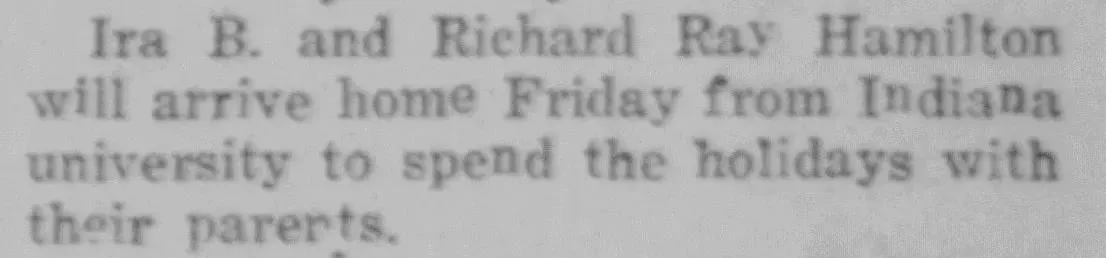
Two problems in one clipping. Ira B. Hamilton appears with only a first initial for his middle name. A search for his full middle name would not find this record. And Richard Ray Hamilton is actually a junior, but that designation does not appear anywhere in the item. If his father is also named Richard Ray Hamilton and both men lived in the same town, a search result for either of them could belong to the wrong generation.
When you find initials in a newspaper record, treat them as a partial name, not a confirmed identity. Look for other records that might give you the full name, and pay attention to Jr. and Sr. designations, or the absence of them.
Mistake 3: Staying in One Town
It feels logical to search the newspaper closest to where your ancestor lived. But people moved, visited, traveled for work, and appeared in papers far from home, sometimes more often than they appeared in their local paper.
Go back to Dola Cunningham. He was from Martinsville. The clipping that named him came from a Greensburg paper, which is roughly 40 miles away. If you searched only Martinsville papers, or only Morgan County papers, you would not find that item.
This happens more than researchers expect. A person might appear in a neighboring county paper when they traveled for business. They might appear in a city paper when they came in from a rural area. They might appear in a paper from a completely different state if they had family there and the local editor noted their visit.
When a search comes up empty, expand the geography before you expand the name. Try neighboring counties, nearby cities, and any place your ancestor had known connections.
Mistake 4: Expecting Names to Appear in Full
Newspaper typesetters and editors abbreviated constantly, especially in list-format items like legal notices, license records, and estate filings.
Samuel Funk's will notice from the 1900 Hagerstown Herald and Torch Light is a useful example. The headline reads Sam'l. Funk's Will. Throughout the article, his executors are listed as Wm. O. Funk and Wm. E. Funk, not William.
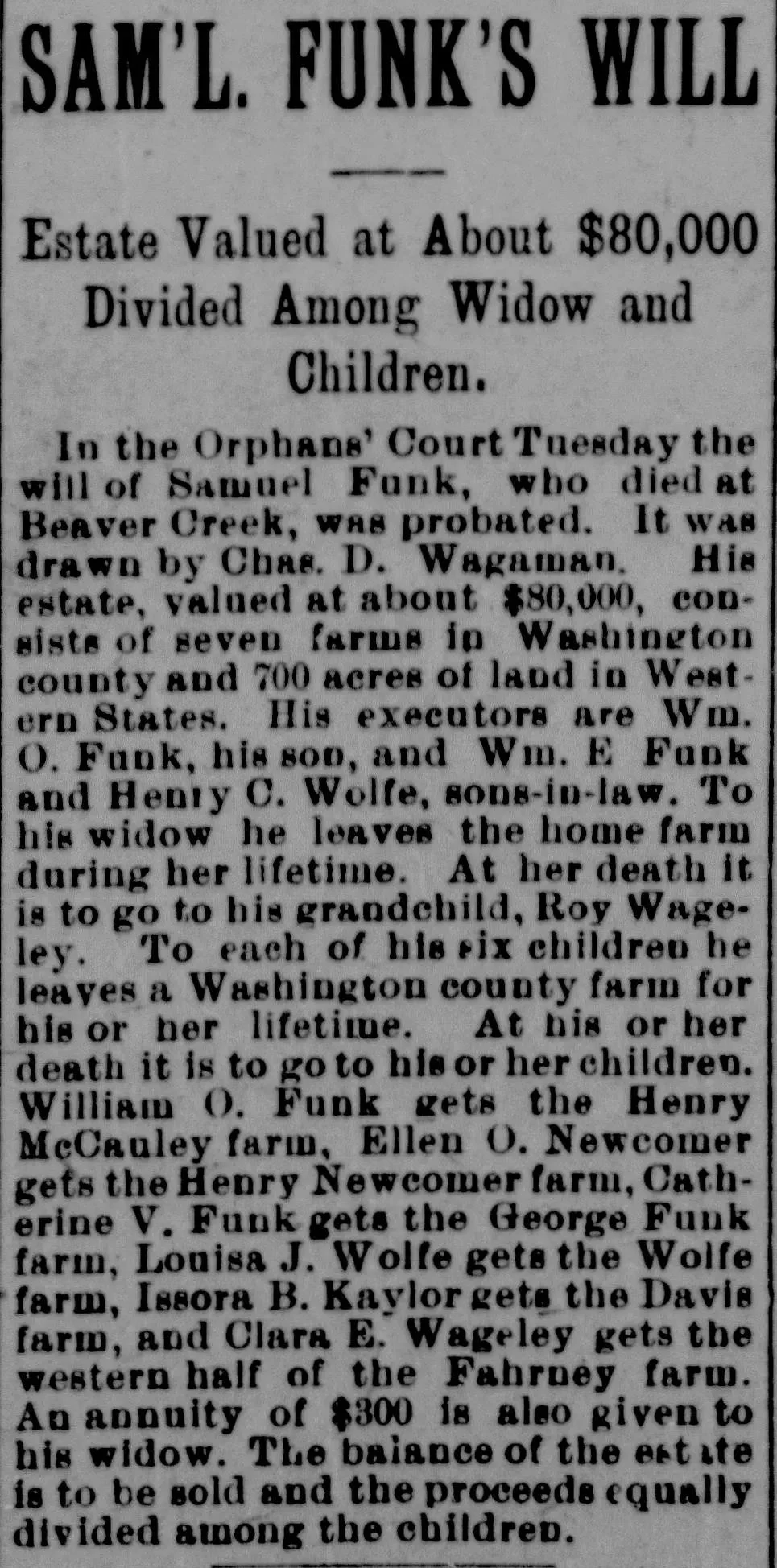
A search for Samuel Funk might return this item depending on how well the OCR handled the abbreviation. A search for William Funk might not return it at all if the system read Wm. as a separate, unrecognized string.
Common abbreviations to watch for include Wm. for William, Thos. for Thomas, Chas. for Charles, Jno. for John, Geo. for George, and Sam'l. for Samuel. If a search for a full name returns nothing, try the abbreviated form. If an abbreviated form is all you have, try the full version too.
NewspaperArchive's ongoing re-OCR improvements have helped with some of these cases, but abbreviations in original print can still create gaps in search results. Knowing the common ones gives you a way around them.
Part Two: Identity Mistakes
These mistakes happen after you find a result. They are about how you evaluate what you are looking at and whether you can confirm it belongs to the right person.
Mistake 5: Assuming You Can Find Women Under Their Own Names
This is one of the most common reasons a female ancestor seems to disappear entirely from newspaper records. She did not disappear. She was just listed under her husband's name.
This 1922 item from the Greensburg Daily News mentions Mr. and Mrs. Harrington Boyd visiting for dinner. Their daughter is identified as Mrs. Jack Butterfield of Hamilton, Ohio.
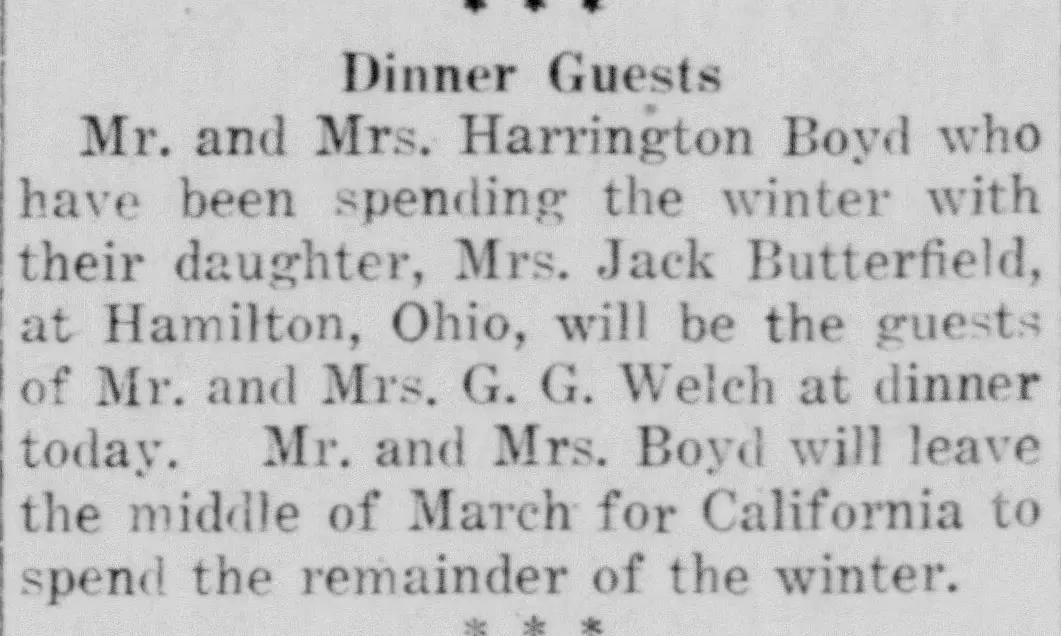
Two women in one clipping. Neither one named. Mrs. Harrington Boyd has no given name in this item. Her daughter Mrs. Jack Butterfield has no given name either. If you were searching for either of these women by their first names, this clipping would never surface.
To find women in historical newspaper records, search the husband's name first and read every result carefully. Look for items that mention a wife, a Mrs., or a daughter without a given name. Then cross-reference with other records to attach the right woman to the right household.
Women who were widowed sometimes continued to appear under a deceased husband's name for years after his death, which adds another layer to the search.
Mistake 6: Overlooking the Jr./Sr. Problem
When a father and son share the same name and live in the same community, newspaper records can blur them together in ways that are easy to miss.
The 1920 Hamilton clipping is worth returning to here. Richard Ray Hamilton and his brother Ira B. are coming home from Indiana University. Richard Ray is a junior. His father, also Richard Ray Hamilton, lives in the same town. The clipping does not distinguish between them.
If you found this item without knowing there were two Richard Ray Hamiltons in Greensburg, you might assign it to the wrong generation entirely. A college student arriving home for the holidays is a very different research thread from a father waiting for his son to arrive.
When you find a record for a common family name, check whether a Jr. or Sr. designation should be present. Look for age clues, relationship clues, and contextual details that help you place the person in the right generation before you add the record to your research.
Mistake 7: Not Verifying Before You Commit
This mistake ties the whole post together. You can search perfectly, account for every nickname and abbreviation and location variation, and still end up with the wrong person if you add a record without verifying it first.
For a step-by-step way to confirm you have the right person, read Same Name, Wrong Man: How to Know You’ve Found the Right Ancestor in Old Newspapers, which includes a helpful verification checklist. The short version is this: a name match is a starting point. Before a record goes into your research file, you want at least two or three confirming details. A spouse's name. A location. A parent or child named alongside the person. An occupation or church that matches what you already know.
When those details are present and consistent, you are likely looking at the right person. When they are absent or contradictory, keep looking before you commit.
Quick Reference: Mistakes and Fixes
Mistake | Why It Happens | What to Try Instead |
|---|---|---|
Searching only the name you know | Assuming formal names were used in print | Search nicknames, common short forms, and name variants |
Trusting initials | Assuming initials represent the full name | Look for records that give the full name, watch for Jr./Sr. |
Staying in one town | Assuming people appeared in their local paper | Expand to neighboring counties, nearby cities, and connected locations |
Expecting full names in print | Not knowing common abbreviations | Try Wm., Thos., Chas., Jno., Geo., Sam'l. as search terms |
Searching women by their own names | Not knowing women were listed under husbands' names | Search the husband's name, read for Mrs. mentions |
Missing the Jr./Sr. distinction | Assuming one record per name | Check for generational clues before assigning a record |
Skipping verification | Assuming a name match is confirmation | Use the ancestor identity checklist before adding any record |
Frequently Asked Questions
Why do so many women seem to disappear from newspaper records? Most of the time they did not disappear. They were listed under their husband's name, their father's name, or simply as Mrs. with no given name at all. Searching the men in their lives and reading carefully for unnamed women is usually the most reliable way to find them.
How do I know which abbreviations to search for? The most common ones in American historical newspapers are Wm. for William, Thos. for Thomas, Chas. for Charles, Jno. for John, Geo. for George, and Sam'l. for Samuel. If your ancestor had one of these names and a direct search returns nothing, try the abbreviated form as a separate search.
What should I do when I find a record but cannot tell if it is the right person? Work through a verification checklist before adding the record to your research. Look for a spouse's name, a location, a parent or child named in the same item, an occupation, or any other detail that either confirms or contradicts what you already know. For a closer look at how to confirm a newspaper match, read Same Name, Wrong Man: How to Know You’ve Found the Right Ancestor in Old Newspapers, which includes a practical checklist for checking identity clues.
Is it worth searching in papers from towns my ancestor never lived in? Often yes. People traveled, visited relatives, conducted business, and appeared in papers far from home. If your ancestor had family connections in a neighboring county or a nearby city, those papers are worth checking. A visiting item or a legal notice can appear almost anywhere.
Does NewspaperArchive search for name variations automatically? NewspaperArchive returns results based on the search terms you enter, so the more name forms you try, the more ground you cover. Improved OCR on many pages has helped surface records that were harder to find before, but knowing the nicknames, abbreviations, and initials your ancestor used gives you a real advantage over relying on any single search.
Ready to test your next search? Go to NewspaperArchive and try one ancestor’s name three different ways: the formal name, a nickname or initials, and one likely abbreviation. Then expand beyond the hometown and see what appears in nearby newspapers.
Conclusion
Most searches that seem to dead-end are not really dead ends. They are places where an assumption got in the way.
Dola Cunningham did not vanish. He was just known by a name that most researchers would never think to try. The women in the Boyd family were not unimportant. They just did not get their own names in the paper that day. Samuel Funk did not disappear from the record. He became Sam'l. and his sons became Wm., and a search for their full names came up empty.
Old newspapers are full of people like this. The names are there. Sometimes you just have to know how your ancestor was known before you can find them.