How to Find Your Ancestor's Occupation in Historical Newspapers
Old newspapers can reveal far more about your ancestor's work life than you might expect. Here's how to find job ads, business directories, personal mentions, and more in historical newspaper archives.
Historical newspapers are a practical source for finding an ancestor's occupation. Job advertisements, business directories, personal appointment notices, industry reports, obituaries, legal notices, and social columns all appeared regularly in local papers and can confirm job titles, employer names, career changes, and professional reputations. Small-town and rural newspapers are especially useful because they named ordinary working people who may not appear in more formal records. NewspaperArchive offers searchable access to more than 280 million digitized newspaper pages from small-town and regional papers across all 50 U.S. states, making it a strong resource for occupation research in historical newspapers.
Most of us start a family history search with the basics: a name, a birth year, maybe a location. But at some point you want more than dates. You want to know what your ancestor actually did. What their days looked like. Whether they worked with their hands or ran a business or held a title in a community no one in your family has mentioned in decades.
That's where old newspapers come in.
Occupation information shows up throughout historical newspapers in ways that formal records simply don't capture. And for ordinary working people, who were never prominent enough to leave behind a lot of paper trail, a local newspaper may be the only source that named them in connection with their work at all.
Quick Answer: Historical newspapers are one of the most practical sources for finding an ancestor's occupation. Job advertisements, business directories, personal mentions, trade news, and obituaries all appeared regularly in local papers and can confirm a job title, name an employer, place your ancestor at a specific business, or reveal a career change. Searching the local papers from the area and time period where your ancestor lived is the best place to start.
If you already have a name, location, and rough date range in mind, try searching NewspaperArchive and see what the local papers from that area show you.
Why Newspapers Are a Practical Source for Occupation Research
Census records note an occupation, but usually just a word or two. City directories can confirm a trade. But neither of those sources tells you much about the actual shape of a person's work life: who they worked for, when they changed jobs, whether they were known in their community for what they did, or how long they stayed in a particular role.
Newspapers filled that gap. They reported on business openings, published directories of local trades, ran help wanted columns, announced promotions, and wrote detailed obituaries that often read like a short professional biography. They covered labor disputes and industry news that placed ordinary workers in a historical context.
That kind of detail didn't always make it into official records. But it made it into the paper.
For a broader look at what else newspapers can tell you that other records can't, this post is worth reading: What Newspapers Reveal About Your Ancestors That Census Records Don't.
Why Small-Town Newspapers Are Especially Useful
If your ancestor lived in a small city or rural community, local papers are often the best place to look. Small-town newspapers named people. That was part of their purpose. A regional paper in a large city might not notice when a local farmhand was hired at a new operation or when a shopkeeper moved locations. A small-town paper often did.
These papers reported on business news, professional appointments, tradespeople coming through town, local union meetings, and the kind of community activity that touched working people's lives regularly. NewspaperArchive has a particularly strong collection of small-town and rural newspapers, many of which are not available anywhere else. If your ancestor wasn't prominent enough to show up in city papers, a county weekly may be exactly the right place to search.
8 Types of Occupation Records Found in Historical Newspapers
1. Job Advertisements
Help wanted columns are one of the most direct ways to understand what kinds of work were available in a particular place and time. Even if your ancestor isn't named, these ads show the wages, skills, and job titles that were standard in their area and era. And sometimes you'll find an ad that connects directly to an employer you already know your ancestor worked for.
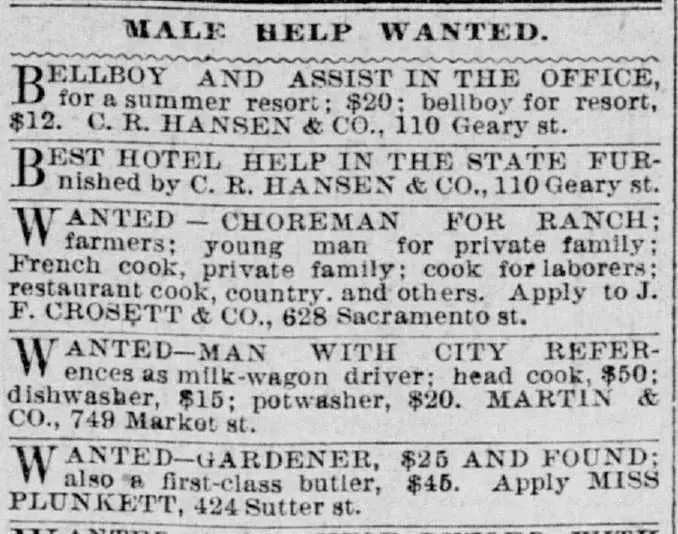
This 1895 help wanted column from the San Francisco Call lists open positions including bellboy, ranch choreman, milk-wagon driver, cook, and butler, with wages noted for each role. A clipping like this tells a researcher exactly what was being hired for in that city at that moment. If you know your ancestor was working in San Francisco in the 1890s, this kind of column can help you understand their options, confirm a job type, or suggest what to search next.
2. Business Directories and Listings
Many newspapers published regular business directories, sometimes weekly, that listed local tradespeople and services by category. These directories are useful for confirming that an ancestor ran or worked for a specific business, and for finding the address and type of work associated with their name.
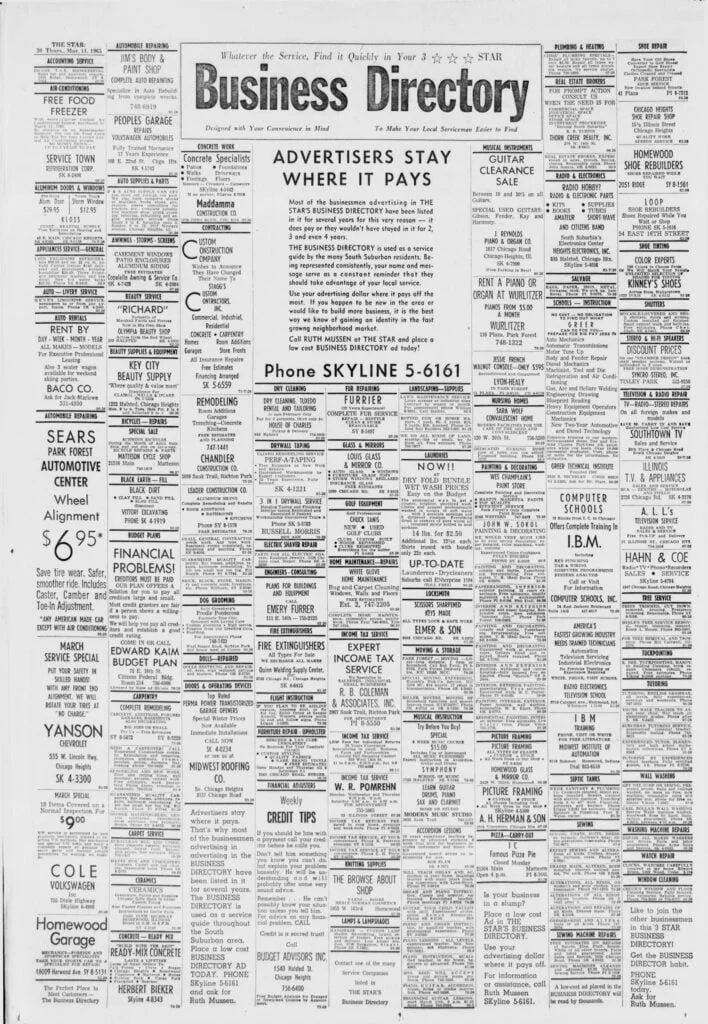
This full-page business directory from the Chicago Heights Star shows dozens of local businesses organized by trade, from auto repair to shoe repair to plumbing. If your ancestor's name or business appeared in a directory like this, you'd have confirmation of their trade, their location, and their presence in that community at that specific time. Directories like this ran regularly, so searching across multiple issues can show you how long a business operated.
3. Industry News and Reports
Newspaper coverage of local industries, factory openings, strikes, and economic shifts can place your ancestor in a larger working context. If you know your ancestor was a coal miner or a mill worker, articles about conditions in that industry, disputes, or closures can help explain family moves, financial changes, or gaps in other records.
4. Personal Mentions and Appointments
Local papers frequently published short notices when someone was promoted, appointed to a new role, took on a business partner, or was recognized professionally. These brief items are easy to miss but can be remarkably specific.
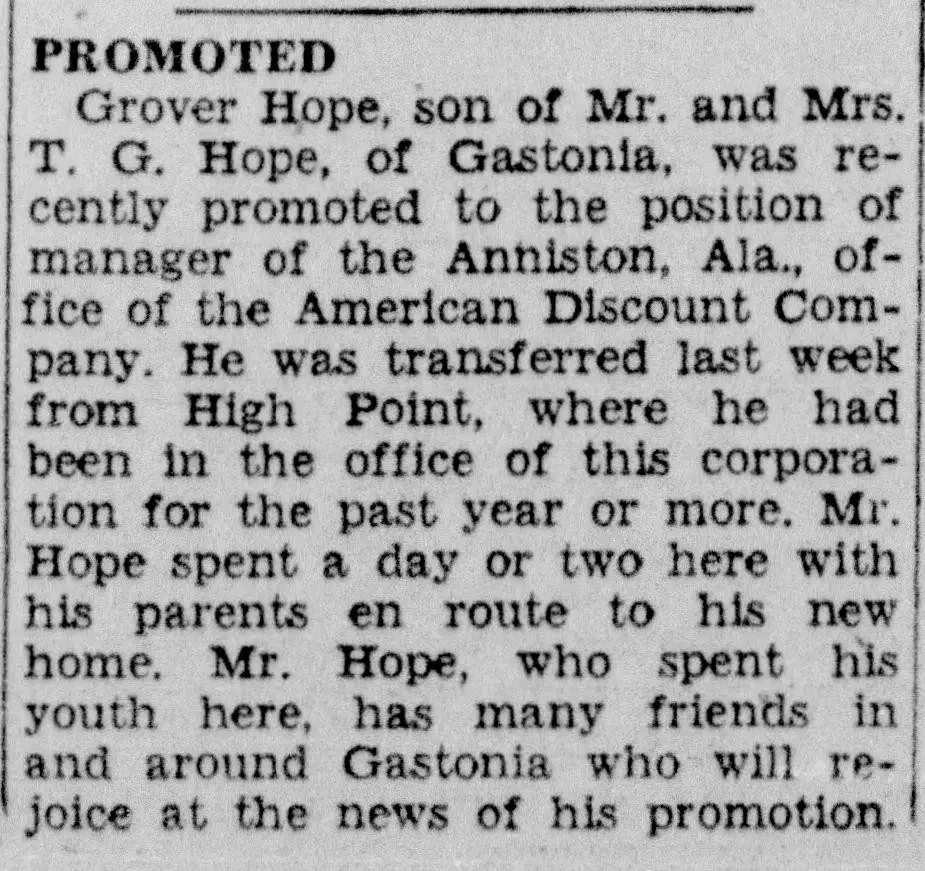
This 1938 notice from the Gastonia Daily Gazette announces that Grover Hope, son of Mr. and Mrs. T.G. Hope of Gastonia, was promoted to manager of the American Discount Company's Anniston, Alabama office and transferred from High Point, where he had worked for the past year. In a few sentences, this clipping gives a researcher a full name, a family connection, an employer, two locations, a job title, a promotion, and a transfer date. If Grover Hope were your ancestor, this single notice would tell you more about his career than most formal records ever would. And it would likely surface just by searching his name in the local North Carolina papers from that period.
5. Obituaries and Death Notices
Obituaries are one of the richest sources for occupation information in old newspapers. A well-written obituary often reads like a professional summary: years of service, employer names, trade affiliations, union memberships, and community roles all appeared regularly. Even short notices often mentioned what a person did for work, especially if their career was central to how they were known in their community.
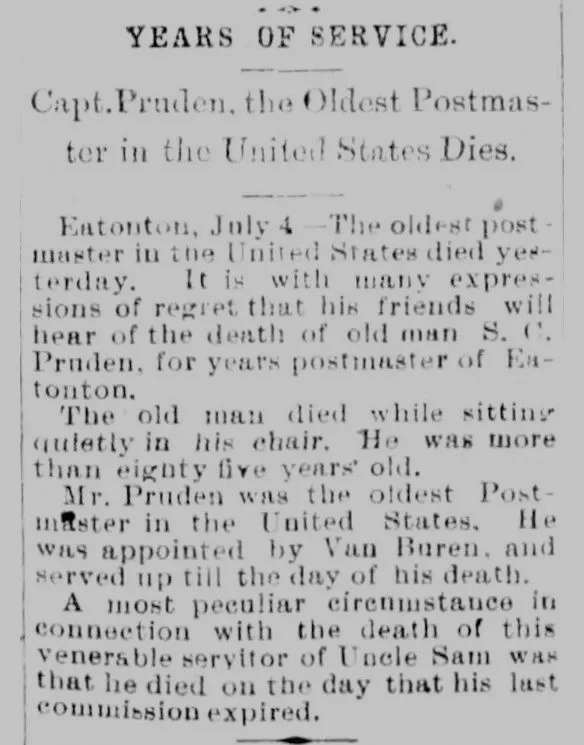
This 1893 obituary from the Milledgeville Union-Recorder reports the death of Captain S.C. Pruden, identified as the oldest postmaster in the United States, appointed by President Van Buren and serving until the day he died. The headline alone, "Years of Service," signals that his career defined how the community remembered him. If you had Pruden in your family tree with only a name and a death year, this obituary would give you his title, his employer, his tenure, and a remarkable personal detail: he died on the day his last commission expired. That's the kind of occupational story that no census record would ever tell you.
6. Community and Trade Organization News
Local newspapers covered trade unions, professional guilds, merchant associations, and occupational fraternal organizations regularly. If your ancestor was a member of a labor union or a trade guild, their name may appear in coverage of meetings, elections, or events connected to that group.
7. Legal Notices
Business-related legal notices, including property transfers, business dissolutions, partnerships, and license applications, appeared in newspapers regularly and often named the individuals involved along with their trade or business type. These can be especially useful for business owners, tradespeople, and farmers.
8. Social Columns
Small-town social columns frequently noted when a local person traveled for work, returned from a business trip, or was visited by a colleague in their trade. These brief mentions can place an ancestor in a specific location at a specific time and sometimes hint at the nature of their work. For more on how to use social columns in your research, see Social Sleuthing: How to Find Your Ancestors in Society Columns.
Tips for Searching Ancestor Occupations in Historical Newspapers
Before you start searching, gather what you already know: approximate dates of employment, locations, any known employers or business names, and the job title or industry if you have it. That foundation will make your searches much more focused.
Start with the local papers closest to where your ancestor lived. City and county papers are the most likely to have named ordinary workers by name. If your ancestor lived in a small town, start there rather than with the nearest large city.
Try multiple newspapers from the same area. Many towns had more than one paper, sometimes with different audiences. A labor-focused paper might cover union news that a general paper skipped. A German-language paper might name community members that an English paper overlooked.
Search by occupation as well as by name. If your ancestor was a blacksmith or a dry goods merchant, try searching the occupation term combined with the town name. You may find industry coverage, employer mentions, or community news that surfaces even when a name search doesn't.
Look beyond the obvious sections. Occupation information turns up in social columns, legal notices, church news, and community event coverage, not just in business sections or obituaries. If a name search isn't producing results, try searching the employer name, the business name, or the trade instead.
Don't skip brief mentions. A single line that says "Henry Kowalski, recently appointed foreman at the mill" confirms an occupation, an employer, a location, and a time period all at once. Short items like this are easy to overlook but can be exactly the kind of confirmation a researcher needs.
Try name variations and spelling alternatives. Occupation searches can fail not because the record isn't there but because a name was recorded differently than you expect. Try initials, nicknames, and common misspellings, and widen your date range if early searches come up empty. For more search strategies, 21 Smart Ways to Find Your Ancestors in Newspaper Archives has a practical list worth bookmarking.
How to Use What You Find
Once you start finding occupation-related clippings, integrate them with what you already know from other records. A business directory entry can lead you to a city directory. An obituary that names an employer can point you toward company records or trade union archives. A personal mention that places your ancestor in a new city can explain a move that census records only hint at.
Cross-referencing is where newspaper finds become most useful. A name in a help wanted ad tells you less than a name in a help wanted ad that matches a census record, a city directory entry, and a business directory listing across several years. Together, those pieces can trace a career, explain a family's circumstances, and add real texture to a story that might otherwise just be a line on a chart.
As you find clippings, note the newspaper name, date, and page number for each one. That sourcing will matter when you want to revisit the material or share it with family.
Frequently Asked Questions
Can I find my ancestor's job in old newspapers even if they weren't famous? Yes. Ordinary workers showed up in newspapers more often than most people expect, especially in small-town papers. Job advertisements, business directories, personal appointment notices, and obituaries regularly named everyday people in connection with their work. The smaller the community, the more likely a local paper was to mention individual workers by name.
What's the best type of newspaper record for finding an ancestor's occupation? It depends on what your ancestor did. Obituaries are often the most detailed single source for occupation information. Business directories are useful for tradespeople and shop owners. Personal mention columns work well for promotions and appointments. Help wanted ads are more useful for understanding the job market than for finding a specific person, but they can confirm wages and skill requirements for a time period.
What if I search my ancestor's name and nothing comes up? Try searching the employer name, the business name, or the occupation term instead. Also, try name variations, initials, and a wider date range. OCR limitations in digitized newspapers can sometimes cause names to be missed in keyword searches, so browsing issue pages directly is worth trying if keyword searches aren't working.
Do historical newspapers include records for blue-collar and working-class ancestors? Yes, often more than formal records do. Newspapers covered labor disputes, union meetings, factory news, and community life in ways that named everyday workers. Small-town papers in particular were likely to mention a farmhand, a mill worker, or a local shopkeeper who would never appear in more formal historical records.
Conclusion
An ancestor's occupation is one of the most humanizing details you can add to a family history. It's the difference between a name and a date and an actual person with a trade, a reputation, and a place in their community.
Old newspapers can give you that detail. Not always, and not in every search. But often enough that they're worth making part of your regular research process, especially when other records have run dry.
If you're ready to start searching, NewspaperArchive is a good place to test what's available for your ancestor's name, location, and time period. And if you want a structured approach to newspaper research more broadly, the Newspaper Research Checklist for Genealogists is a practical next step.