Beyond “They Were Married”: What Wedding Announcements Reveal About Your Ancestors
Wedding announcements hold far more genealogical detail than most researchers realize. Discover how reception notices, gift lists, and social columns in historical newspapers can reveal family networks, migration patterns, and community ties hiding in plain sight.
This article uses two 1905 reception notices from Maine's Daily Kennebec Journal to demonstrate how historical wedding announcements can serve as rich genealogical sources. Author Julie Holmansky shows that beyond basic marriage facts, these notices can reveal the groom's family home and parents' names, the bride's extended family network across multiple states, family naming patterns and identity clues, community affiliations like Grange membership, and social connections such as former teachers and neighbors. The article advises genealogists to search for multiple newspaper mentions of the same event, browse social columns directly, and look for follow-up reception notices that often appear days after the initial announcement and contain entirely new information.
Wedding announcements are some of the most familiar items in historical newspapers—but they’re also some of the most overlooked sources for genealogy.
Most researchers scan them for a name, a date, and a location. Then they move on.
But when you slow down—and especially when you find more than one mention of the same event—these announcements can reveal far more than a marriage. They can uncover family structure, migration patterns, social networks, and even relationships that don’t always appear clearly in official records.
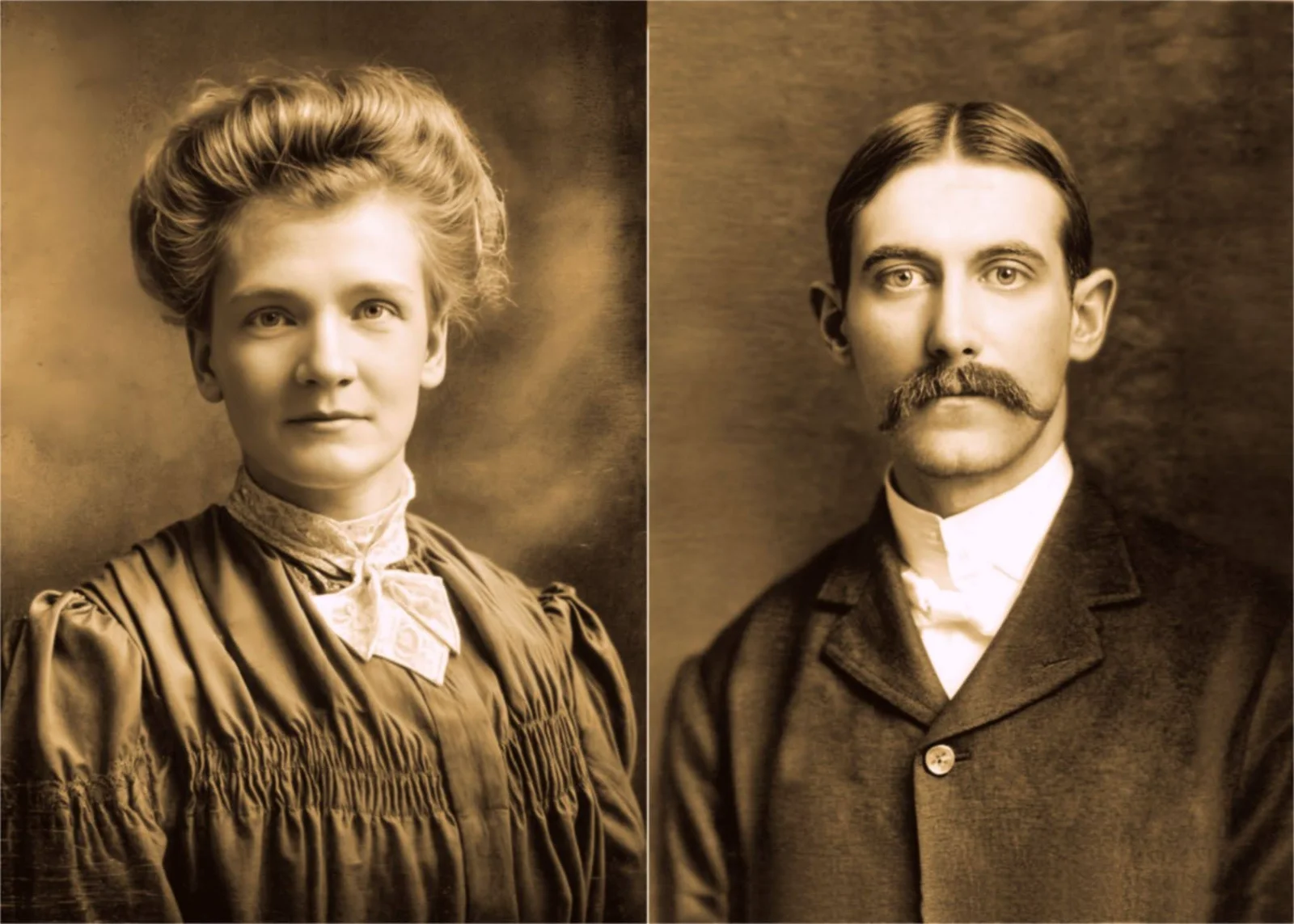
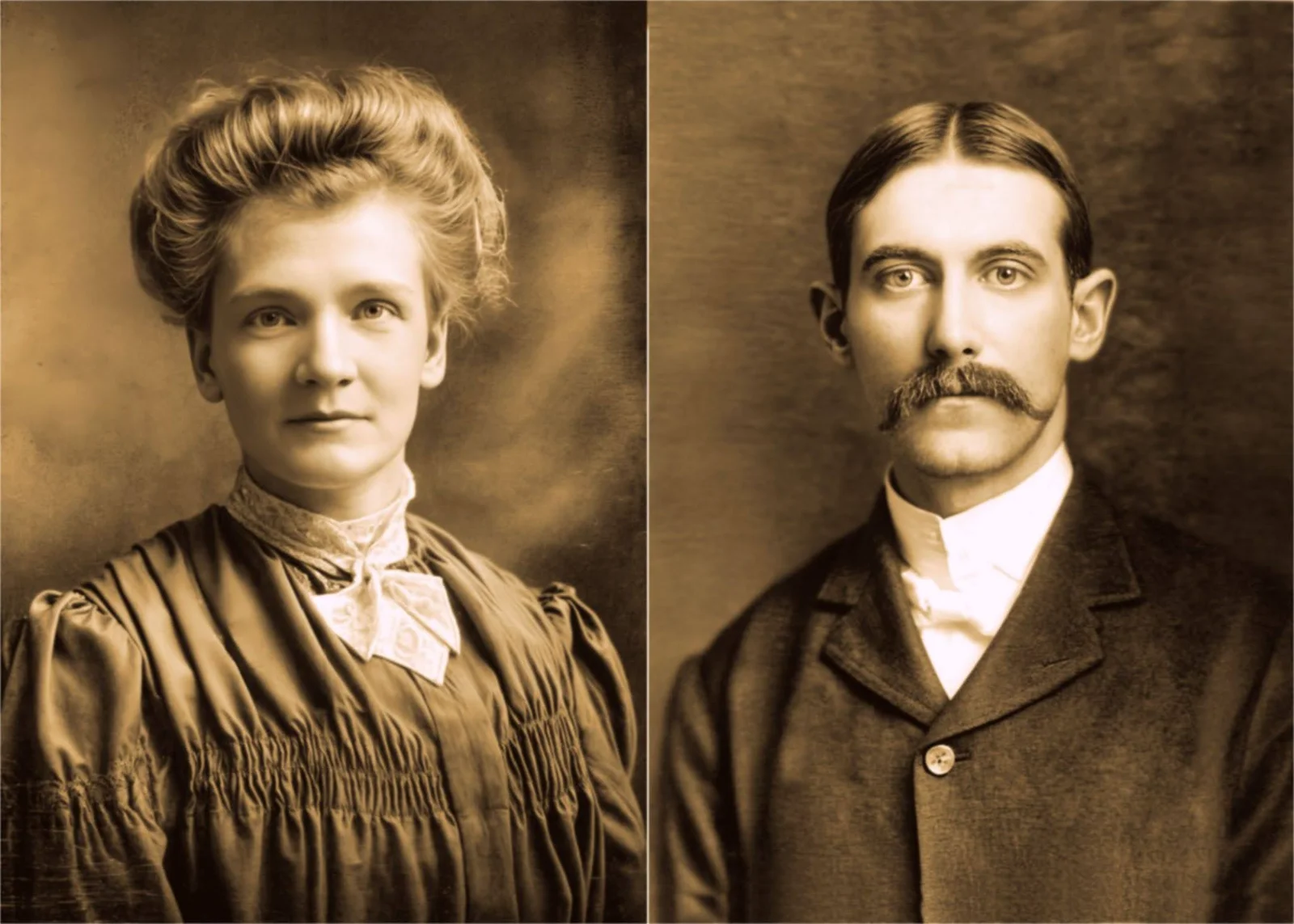
A pair of reception notices for my great-grandparents, Stanley L. Turner and Emilie Wolf, published in Maine’s Daily Kennebec Journal in June and July 1905, offers a perfect example of how much genealogical detail is hiding in plain sight.
A Wedding Announcement Can Span Multiple Newspaper Issues
The first notice, published on June 28, 1905, gives us the essential facts: Stanley L. Turner, “a highly esteemed resident,” had been married the previous week in Brighton, Massachusetts, to Miss Emilie Wolf of Dorchester, Massachusetts.
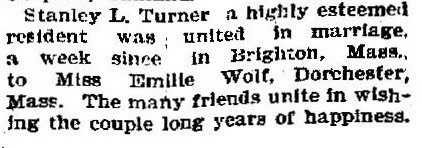
This small section anchors the couple with:
A marriage location (Brighton, Massachusetts)
A timeframe (“a week since”)
The bride’s name and residence
But just a few days later, a second notice appears—and it never mentions the bride’s name at all.
What Wedding Reception Announcements Reveal About Family and Community
Both notices describe the same reception, held over two evenings at the home of the groom’s parents in East Mount Vernon, Maine.
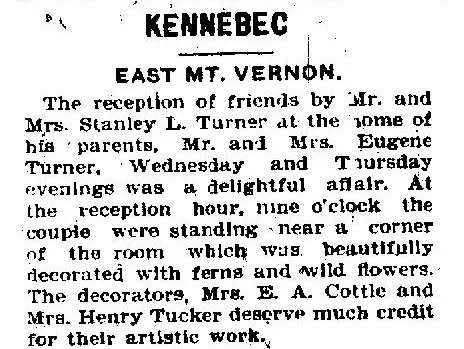
These details establish:
The groom’s family home and residence
The role of his parents as hosts
The scale and tone of the event
By the end of the article, we learn that more than 200 guests attended—turning this into a significant community gathering.
Using Gift Lists in Wedding Announcements for Genealogy Clues
This is where the second article becomes invaluable for family history research.
The June 28 notice gives only a general summary of the gifts. But the July 3 notice expands dramatically, naming individuals and—most importantly—their relationships to the bride.
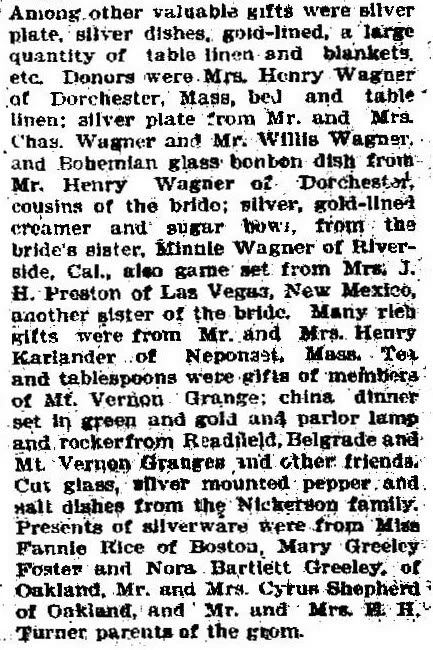
This single section reveals:
Multiple members of the Wagner family in Dorchester, Massachusetts
A sister, Minnie Wagner, in Riverside, California
Another sister in Las Vegas, New Mexico
In one list, the bride’s family network stretches across the country.
And just as importantly, the article reflects how the family identified themselves. Emilie was born Emilie Wolf, and records show that she and her sisters were raised by their aunt and uncle, Mr. and Mrs. Henry Wagner. But in this notice, her sister Minnie appears under the Wagner surname—offering a glimpse of how she chose to identify, and how she was recognized within her family and community.
Reading Between the Lines in Historical Newspapers
Even the smaller details in wedding announcements can provide meaningful insight.
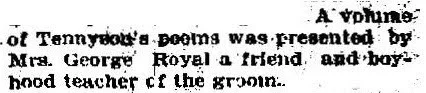
A single gift connects the groom to a former teacher—someone important enough to be named.
The gift list also points to something larger. Multiple gifts came from members of the Mt. Vernon Grange and neighboring granges in Readfield and Belgrade. In a farming community like Mount Vernon, Grange membership was more than a social club—it reflected agricultural life and community involvement.
For the Turner family, these gifts suggest active participation. They place the family within a network of local farmers and community members, reinforcing what other records may only hint at.
Other details—the Teague band and the elaborate refreshments—add to that picture, placing the couple within a connected and active community.
These are the moments that turn names on a page into real people.
Why Small Town Newspapers Matter for Genealogy
Small-town newspapers often provide a level of detail that larger papers simply don’t.
In publications like the Daily Kennebec Journal, social columns documented everyday life in rich detail. Events like wedding receptions were treated as community occasions, not just private milestones.
As a result, these articles often include:
Names of extended family members
Clearly defined relationships
Social organizations and affiliations
Occupations of the bride or groom
Clues about status, movement, and community ties
For genealogists, this makes small-town newspapers one of the most valuable resources available.
How to Find Wedding Announcements in Old Newspapers
If you’re researching family history, wedding announcements and reception notices should be part of your regular newspaper searches. For a deeper dive into search strategies, How to Find Engagements, Weddings, and Marriage Records in Old Newspapers is a helpful starting point.
Start by searching:
Names of the bride and groom
Names of the bride’s or groom’s parents
Keywords like wedding, marriage, nuptials, or reception
The weeks before and after a known marriage date
Don’t stop at the first result.
Follow-up mentions—like reception notices—often appear days later and can contain entirely new information.
It’s also worth browsing social columns directly. These sections frequently include names, relationships, and community details that don’t appear in official records.
Bringing It All Together
A single wedding announcement can provide a useful starting point for genealogy research.
But multiple newspaper mentions can do something more.
One gives you the structure – the names, date, and place.
Another reveals relationships and community connections.
Together, they don’t just document a marriage – they reveal a network.
And that’s where family history truly begins.
About the Author
Julie Holmansky discovered her love of family history through her grandfather, who filled her childhood with stories, photos, and unforgettable characters. What began with flipping through photo albums turned into a lifelong passion for genealogy. Today, she’s driven by the same thing that first captured her imagination—bringing ancestors to life through their stories.
Connect with Julie
If you enjoyed this story, you can find more of Julie’s research and storytelling at her website, Roots and Rabbit Holes, and follow her on Storied to see what she uncovers next.