A Day at the County Fair: What Newspapers Reveal About Your Farming Ancestors
Discover how county fair newspaper coverage reveals your farming ancestors — names, skills, neighbors, and daily life — through the 1907 Kennebec County Fair.
This post by guest blogger Julie Holmansky explores how local newspaper coverage of 19th- and early 20th-century county fairs serves as a rich genealogical resource. Using the 1907 Kennebec County Fair in Readfield, Maine — its 75th year and reportedly the longest-running county fair in the country — as a case study, the post demonstrates what researchers can find in fair coverage: names of entrants and winners, evidence of agricultural and domestic skills, family participation patterns, community connections, and social context. Illustrated with clippings from the Daily Kennebec Journal (September 17–20, 1907), the post covers livestock competitions, horse races, household arts categories, a baby contest, and even the debut of a gasoline-powered cider press. Practical search tips are included for locating fair coverage in digitized newspaper archives.
Morning at the Fairgrounds
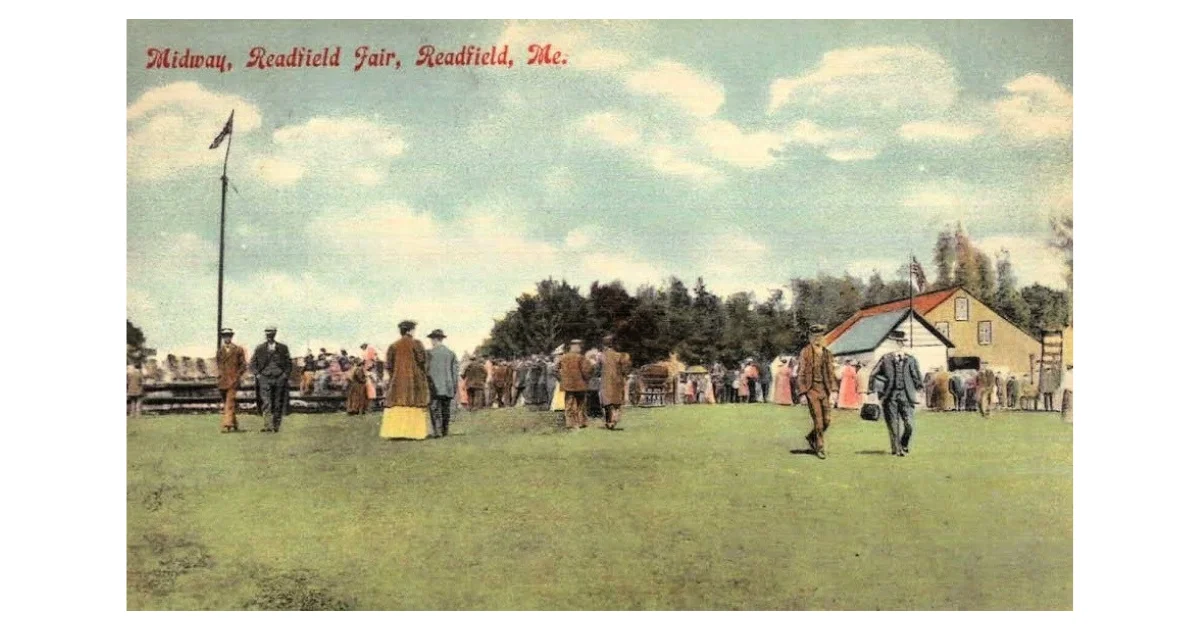
The fairgrounds in Readfield, Maine, were already coming to life early in the morning. Wagons arrived through the soft light, horses shifting and waiting as families and exhibitors made their way onto the grounds. The air carried that familiar mix of hay, earth, and the first smells from food stalls setting up for the day. The sounds of animals – the mournful lowing of cows, the piercing squeals of pigs – mixed with voices of attendees as the crowd filtered in.
It was the 1907 Kennebec County Fair, a three-day event held September 17–19, marking its seventy-fifth year and, according to the Daily Kennebec Journal, the longest-running county fair in the country. A shower threatened in the morning but passed quickly, and reporters noted an unusually strong opening day. Every rail car bound for Readfield arrived full, and more than 2,000 people came through the gates.
Horse races drew steady crowds. Livestock and agricultural entries filled the grounds. Tables and displays of sewing, cooking, and farm produce sat alongside some of the more active contests and competitions.
From the beginning, it was clear in the newspaper coverage that this was not just a local gathering—it was a community tradition.
The County Fair as a Window into Rural Life
County fairs were central to rural life, bringing together the work, relationships, and traditions that shaped a community.
There was an economic side to it—prizes, premiums, and the recognition that came with them. A well-placed ribbon carried weight beyond the fairgrounds, reflecting skill and reputation. But just as important was the social side. Fairs drew people together from across a county, creating a shared space where neighbors met, families gathered, and everyday routines gave way to something more communal.
Newspaper coverage of the opening day reflects both the scale of the crowd and the excitement in the air:
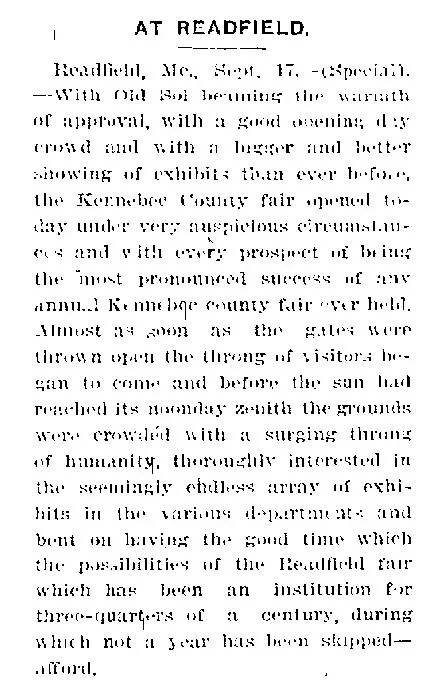
By 1907, the Kennebec County Fair had been held for seventy-five years. This continuity mattered. Those who were children when the fair began in 1832 grew up, raised families, and in some cases returned decades later with children and grandchildren of their own.
Through the Daily Kennebec Journal’s coverage, these economic, social, and cultural moments are preserved in detail.
What You Can Find in Fair Coverage
Once you begin reading county fair newspapers, the amount of genealogical information becomes clear. What looks like a straightforward report often holds layers of valuable details—names, activities, and small moments that begin to build a fuller picture of the people involved.
Within these articles, you can see not just who was present, but how they participated and how they fit within their community.
Names in Print
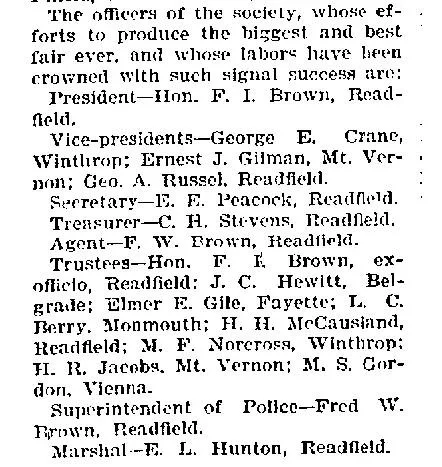
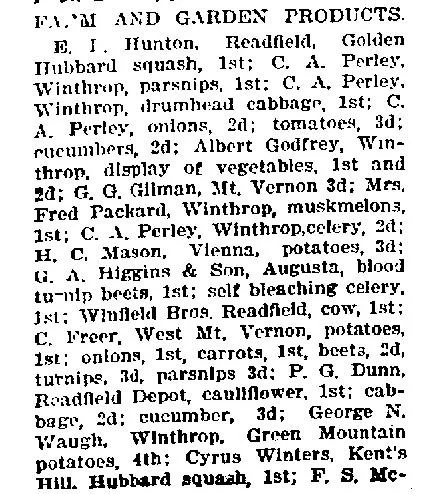
County fair coverage is often packed with names—entrants, winners, judges, and committee members. Even those who did not place are frequently included. These lists can confirm residence, interests, and level of involvement within a community.
Evidence of Work and Skill
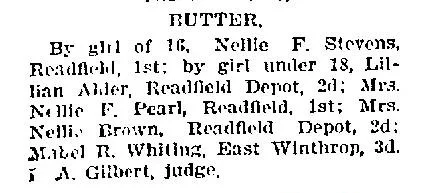
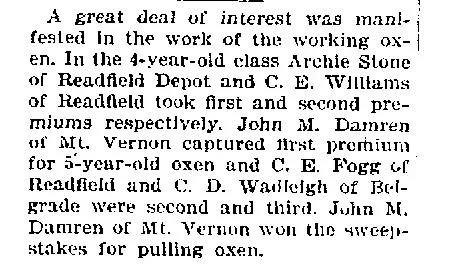
Livestock entries, crop competitions, preserves, textiles, and handiwork categories reflect the labor that filled daily life. These were not simply hobbies—they represented real skills and knowledge. A prize for butter or a winning team of oxen can reveal far more than a census occupation alone.
A Family Affair: Following Recurring Names
County fair entries often showed entire families participating across multiple categories. One person might enter vegetables, another quilts, another livestock—or the same individual might appear in several events. These patterns suggest division of labor and the cooperative nature of farm life. Repeated surnames and locations can point to family connections worth exploring further.
Community Connections
County fair coverage placed your ancestors among their neighbors. Familiar surnames appearing together may reflect proximity, kinship networks, or long-standing relationships.
In some cases, comparing these names with census records can help confirm how closely these families lived—sometimes placing them on the same road or neighboring farms.
Snapshots of the Day
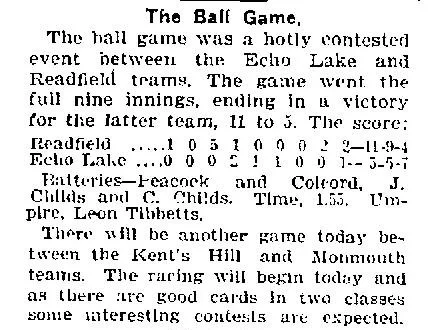
County fair coverage in newspapers often included glimpses of the day’s entertainment, offering a sense of what drew the largest crowds. At the Kennebec County Fair, baseball games and horse races were major attractions, both covered with noticeable enthusiasm.
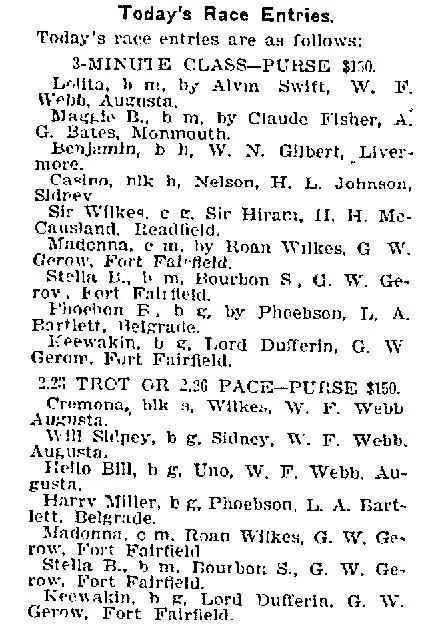
Horse races, in particular, were a favorite event. Reports frequently included the names of horses, along with owners or drivers—details that can add texture when writing your family stories.
Beyond Names: County Fairs as Social History
County fair coverage in local newspapers offers more than a list of participants and prize winners. It captures a moment in time—one that reflected how people lived, worked, and adapted to change.
The 1907 Kennebec County Fair, in its seventy-fifth year, stood firmly in tradition. Agricultural entries, livestock, and handiwork reflected long-established patterns of rural life. At the same time, newspapers recorded something newer. One report described a gasoline-powered cider press—an innovation that would have drawn attention not only for its function, but for what it represented.
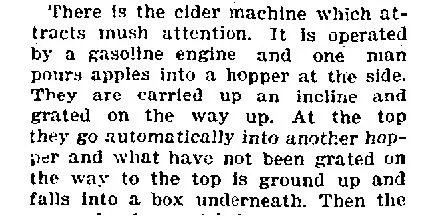
Details like this point to broader changes taking place in rural communities. Even within a traditional agricultural fair, new technology began to appear, signaling shifts in how work might be done in the future.
Through county fair coverage, newspapers captured a world in transition—where established practices and emerging ideas existed side-by side.
Reading Between the Lines
While some categories reflected work and skill, others revealed something more about how people were seen within their communities.
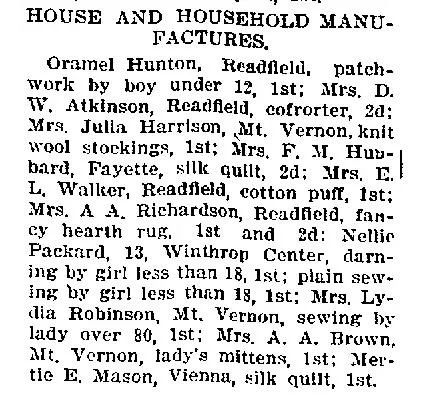
House and Household Manufacturers categories—sewing, quilting, knitting, and mending—offered a clear view of everyday labor. These entries were dominated by women, with age divisions that provided additional context, from girls learning their skills to women well into later life. Even the occasional category for boys hinted at how these roles were understood and taught.
In contrast, events like the baby contest showed a different side of participation. Infants were described in detail—curly hair, black eyes, fattest baby—offering a glimpse into how families presented their children and how communities responded. These descriptions reflected pride and shared standards of what was admired at the time.
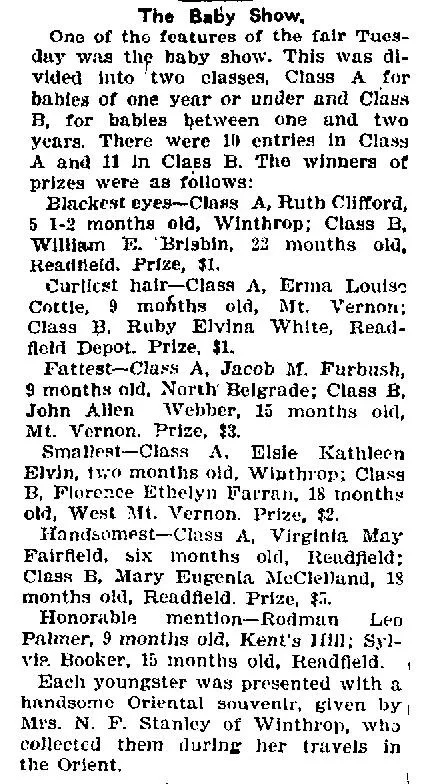
These entries show that county fair coverage was not only about competition. It reflected participation, visibility, and belonging—and offered insight into how individuals were understood within their world.
How to Find County Fair Articles in Newspapers
County fair coverage tends to follow a predictable pattern, which makes it easier to locate once you know what to look for.
Start with simple search terms. Use phrases like “county fair” or “agricultural fair,” paired with a county name.
Focus on timing. Most fairs were held in late summer or early fall, so narrowing your search to those months can provide more relevant results.
Search broadly. Names don’t always appear the way you expect. Men are often listed by first initial and surname. Women may appear under their husband’s name.
Watch for locations. Winners are frequently identified by town, such as “W. Cottle, Mount Vernon.”
Check social columns. Towns took pride in their winners. Local papers often followed up after the fair. Search surname + location. Social columns may include additional mentions and show family groups appearing together.
Small Town Newspapers Matter for Genealogy
Small-town newspapers recorded the details of everyday life in a way larger publications rarely did. They named participants, noted activities, and preserved moments that might otherwise have been lost.
Without this coverage, events like the 1907 Kennebec County Fair would be reduced to little more than a date and location. Instead, we can see who was present, what they contributed, and how the community came together.
For genealogists and family historians, local newspapers provide essential context—placing ancestors not just in time and place, but within the fabric of their communities.
The Fairgrounds at Dusk
As the fair drew to a close after three full days, things began to wind down. Ribbons had been awarded, contests decided. Wagons were loaded again, horses led out, and families made their way along the same roads and rail lines that had brought them to Readfield.
But the fair was never solely about results. It was reflected just as much in the small moments—lemonade shared along the Midway, peanuts eaten by the handful, a stop at a fortune teller’s tent, or a turn on the merry-go-round. For some, it was the draw of the races or a ball game. For others, it was simply the chance to be there among neighbors.
These details do not always stand out at first glance in newspaper columns, but they are there. Together, they show more than names or outcomes. They show a community moving through a shared experience—one shaped by work, skill, tradition, and pride.
A single county fair listing can do more than place an ancestor at an event. It can bring them—and the world they were part of—back into view.
About the Author
Julie Holmansky discovered her love of family history through her grandfather, who filled her childhood with stories, photos, and unforgettable characters. What began with flipping through photo albums turned into a lifelong passion for genealogy. Today, she’s driven by the same thing that first captured her imagination—bringing ancestors to life through their stories.
Connect with Julie
If you enjoyed this story, you can find more of Julie’s research and storytelling at her website, Roots and Rabbit Holes, and follow her on Storied to see what she uncovers next.