19 Newspaper Sections to Search When Researching a WWI Ancestor
Looking for a WWI ancestor in old newspapers? These 19 sections go far beyond obituaries and can reveal service dates, homecomings, letters, and more.
Historical newspapers contain extensive World War I research material beyond front-page war coverage. Genealogists and family historians can find WWI ancestors in society columns, casualty lists, honor rolls, soldier letters, draft registration notices, military send-off and welcome-home stories, obituaries, memorial columns, camp newsletters, Red Cross and war relief reports, church news, business columns, veterans' columns, burial notices, war poetry, women's auxiliary reports, editorial cartoons, and wartime advertisements. Small-town and local newspapers are especially valuable because they named individual community members in detail that official military records often do not include. NewspaperArchive provides searchable access to millions of newspaper pages from small-town and regional papers across all 50 states, making it a practical resource for WWI family history research.
When you search for a World War I ancestor in old newspapers, the front page is rarely where the story lives.
The real details are tucked into interior columns that ran week after week: the society page that noted a young man's departure for camp, the casualty list that confirmed a wound, the letter from France that his mother saved for the rest of her life. Those columns were written for neighbors, not historians, and they named ordinary people by name.
This post covers 19 newspaper sections worth searching when you're researching a WWI ancestor. Some are obvious. Others you may never have thought to check.
Quick Answer
Historical newspapers contain far more WWI research material than most family historians realize. Beyond obituaries and front-page war coverage, useful sections include society columns, casualty lists, honor rolls, soldier letters, draft notices, welcome-home coverage, veterans' columns, and church and business news. Local and small-town papers are especially valuable because they named individual community members by name, often with details that never appeared in official military records.
If you have a name, hometown, and approximate service dates, searching NewspaperArchive across those years in local papers is a good place to start.
WWI Newspaper Sections: Quick Reference Guide
Section | What It Typically Contains | What to Search For |
|---|---|---|
1. Society Columns | Departures, furloughs, homecomings, family gatherings | Ancestor's name, "furlough," "stationed at," town name |
2. Casualty Lists | Names of wounded, missing, and killed soldiers with rank and unit | Surname, state, "killed in action," "missing in action" |
3. Honor Rolls | Lists of all local men in service, sometimes with photos and unit details | Town name, "our boys in service," "sons in uniform" |
4. War News Briefs | Promotions, transfers, battle mentions, unit movements | Unit name, regiment number, ancestor's name |
5. Soldier Letters | Firsthand accounts from training camps and overseas, printed in full | Ancestor's name, camp name, regiment |
6. Draft Registration Notices | Registration dates, lists of local men who complied | Ancestor's name, town name, "selective service" |
7. Military Send-Offs | Departure dates, camp destinations, family names | "Boys leave for camp," town name, ancestor's name |
8. Welcome Home | Return dates, injuries, medals, post-war plans | Ancestor's name, town name, "safe return" |
9. Obituaries and Memorials | Death details, service history, letters from officers, Armistice Day tributes | Ancestor's name, "died in service," "gold star" |
10. Camp Newsletters | Unit updates, training milestones, rosters of arrivals and transfers | Camp name, regiment, ancestor's name |
11. Red Cross and War Relief | Donor and volunteer lists, Liberty Loan contributors | Ancestor's name, family members' names, town name |
12. Church News | Members in service, chaplain updates, memorial services | Church name, ancestor's name, "service stars" |
13. Business and Employment | Workers who enlisted, company honor rolls, workplace send-offs | Employer name, ancestor's name, "employees in service" |
14. Veterans' Columns | Reunions, disability benefits, American Legion news, post-war life | Ancestor's name, "American Legion," regiment or division |
15. Burial Notices | Return of remains, repatriation dates, burial arrangements | Ancestor's name, "remains returned," "final homecoming" |
16. War Poetry and Tributes | Named memorials, community grief, Armistice Day verse | Ancestor's name, town name, "in memory of" |
17. Women's and Auxiliary Columns | Nurses, volunteers, Gold Star Mothers, relief work | Female relatives' names, "women's auxiliary," "Gold Star Mothers" |
18. Editorial Cartoons | Visual context for the war era, community attitudes | Date range, paper name |
19. Wartime Advertisements | Patriotic products, war bond promotions, home front life | Date range, paper name |
1. Society Columns
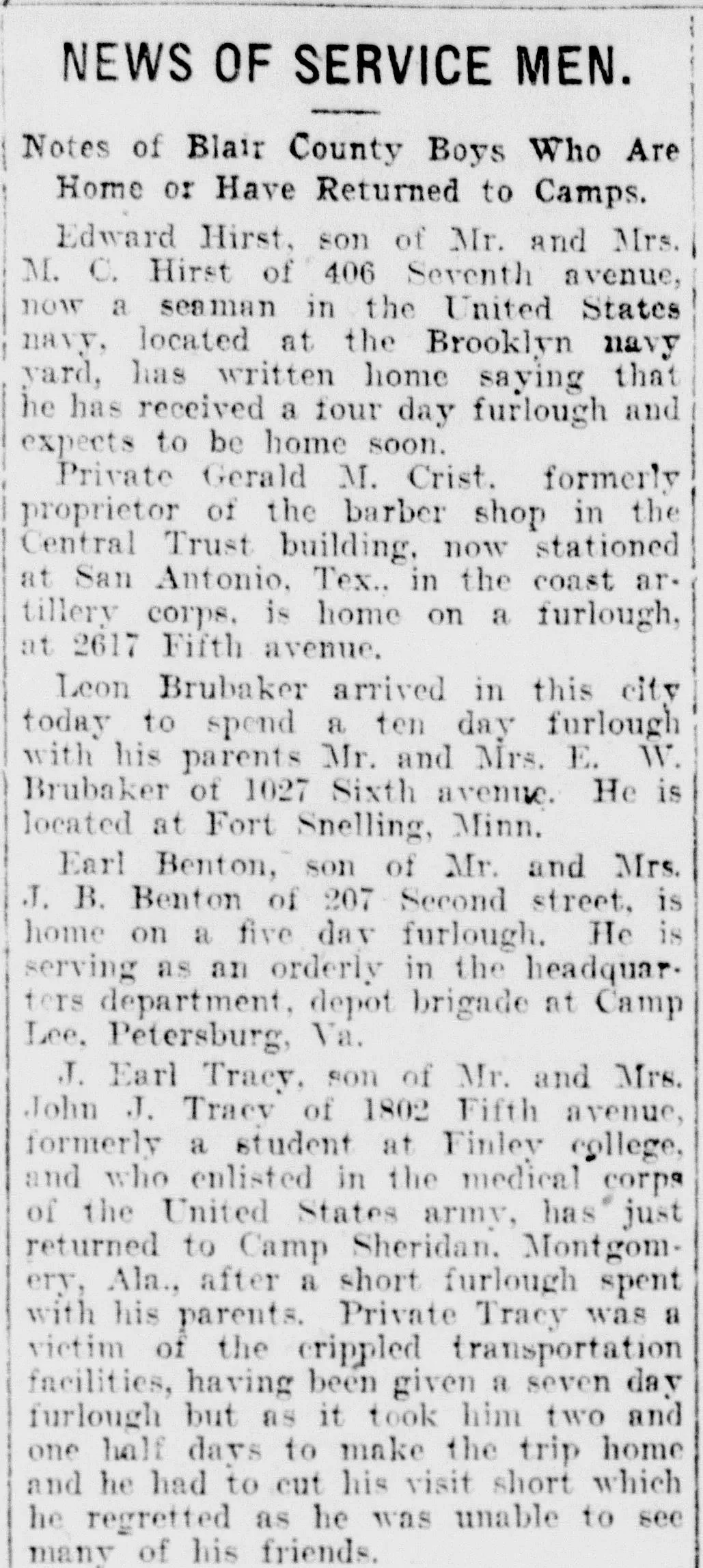
Society pages covered the people everyone in town already knew. During the war years, that meant tracking who had enlisted, who was home on furlough, and who hadn't come back yet.
When you scan society columns, watch for phrases like:
"entertaining in honor of" a recently enlisted son
"returning home on furlough"
"stationed at" a named location
"recently called to service"
"safe return" of a local man
A single society mention can reveal a service date, a training camp location, or a family relationship that doesn't appear anywhere in official records.
2. Casualty Lists
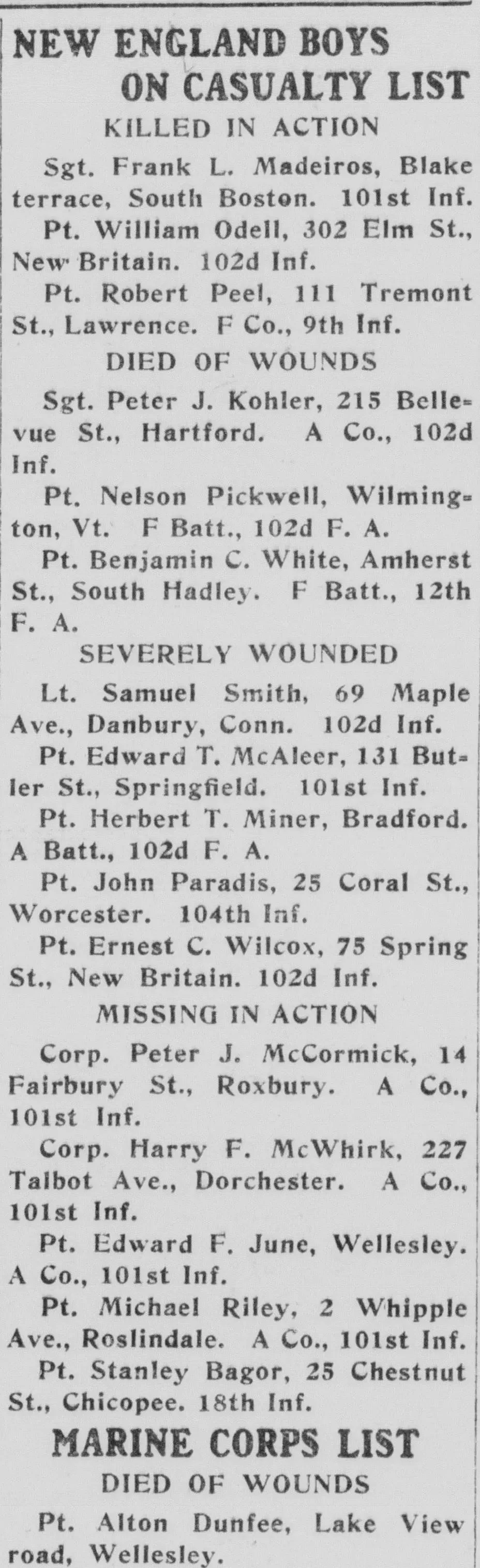
Local and regional papers published casualty lists regularly, often in the same spot each week. These columns reported soldiers who were wounded, missing, or killed, and they sometimes included rank, unit, and hometown.
Common headings to look for:
"Roll of Honor"
"Killed in Action"
"Wounded in Service"
"Missing in Action"
"Gold Star Honor Roll"
Search by surname and state. If your ancestor had a common name, check both hometown papers and larger regional publications. Casualty lists were often reprinted across multiple papers, so the same name may appear in several places.
3. Honor Rolls
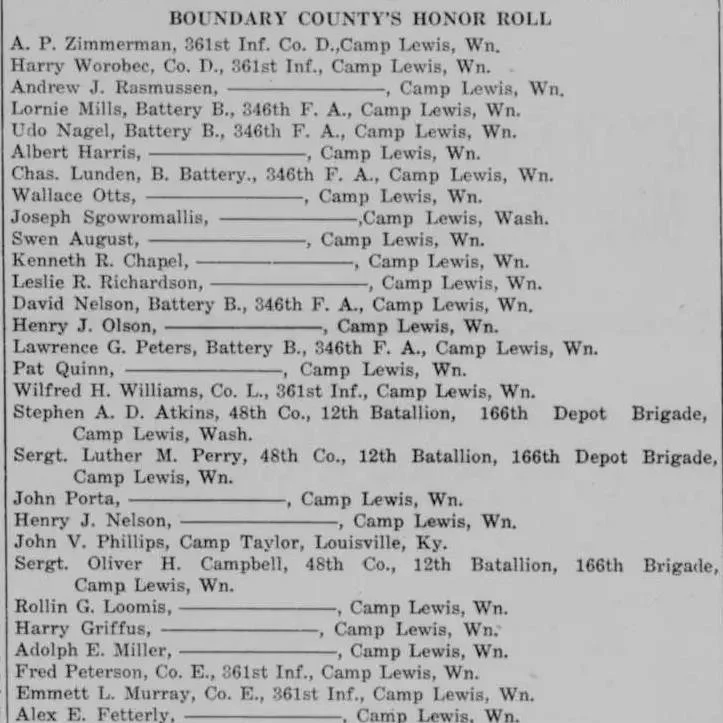
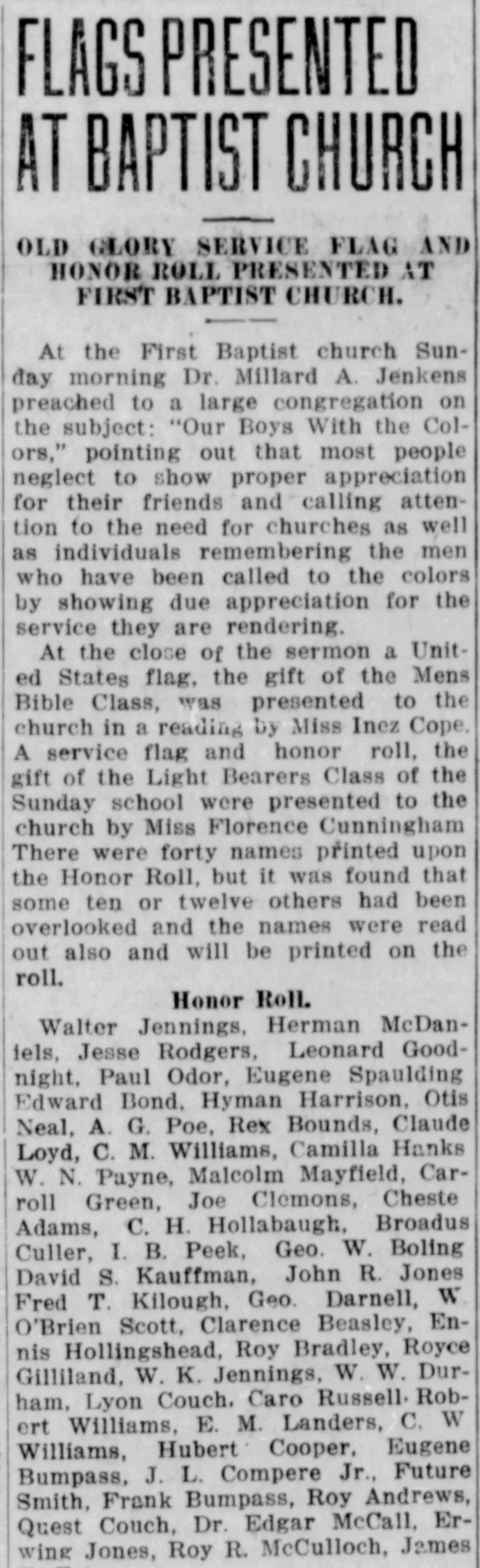
Towns published honor rolls with pride, sometimes listing every local serviceman on a single page. These columns often included rank, branch, and unit, and some communities produced special commemorative editions around holidays or major wartime milestones.
Look for headings like:
"Our Boys in Service"
"Sons in Uniform"
"Service Honor List"
"Community Heroes"
"Pride of Our Town"
If your ancestor came from a small town, there's a reasonable chance his name appeared in one of these lists. Small-town papers were particularly thorough about naming their own.
4. War News Briefs
These short columns and sidebars covered quick updates: troop movements, promotions, battle mentions, and local connections to major military events. Because they were brief, they can be easy to overlook, but they sometimes contain specific unit designations, location references, or timeline details that help fill in gaps between official records.
Watch for phrases like:
"recently promoted to"
"served with distinction"
"transferred to new unit"
"awarded for bravery"
"reported among those present"
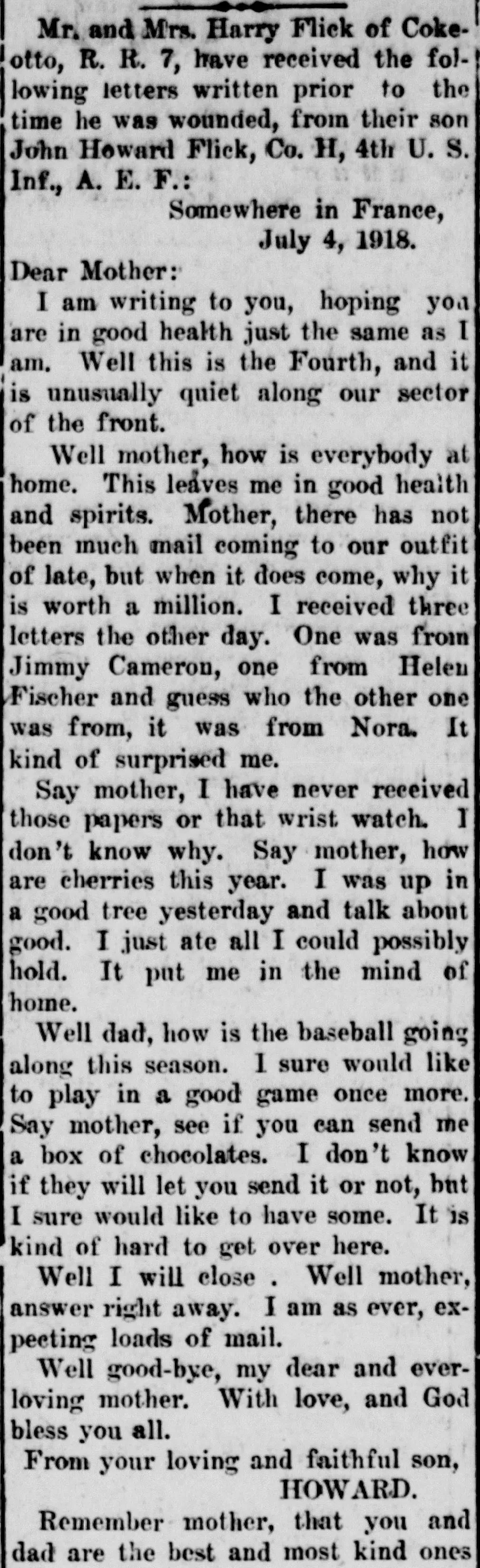
5. Soldier Letters Home
Many newspapers printed excerpts or full letters sent by local soldiers. These columns are among the most personal records you can find. They're written in the soldier's voice, describing training camps, daily life overseas, and sometimes the war itself.
Common headings include:
"Letters from Our Boys"
"Word from the Front"
"Messages from Camp"
"From the Trenches"
"A Letter from France"
If you don't know whether your ancestor's letters were printed, try searching by regiment or camp name. Newspapers sometimes grouped letters from multiple men in the same unit together.
6. Draft Registration Notices
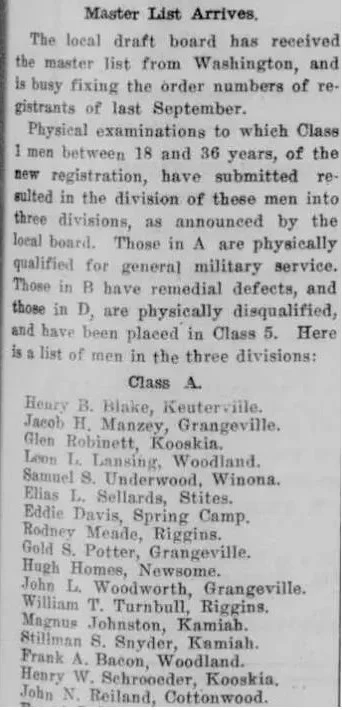
In the months leading up to and during the war, newspapers published announcements about registration dates, who was required to register, and sometimes lists of those who complied. Some communities even printed registrants' names, which can help confirm residency and timelines alongside a draft registration card.
Some papers went further than announcing registration dates. The example above shows a local draft board dividing registrants into Class A (fit for service), Class B (remedial defects), and Class D (disqualified), with individual names and hometowns printed for each category.
Look for headings like:
"Registration Day Announced"
"All Men Must Register"
"Selective Service List"
"Those Who Registered"
"Local Registration Results"
7. Military Send-Offs and Parades
Before young men left for training camps, towns organized public send-offs. Newspapers covered these events in detail and sometimes listed every participant. Coverage often noted the departure date, the destination camp, and the names of family members who came to see them off.
Headlines to watch for:
"Boys Leave for Camp"
"Crowd Gathers at Depot"
"Public Banquet Held for Recruits"
"Farewell Ceremony"
"Grand March to Station"
These stories offer a window into the moment your ancestor left home. If you can find one, it's often worth including in a family history.
8. Welcome Home Celebrations
Just as they covered departures, newspapers documented returns. Welcome-home mentions might appear in society news or as featured local stories. Look for the return date, details about injuries or medals, and any mention of post-war plans.
Common headings include:
"Heroes Return Home"
"Our Boys Are Back"
"Veteran Receives Warm Welcome"
"Safe Return from Overseas"
These columns also show how a community honored its veterans, which can add meaningful context to a family story.
9. Obituaries and Memorial Columns
If your ancestor died in service, newspapers are often where those details first became public. Obituaries from this period frequently mentioned military service, station location, and circumstances of death. Some included letters from officers or fellow soldiers describing what happened.
War memorial columns, especially around Armistice Day, sometimes revisited a soldier's story years later and added new details.
If searches keep coming up empty, NewspaperArchive's obituary search checklist covers what to try when nothing shows up.
10. Camp Newsletters and Syndicated Camp Columns
Some training camps had their own columns that were syndicated in local papers. These featured unit updates, training milestones, and sometimes rosters of recent arrivals, which makes them useful for tracking movement over time.
Look for headings like:
"News from Camp"
"Recent Arrivals"
"Unit Activities"
"From the Barracks"
These columns often included names of soldiers completing training phases, receiving promotions, or being reassigned, details that rarely show up anywhere else.
11. Red Cross and War Relief Reports
Newspapers published regular columns listing donors, volunteers, and local activities tied to the Red Cross and Liberty Loan Drives. These are especially useful for tracing women and older family members who stayed home during the war.
Look for headings like:
"Red Cross Report"
"Liberty Loan Contributors"
"War Relief Donors"
"Women's War Work"
"Home Front Heroes"
If you're researching a mother, wife, or sister from a WWI-era family, these columns may be the best newspaper record you'll find for her.
12. Church News and Bulletins
Church columns mentioned members serving overseas, printed prayers for local soldiers, and shared updates from military chaplains. These sections are often overlooked but offer a community-centered view of how a congregation understood the war and its losses.
Watch for headings like:
"Church Members in Service"
"Service Stars"
"Church Honor Roll"
"Memorial Service"
"From the Chaplain"
Small-town churches often tracked their members closely, and a church column might include a detail, like a regiment name or a posted address, that opens a new line of research.
13. Business and Employment News
Papers sometimes printed lists of workers who left jobs to enlist, or companies that contributed to patriotic funds. If your ancestor worked for a significant local business or factory, his name might appear in a workforce honor list.
Look for headings like:
"Workers Answer the Call"
"Company Honor Roll"
"Employees in Service"
"Factory War Workers"
"Workplace Send-Off"
These columns sometimes noted the employer, the occupation, and whether the job would be held for the returning veteran.
14. Veterans' Columns (Post-Armistice)
After the war ended, many newspapers ran regular features for local veterans covering reunions, disability benefits, VA announcements, and American Legion news. These columns, especially through the 1920s and 1930s, are valuable for tracing what happened to an ancestor after he came home.
Common headings include:
"Veterans' News"
"Ex-Service Men"
"American Legion Post"
"Veterans' Reunion"
"Disability Benefits"
"Old Soldiers Gather"
Don't stop your newspaper search at 1918. A veteran might appear in these columns for decades.
15. Overseas Death and Burial Notices
Separate from obituaries, these were often brief announcements about the return of remains or burial arrangements. They can confirm death and burial details and sometimes appeared months or even years after the original death notice, as the process of returning bodies from overseas was slow and complicated.
Watch for headings like:
"Body to Arrive"
"Remains Returned"
"Repatriation Notice"
"Final Homecoming"
"Memorial Burial Service"
If you know an ancestor died overseas, check for a follow-up burial notice several years after the war ended.
16. War Poetry and Community Tributes
Local poets and writers responded to war events with published verse and tributes. You might find a poem written for a specific soldier by name, or a memorial to local men lost in action. These pieces appeared around Memorial Day, Armistice Day, and anniversaries of notable losses.
Look for headings like:
"In Memory Of"
"A Tribute to Our Boys"
"Memorial Verse"
"Lines Written for"
"In Honor of Local Heroes"
These aren't research records in the traditional sense, but they can tell you how a community mourned and what a person meant to the people who knew him.
17. Women's and Auxiliary Columns
These sections covered service by women as nurses, clerks, and volunteers. Groups like the Women's Auxiliary, Gold Star Mothers, and the Salvation Army were regularly featured. If a female ancestor was involved in war relief work, overseas nursing, or a local auxiliary, she may appear here.
Look for headings like:
"Women's War Work"
"Auxiliary News"
"Gold Star Mothers"
"Nurses Overseas"
"Women's Service League"
These columns sometimes named women who traveled overseas or led local fundraising efforts, details that rarely appear in any other historical record.
18. Editorial Cartoons and War Illustrations
Editorial cartoons and illustrated news aren't research records, but they can provide useful context for storytelling and for understanding how the war was portrayed in the community where your ancestor lived. If you're building a family history document or presentation, a period cartoon from the local paper can help set the scene.
19. Wartime Advertisements
Wartime ads reflect the economic and emotional climate of the era. Businesses promoted products with patriotic slogans, encouraged war bond purchases, and highlighted goods for soldiers overseas. These can help you understand the daily life your ancestor's family experienced at home, even if they don't name individuals directly.
Why Small-Town Newspapers Are Worth Searching
Larger city papers covered the war broadly. Small-town papers covered it personally.
A community paper in rural Indiana or western Kansas was likely to name every man from the county who enlisted, print their letters home, report on their furloughs, and publish their obituaries if they didn't come back. Those papers named ordinary people the way city papers simply didn't.
NewspaperArchive has a particularly strong collection of small-town and rural newspapers, including many titles that aren't available anywhere else. If your ancestor came from a small community, the local paper may hold more detail about his wartime experience than his military records do.
Frequently Asked Questions
What newspaper sections are most useful for WWI genealogy research? Society columns, casualty lists, honor rolls, and soldier letters are often the most detailed for individual ancestors. Veterans' columns are valuable for post-war research. Small-town papers tend to cover individuals more thoroughly than large city papers.
Did newspapers publish names of WWI soldiers? Yes. Local papers regularly published names of men who enlisted, appeared on honor rolls, were listed as casualties, wrote letters home, and attended reunions after the war. The level of detail varied by paper, but small-town and community newspapers were often thorough.
How do I find a WWI ancestor in a newspaper if I don't know exactly when he served? Start with what you know: his name, his hometown, and the general war years (1917–1919 for U.S. service). Search with a wide date range and look at the local papers from his county. Try name variations if the first search doesn't return results. If spelling is a recurring problem, NewspaperArchive's guide to searching name variants in historical newspapers covers strategies that can help.
Can newspapers tell me where a WWI soldier was stationed? Often yes. Society columns, soldier letters, send-off coverage, and camp columns frequently named specific training camps and overseas locations. Draft registration notices and casualty lists sometimes included unit information as well.
What if my ancestor died in WWI? What newspaper records might exist? Look for an initial death notice or casualty list entry, a formal obituary, a memorial column around Armistice Day or Memorial Day, a burial or repatriation notice if his remains were returned, and any tribute poetry or community remembrance published in the years after the war.
Where to Start Your Search
The 19 sections in this post show up across thousands of newspapers, but not every paper is available in every archive. NewspaperArchive includes coverage from all 50 states and a strong collection of small-town titles, many of which exist nowhere else online.
If you have a name, a hometown, and a general time frame, start there. Search the local county paper first, then widen to nearby town papers and regional publications. The clue you need is often in a column that was never meant to be a genealogy record.