America250 Genealogy Research Checklist: 10 Newspaper Searches to Try
A practical checklist of 10 newspaper searches that connect your family history to the American Revolution and the founding era, with search tips for pension notices, DAR records, July 4th coverage, and more.
Historical newspapers contain genealogy records that connect families to the American Revolution across multiple generations, not just the war years themselves. Useful record types include pension notices from 1818 and 1832, veteran tributes published through the 1870s, DAR and SAR membership announcements from the 1890s onward, July 4th celebration coverage, 1876 Centennial retrospectives naming founding families, Revolutionary War obituaries, veterans' reunion coverage, women's pension and mourning notices, Loyalist property records, and historical retrospective columns. Many of these records appear in small-town newspapers and are searchable in NewspaperArchive, which includes more than 280 million pages dating to 1607.
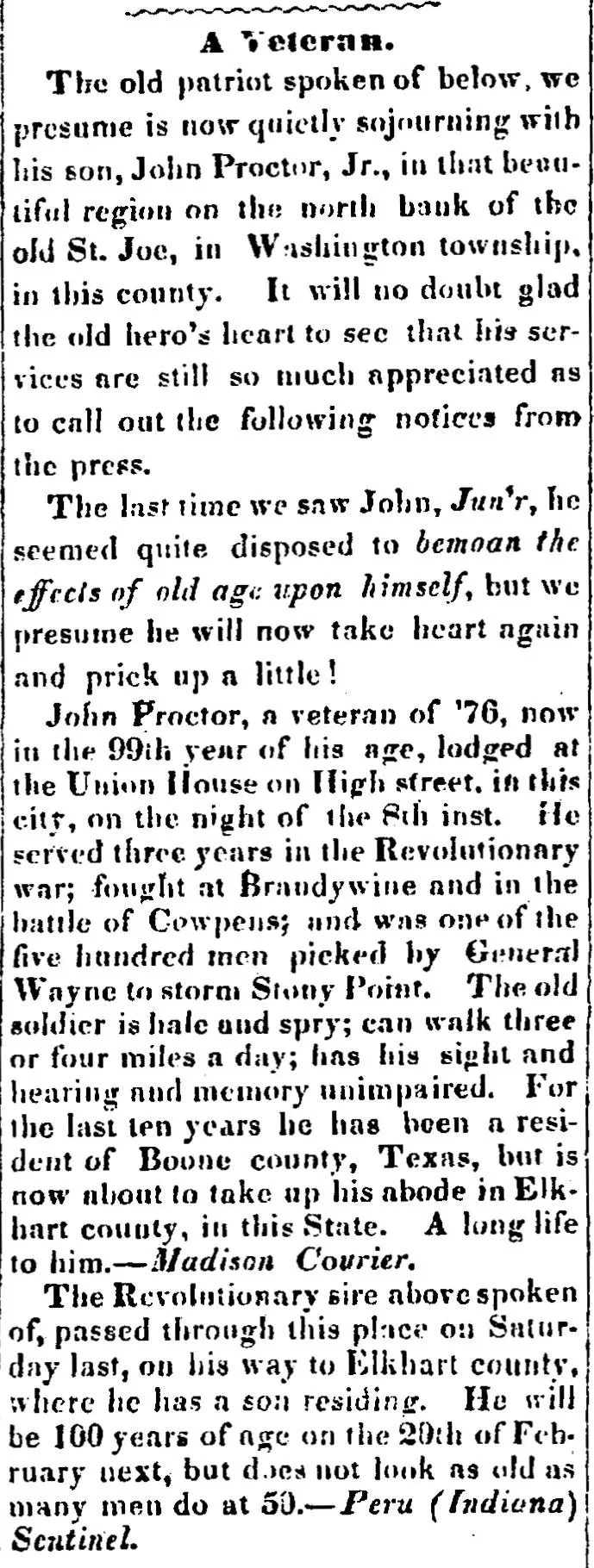
In 1851, a newspaper in Goshen, Indiana, ran a short item about a man named John Proctor. He was 99 years old, still walking three or four miles a day, his memory unimpaired. He had fought at Brandywine, at Cowpens, and had been one of five hundred men chosen by General Wayne to storm Stony Point. He was a veteran of 1776, and three newspapers were still talking about him nearly seven decades after the Revolution ended.
That clipping exists at NewspaperArchive right now. So does the story of your ancestor.
America250 is a good moment to ask what your family was actually doing during the founding era and the generations that followed. Old newspapers are one of the best places to find out. They named ordinary people: veterans, community members, new arrivals, local business owners, women who joined civic organizations, and families who showed up at centennial celebrations. Most of that coverage has never been indexed anywhere else.
This checklist gives you ten specific searches to try. Each one targets a different type of newspaper record from the Revolutionary era and beyond. You do not need to try all ten at once. Start with the one that matches what you already know and see where it takes you.
Quick Answer
Historical newspapers contain records that connect families to the American Revolution and the founding era across many generations, not just the war years. Useful record types include pension notices, veteran tributes, DAR and SAR membership announcements, July 4th celebration coverage, 1876 Centennial retrospectives, and obituaries that note Revolutionary War service. Many of these records appear in small-town papers decades after the Revolution ended and are searchable today at NewspaperArchive.
The 10 Searches
Search 1: Your Surname Plus "Veteran of '76"
Newspapers well into the mid-1800s used the phrase "veteran of '76" to identify men who had served in the Revolution. Search your ancestor's surname alongside that phrase and cast a wide date range, from 1800 through the 1860s. You may find tributes, travel notices, death notices, or community items you would never locate by searching the war years alone.
What to look for: The name, the county or township, the battles mentioned, and any family members named alongside the veteran.
Search 2: Pension Application Notices
After Congress passed the pension acts of 1818 and 1832, newspapers frequently published notices when local veterans applied for or received Revolutionary War pensions. These notices often named the veteran, his age, his county, and sometimes his unit or the battles he fought in. Some states published full pension lists in local newspapers, naming every pensioner by name and rank.
Look closely at those lists. Women appear in them, too. The 1824 Maryland pension list below names Margaret Bruff, widow of Captain J. Bruff, and Mary King, wife of J. King, both of whom are listed among the state's Revolutionary War pensioners. Most researchers never think to search pension lists for female ancestors. This clipping is a good reason to start.
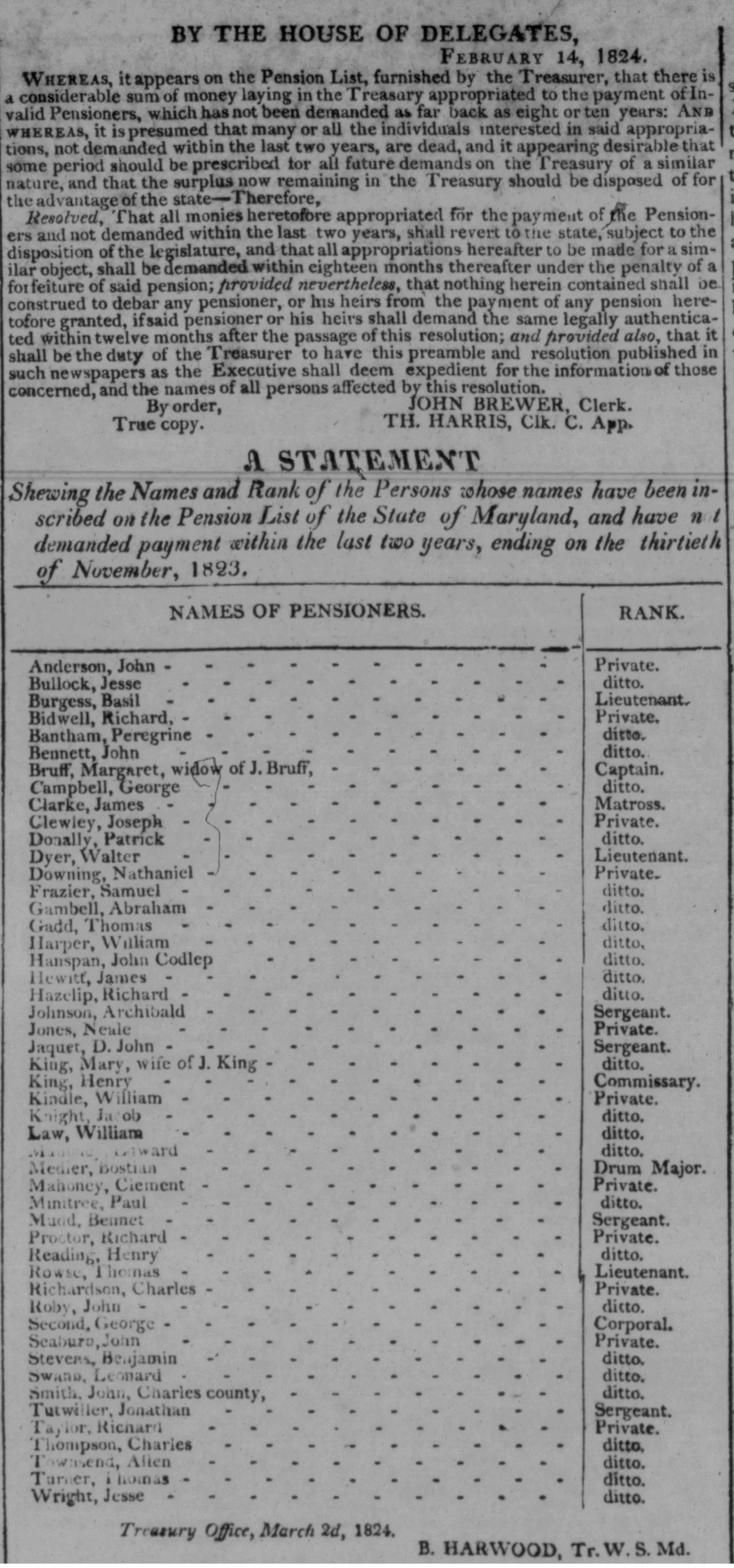
Search your ancestor's name or county alongside words like "pension," "Revolutionary soldier," or "declaration." Small-town papers are especially useful here because they covered local pension activity that larger city papers ignored. If you find a woman on a pension list, follow her to Search 8 for more on what newspaper records exist for female ancestors in the founding era.
Search 3: DAR and SAR Membership Announcements
Beginning in the 1890s, local newspapers regularly published announcements when community members joined the Daughters of the American Revolution or the Sons of the American Revolution. These items often named the ancestor through whom membership was claimed, which gives you a direct newspaper reference to a Revolutionary era connection.
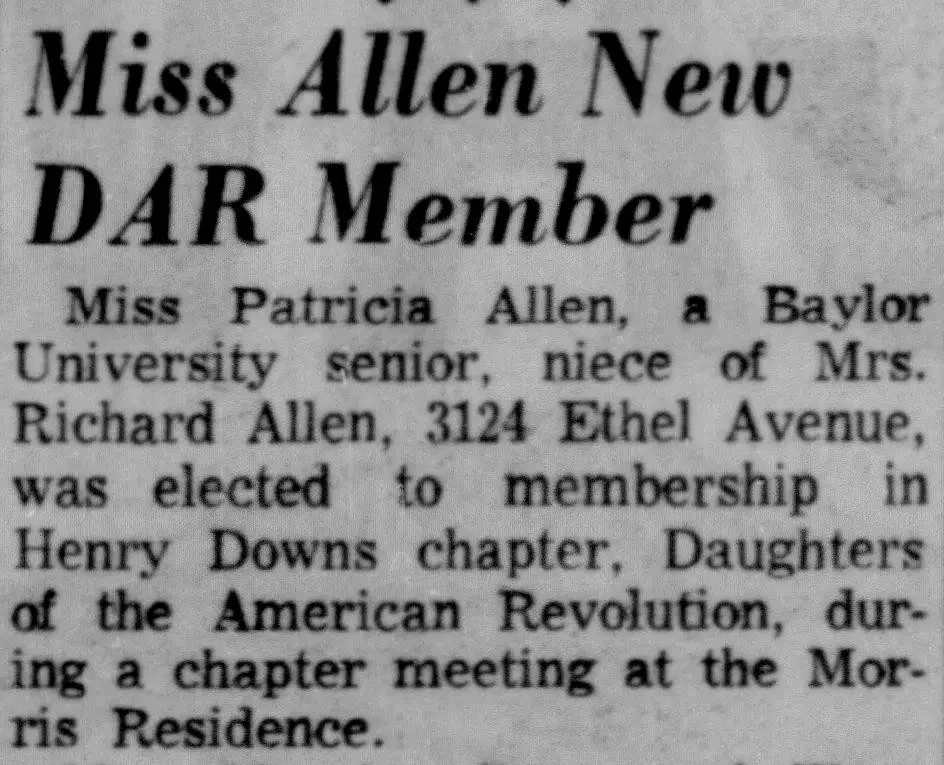
The 1955 clipping above is a good example of how these notices work. Miss Patricia Allen, a Baylor University senior, niece of Mrs. Richard Allen. Four sentences that name multiple people, multiple relationships, and a specific DAR chapter. A researcher finding this notice today has a named person, a named family connection, and a chapter name to search further.
Search your family surname alongside "Daughters of the American Revolution," "Sons of the American Revolution," "DAR," or "SAR." A membership announcement in a small-town paper from 1905 or 1955 can point you straight back to a founding era ancestor you may not have known existed. These notices appear across a very wide date range, from the 1890s through the mid-twentieth century.
Search 4: July 4th Celebration Coverage
Fourth of July newspaper coverage named people. Parade marshals, platform speakers, honored veterans, essay contest winners, and visiting dignitaries all showed up in local Independence Day reporting. In the 1800s and early 1900s, the oldest living veteran in a community was frequently named and celebrated by name, age, and service record in July 4th coverage.
Search your ancestor's name or hometown alongside "Fourth of July," "Independence Day," or "celebration" and look through late June and early July issues across a range of years.
Search 5: 1876 Centennial Coverage
The 1876 Centennial was the first major national anniversary of American independence, and local newspapers across the country marked it with retrospectives that named founding families, old settlers, and community members with deep roots. These items are an overlooked resource for connecting families to the Revolutionary era.
Search your family's county or hometown newspapers from 1876 alongside terms like "centennial," "old settler," "pioneer family," or "founding." You may find your ancestors named as part of the community's founding story in ways that no other record type captures.
Search 6: Revolutionary War Obituaries
Obituaries for men who served in the Revolution appeared in newspapers from the 1810s through the 1870s as the last survivors of the war died. These obituaries often included service details, battle names, unit information, and family relationships not found in pension records or military files.
Search your ancestor's name alongside "Revolutionary War," "soldier of the Revolution," or "War of Independence" in obituary columns. Widen your date range further than you think you need to. The last verified Revolutionary War veteran died in 1869, which means these obituaries span more than fifty years of newspaper publishing.
Search 7: Veterans' Reunion and Association Coverage
In the decades after the Revolution, surviving veterans and their descendants formed reunion associations and held annual gatherings. Local newspapers covered these events and frequently published full attendance lists, speeches, and tributes that named individual veterans and their families.
Search for reunion coverage using terms like "Revolutionary soldiers," "survivors of the Revolution," or the name of your ancestor's regiment or unit. State and county histories sometimes mention these reunions, which can help you identify the right time period and newspaper to search.
Search 8: Women in Founding Era Newspaper Coverage
Women connected to the Revolutionary era appear in newspapers more often than most researchers expect. Widows' pension notices, mourning notices, property transfer notices, and social columns all named women by name. DAR membership announcements, which name the female applicant and her Revolutionary ancestor, are especially useful.
Search your female ancestor's name alongside "widow," "relict," "pension," or "Daughters of the American Revolution." A widow's pension notice from the 1830s can confirm a marriage, a husband's service record, and sometimes the names of children, all in one short item. If you found a woman named in the pension list clipping under Search 2, this is where to follow that lead.
Search 9: Loyalist and Property Notices
Not every family in 1776 supported the Revolution, and newspapers recorded that too. Property confiscation notices, banishment orders, and loyalty oath records appeared in colonial and early American newspapers. After the war, some Loyalist families returned, and their reintegration into communities was occasionally noted in local papers.
If your family has roots in areas with strong Loyalist populations, such as parts of New York, New Jersey, the Carolinas, or Georgia, search for your surname alongside "loyalist," "tory," "confiscated," or "loyalty." These are not common finds, but when they appear, they can reframe your entire understanding of a family's founding era story.
Search 10: "Years Ago" Columns and Historical Retrospectives
Many newspapers published regular columns looking back at local history: "50 Years Ago," "75 Years Ago," "100 Years Ago." These columns frequently reprinted or summarized earlier items about community members, veterans, and founding families. A "100 Years Ago" column from 1876 might reprint an item about your ancestor from 1776. A column from 1926 might summarize a story that connects to an earlier Revolutionary generation.
Search your ancestor's name in combination with phrases like "years ago," "in this county," or "early settler." These columns are easy to miss but can surface records from much earlier papers that no longer exist in full.
How to Use This Checklist
You do not need to try every search at once. Start with what you know.
If you have a name and a state, try Searches 1 and 2 first. If you have a female ancestor from the late 1800s or early 1900s, try Search 3 and Search 8. If your family has been in the same county for generations, try Search 5 and Search 10.
Each search works best when you vary your spelling, widen your date range, and look beyond the obvious years. The John Proctor clipping that opened this post was published 68 years after the Revolution ended. The record you need may be sitting in a paper from a decade you never thought to search.
If you have a name, a place, or a date to start with, try searching NewspaperArchive and see what the local papers recorded about your family's American story.
Frequently Asked Questions
How far back do newspaper records go for Revolutionary War research? NewspaperArchive includes content dating to 1607, making colonial-era newspapers searchable alongside records from the Revolution itself and the generations that followed. For Revolutionary War research specifically, the most useful records tend to appear between 1776 and the 1870s, when the last surviving veterans died.
Can I find a Revolutionary War ancestor in a newspaper if I don't know exactly where they lived? Yes, with some patience. Start with what you know: a surname, a state, a general region. Search those terms across a wide date range and look for pension notices, veteran tributes, and DAR or SAR membership announcements that match. Each find can narrow your search further.
What if my ancestor didn't serve in the Revolution? Can old newspapers still connect my family to the founding era? Yes. July 4th coverage, centennial retrospectives, old settler profiles, and community history columns named ordinary people who lived through the founding era, even if they never served in the military. Women, merchants, farmers, and community members of all kinds appeared in this coverage.
Why do Revolutionary War records keep appearing in newspapers decades after the war ended? Because veterans lived long lives and newspapers tracked them. Pension legislation in 1818 and 1832 generated new notices. Anniversary coverage in 1826, 1876, and beyond named surviving veterans and their descendants. Obituaries marked the deaths of the last survivors well into the 1860s. The newspaper record of the Revolution spans nearly a century of publishing.
Are small-town newspapers useful for Revolutionary War research? Often more useful than large city papers. Small-town papers named local veterans, covered community pension applications, published DAR and SAR membership notices, and ran retrospectives about founding families in their counties. NewspaperArchive is especially strong in small-town newspaper coverage, which makes it a practical starting point for this kind of research.
Your Family's American Story Is in There Somewhere
John Proctor was nearly 100 years old when three Indiana newspapers passed his story from one to the next. He had fought at Brandywine and Cowpens and Stony Point, and the papers wanted their readers to know it.
Your ancestor may not have fought at Stony Point. But they were somewhere in 1776, and in the years that followed, and in the small communities where newspapers recorded who showed up, who served, who joined, who celebrated, and who was worth remembering.
The searches on this checklist are starting points. Follow the ones that match what you already know, and let the clippings point you toward what you don't.