What Old Newspapers Actually Reported About America's Most Haunted Places: Part 2
Old newspapers covered America's most haunted places long before ghost hunting shows did. Here's what they reported, and what family historians can still find and search today.
Historical newspapers documented America's most famous haunted locations through original news coverage, obituaries, death notices, and feature reporting. The RMS Queen Mary's 1936 maiden voyage was covered extensively by wire services. The Lizzie Borden murders of August 4, 1892, generated years of detailed coverage in Boston and Fall River papers. The Stanley Hotel's 1909 opening in Estes Park was announced in local Colorado papers. Weston State Hospital death notices appeared in West Virginia papers, including the Grafton Sentinel. The Whaley House and Winchester Mystery House were covered in California papers dating to the 1850s and 1880s, respectively. Researchers can search NewspaperArchive by institution name, family surname, county, and date range to find records connecting real people and families to these locations.
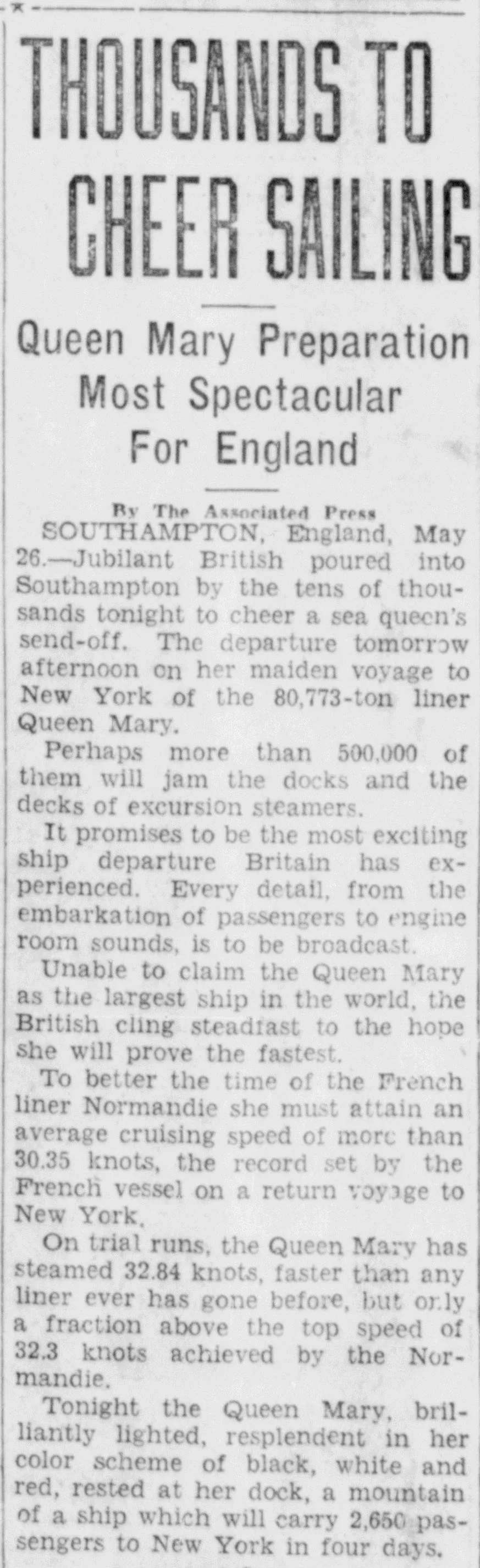
The Queen Mary left Southampton on May 27, 1936, carrying 2,650 passengers to New York. Hundreds of thousands of people lined the docks to watch her go. Seventy years later, she sits permanently moored in Long Beach, California, and the ghost tours run nightly.
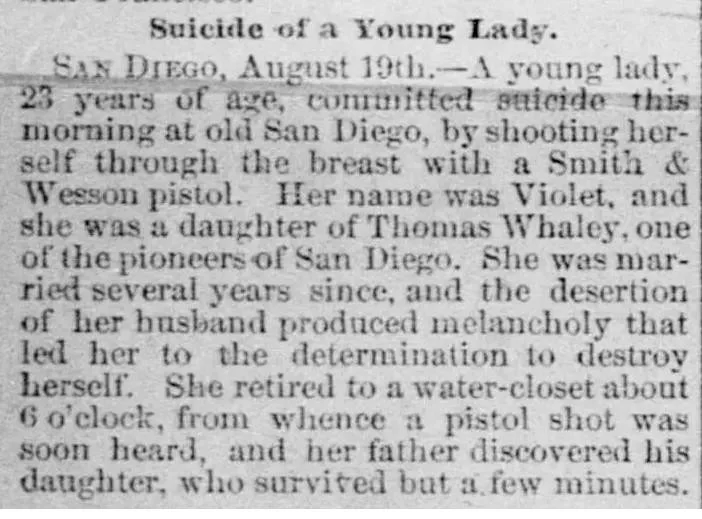
Newspapers covered her departure as a national event. They covered Lizzie Borden's arrest the same way in 1892. And the Stanley Hotel's opening in 1909. And a young woman named Violet Whaley, who died at her father's house in San Diego in August 1885.
This is the second post in a series about what old newspapers actually reported about America's most haunted places, and what family historians can still find in those records today. Part 1 covered the Myrtles Plantation, the Villisca ax murders, Waverly Hills Sanatorium, and Eastern State Penitentiary. This post covers six more.
The ghost stories came later. The newspaper record came first.
Quick Answer
Historical newspapers documented the RMS Queen Mary, the Lizzie Borden house, the Stanley Hotel, the Trans-Allegheny Lunatic Asylum, the Whaley House, and the Winchester Mystery House through original news coverage, death notices, and feature reporting. Searching NewspaperArchive by location, family name, and date range can surface records that connect real people and families to these places.
RMS Queen Mary, Long Beach, California
The Queen Mary was launched on September 26, 1934, from the John Brown shipyard on the River Clyde in Scotland, christened by Queen Mary herself in a ceremony attended by King George V. She did not make her maiden voyage until May 27, 1936, after two years of fitting out. By the time she departed Southampton that morning, hundreds of thousands of people lined the docks to watch her go.
Newspapers covered the departure as a national event. The 80,773-ton liner was carrying 2,650 passengers to New York. She was brilliantly lit, dressed in her color scheme of black, white, and red, and she was expected to challenge the French liner Normandie for the fastest Atlantic crossing. She did, winning the Blue Riband that August.
The Queen Mary served as a troopship during World War II, transporting nearly 810,000 troops and earning the nickname the Grey Ghost for her speed and her battleship-grey wartime paint. She retired from transatlantic service in 1967 and has been permanently moored in Long Beach, California, ever since, operating as a hotel, museum, and event venue.
For family historians, the Queen Mary's passenger manifests and wartime service records are worth searching alongside newspaper coverage. If an ancestor traveled on the Queen Mary between 1936 and 1967, or served aboard her during the war, newspaper records from departure and arrival ports may name them directly. Passenger arrivals were regularly covered in New York and Southampton papers, and the ship's wartime movements generated substantial press coverage on both sides of the Atlantic.
Lizzie Borden House, Fall River, Massachusetts
On the morning of August 4, 1892, Andrew and Abby Borden were found hacked to death in their home at 92 Second Street in Fall River, Massachusetts. Andrew was 69 and napping on the sitting room sofa when he was killed. Abby, his wife, was found upstairs. Their daughter Lizzie, 32 years old, was in the house.
Newspapers covered the story within hours. The Boston Daily Globe's front page that afternoon carried a stack of headlines that captured the chaos of the scene: both dead, skulls crushed, a prominent family destroyed in their own home before noon.

Lizzie was arrested on August 11, indicted by a grand jury in December, and went to trial in June 1893. She was acquitted after roughly ninety minutes of deliberation. No one else was ever charged. She lived in Fall River for the rest of her life, largely ostracized, and died in 1927 at age 66. The murders have never been officially solved.
The newspaper record around this case is extensive and runs for years. The Boston Daily Globe, Fall River papers, and wire services covered the crime, the inquest, the indictment, the trial, and the verdict in exhaustive detail. Names of neighbors, witnesses, servants, family friends, and legal figures appear throughout. If your family has roots in Bristol County, Massachusetts, or in the Fall River area during the 1890s, a search may surface a connection you did not expect.
The house on Second Street now operates as a bed and breakfast.
The Stanley Hotel, Estes Park, Colorado
Freelan Oscar Stanley came to Estes Park in 1903 after being diagnosed with tuberculosis. His doctors had told him he had months to live. The dry mountain air improved his health so dramatically that he decided to stay and build a hotel worthy of the setting.
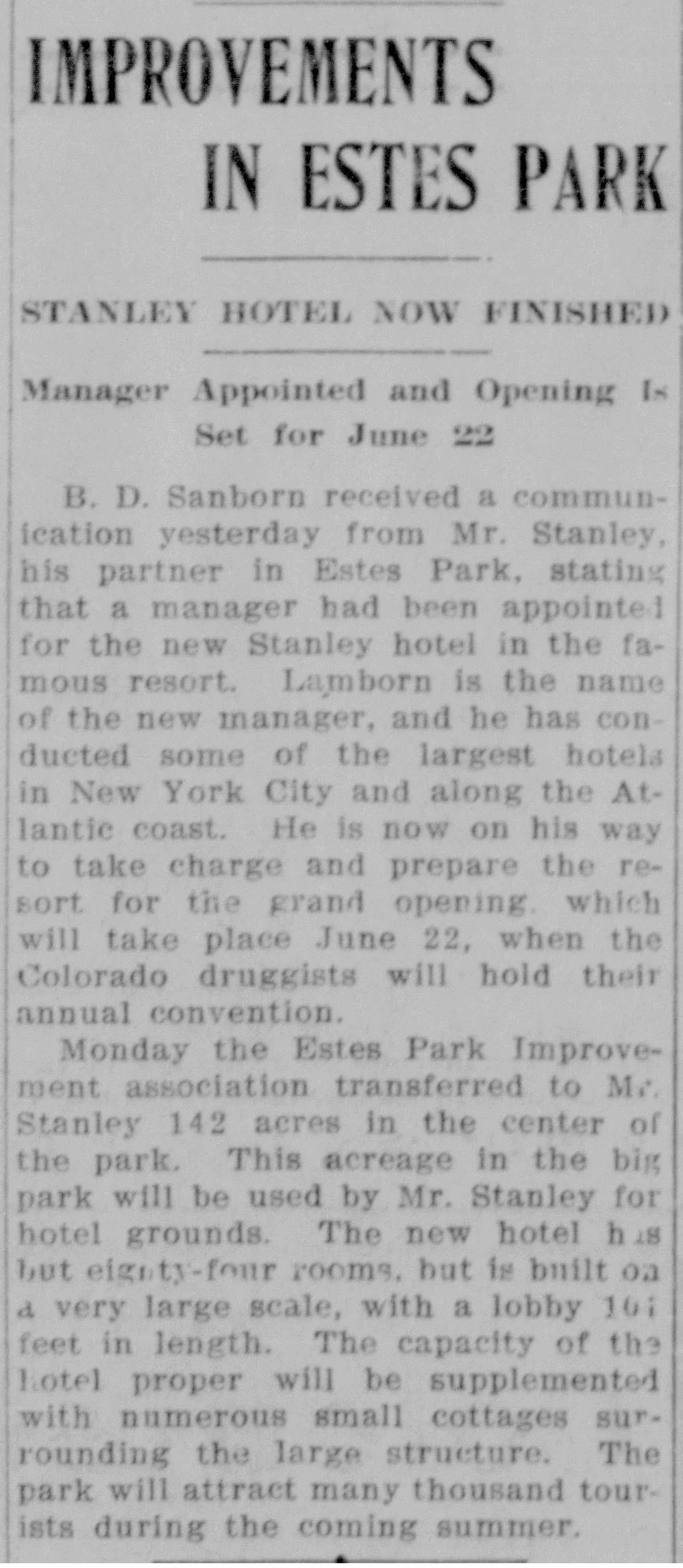
The Stanley opened on June 22, 1909. It was one of the first fully electrified hotels in the country, powered by a hydroelectric plant Stanley built on the Fall River. Every guest room had a telephone. The opening announcement in a local Colorado paper noted the new manager's arrival from New York, the room count, and a 101-foot lobby. The Colorado Pharmacal Association held its twentieth annual meeting there that first week.
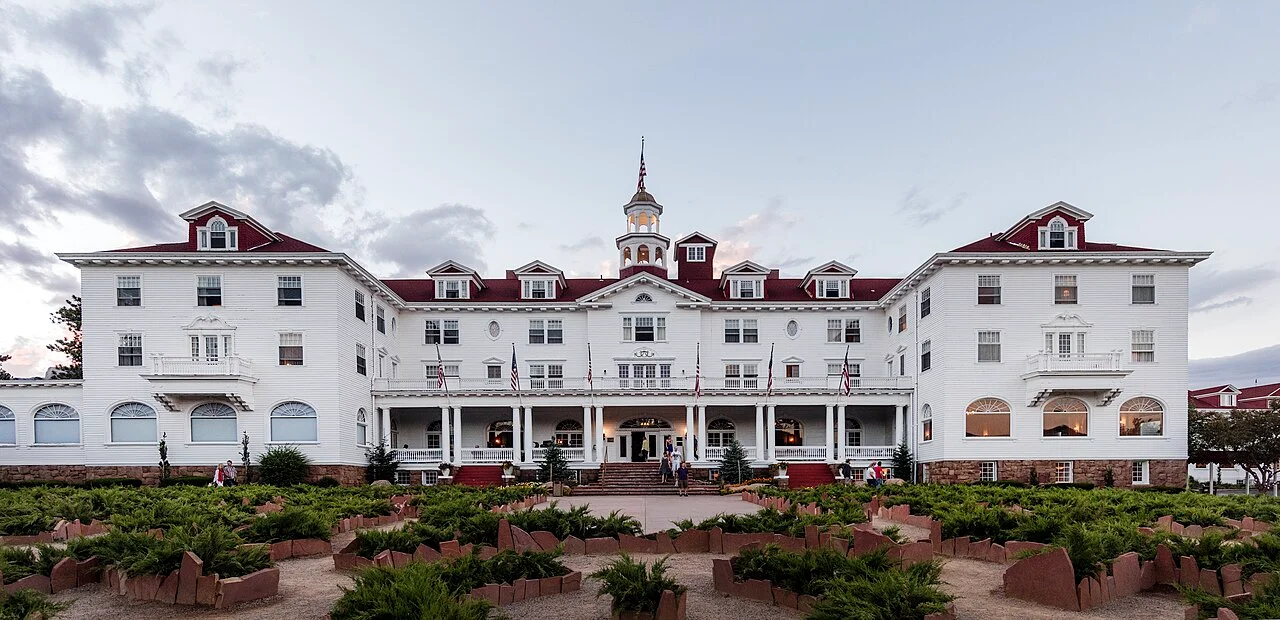
Stephen King stayed at the Stanley in 1974, in Room 217, near the end of the hotel's season. The hotel was nearly empty. The experience inspired The Shining, published in 1977. The Stanley leans comfortably into that connection today, offering daily ghost tours and featuring several rooms said to be particularly active.
For researchers, the Stanley's early years are well covered in Colorado newspapers. F.O. Stanley was a prominent figure in Estes Park, and his hotel, his hydroelectric plant, and his role in developing the town generated consistent coverage for decades. If your family vacationed in Estes Park or worked in the hotel industry in Colorado during the early twentieth century, that record is searchable.
Trans-Allegheny Lunatic Asylum, Weston, West Virginia
Virginia legislators authorized construction of Weston State Hospital in 1858. The first patients were admitted in 1864. The main building is one of the largest hand-cut sandstone structures in the world, a massive Gothic Revival complex that was originally designed to house 250 patients. By the 1950s it held nearly 2,500.
The hospital changed hands during the Civil War, ending up with West Virginia when it became a separate state. It operated for 130 years, closing in 1994 when the state moved patients to a more modern facility. After closure, it sat empty for years before being purchased at auction and reopened as a tourist attraction, now marketed under the name Trans-Allegheny Lunatic Asylum.
The newspaper record around Weston State Hospital is quieter than the record around some of the other locations in this series, but it exists. People died there, and those deaths were reported in West Virginia newspapers. In September 1929, the Grafton Sentinel carried a brief notice that Florence Davis, admitted to Weston State Hospital on May 10, 1926, had died there. The sheriff was notified at ten o'clock that morning. Efforts were made immediately to contact relatives. Her family was said to be on the way to Weston to claim her body for burial.
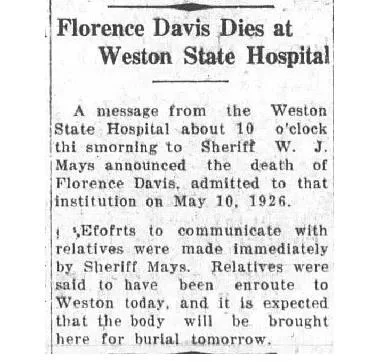
That notice is brief. It does not give Florence Davis's age, her hometown, or the names of the family members who came to collect her. But it confirms what a newspaper search can surface: real people with families who cared about them, placed in a specific institution, in a record that researchers can find. If your family has roots in central West Virginia and you have an ancestor whose trail goes cold in the early twentieth century, a search for Weston State Hospital is worth making.
Whaley House, San Diego, California
Thomas Whaley built his two-story brick house in San Diego in 1857, on a lot where a public hanging had taken place six years earlier. Yankee Jim Robinson had been hanged there in 1852 for attempting to steal a boat. Whaley reportedly heard heavy footsteps in the house from the time he moved in and wrote in letters that they sounded like they belonged to Yankee Jim.
The Whaley family's troubles did not end there. In the summer of 1885, Violet Whaley, Thomas's 23-year-old daughter, died at the family home. She had married several years earlier, and the desertion of her husband had left her in a state of despair that ended in her death on August 19, 1885. The Sacramento Daily Record-Union carried a brief notice the following day, naming her as the daughter of Thomas Whaley, one of the pioneers of San Diego, and noting that her father had discovered her.
Thomas Whaley himself died in 1890. His wife Anna followed in 1913. The house served at various points as a store, a courthouse, a theater, a granary, and a billiard room before San Diego County reclaimed it in 1960 and restored it as a museum. In the early 1960s, the U.S. Commerce Department designated it as officially haunted, one of only a handful of structures in the country to hold that distinction.
For researchers, the Whaley family has a documented presence in San Diego newspapers going back to the 1850s. Thomas Whaley was a prominent businessman and early settler, which means his name surfaces regularly in property records, legal notices, and local news items of the era. A search for Whaley in San Diego-area papers, paired with a date range from the 1850s through the early 1900s, is likely to return more than ghost stories.
Winchester Mystery House, San Jose, California
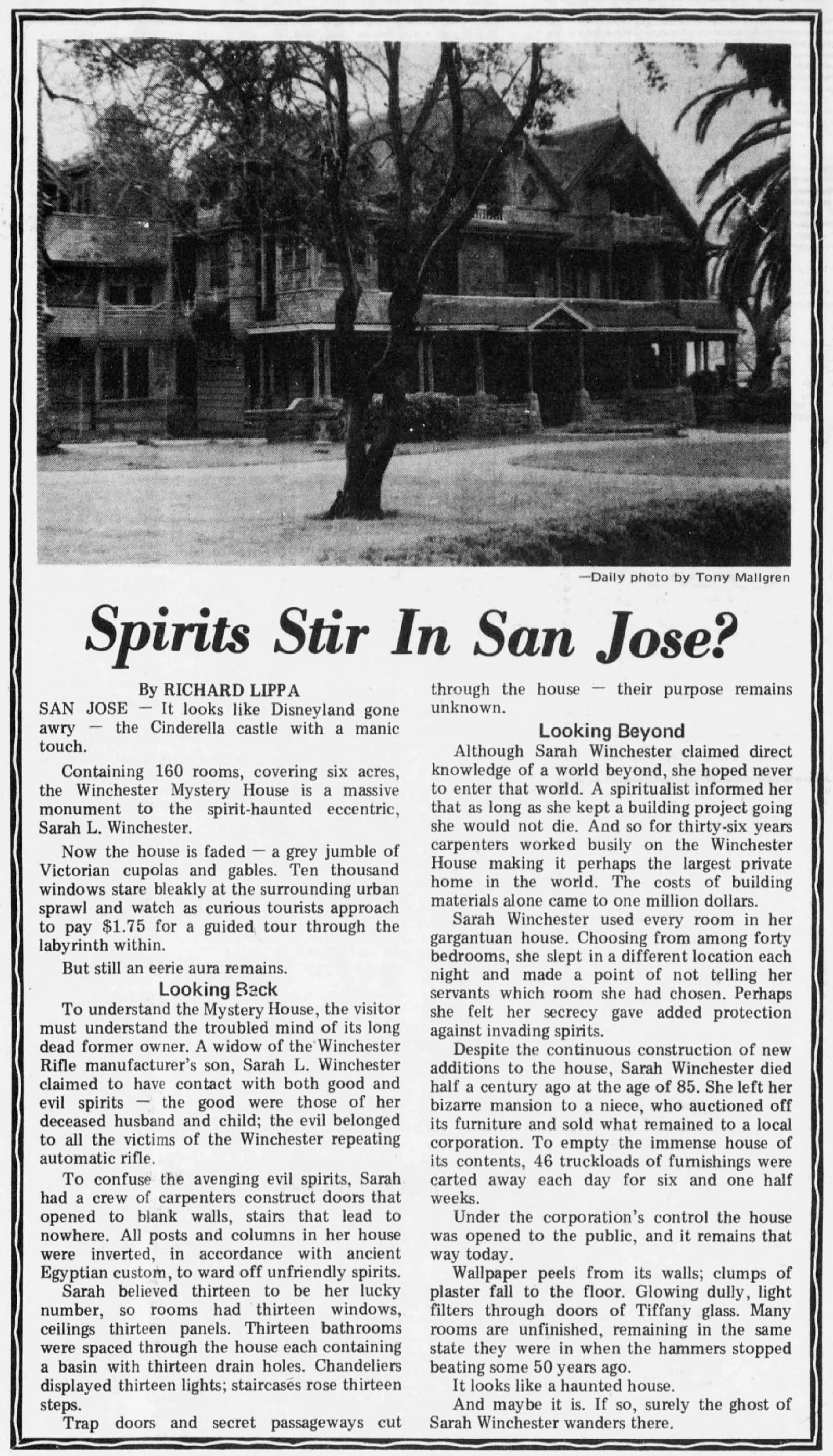
Sarah Winchester began building in 1884, two years after the death of her husband William Wirt Winchester, son of the manufacturer of the Winchester repeating rifle. A medium had reportedly told her that the spirits of those killed by Winchester rifles were haunting her and that she must build continuously to appease them. She took the advice seriously.
For 38 years, construction never stopped. Carpenters worked around the clock, seven days a week, adding rooms, stairways, doors, and passageways in configurations that made no architectural sense to anyone but Sarah. There are stairs that end at ceilings. Doors that open onto walls. Windows that look into other rooms. By the time she died in 1922 at age 83, she had spent an estimated $5.5 million on a house that had grown to 160 rooms across six acres.
Newspapers covered her death and the house immediately. The Port Arthur News ran a syndicated NEA feature headlined "Spirits Build $3,000,000 Mansion" that laid out the full story of the construction, the spirit rooms, the 13-panel ceilings, the 13-drain basins, the secret passageways, and the 46 truckloads of furniture removed after her death. It concluded:
"Mrs. Winchester kept her bargain; the spirits violated theirs."
The house was opened to the public shortly after her death and has operated as a tourist attraction ever since. For family historians, the Winchester Mystery House is less likely to yield direct genealogical records than the other locations in this series. But if your family has roots in the Santa Clara Valley and your ancestor worked in construction, domestic service, or real estate in San Jose between the 1880s and the 1920s, the newspaper coverage of the house and its owner may surface unexpected connections.
What the Newspaper Record Holds
Every location in this two-part series became famous for something dark. But behind every haunted reputation is a documentary record built from real events, real names, and real families.
The Queen Mary's passenger lists. The Fall River inquest witnesses. The Estes Park hotel manager who came from New York to run a new resort in 1909. Florence Davis, whose family traveled to Weston to bring her home. Violet Whaley, named in a California newspaper the day after her death. Sarah Winchester's carpenters, who worked for 38 years and left almost no record at all.
Some of those records are easy to find. Some require patience, name variations, and a wider date range. If you have a name and a place to start, NewspaperArchive is a practical place to search, especially if your family connections run through small towns and rural counties where local papers named ordinary people in ways that larger city papers rarely did.
Frequently Asked Questions
Can I find records for people who traveled on the Queen Mary? Passenger arrivals were sometimes covered in New York and Southampton newspapers, particularly for notable crossings or notable passengers. Searching the ship's name alongside a family name and approximate date range is a reasonable starting point.
Are there newspaper records from the Lizzie Borden investigation? Yes. Coverage was extensive and ran from August 1892 through the acquittal in June 1893 and beyond. Boston-area papers, Fall River papers, and wire services all named witnesses, neighbors, family members, and legal figures throughout the case.
How do I search for an ancestor connected to Weston State Hospital? Search "Weston State Hospital" alongside the family surname and a date range. West Virginia papers from the late 1800s through the mid-1900s are the most likely source. The hospital was known as Weston State Hospital during its operational years, not Trans-Allegheny Lunatic Asylum, which is a name used only after closure.
Does NewspaperArchive include California and Colorado papers from the early 1900s? Yes. NewspaperArchive includes papers from all 50 states, with particularly strong coverage of small-town and regional papers.
What if my search returns nothing? Try the location name instead of a family name. Try nearby counties. Widen your date range. OCR errors in older papers can affect search results, so try name variations and initials as well. A search that returns nothing on the first attempt often surfaces useful records with a slightly different approach.
Keep Searching
The ghost tour tells you what the legends say. The newspaper record tells you what actually happened and who was there when it did.
If any of these places connects to your family, a name, a county, and a decade are enough to begin.