
Political Footprints: How to Trace Your Ancestors Through Newspaper Political Records
Historical newspapers published voter lists, election results, campaign notices, and civic records. Here's how to find your ancestors in those pages.
Historical newspapers regularly published political and civic records that named ordinary citizens, including voter registration lists, local election results, convention nomination notices, primary ballot lists, letters to the editor, board appointments, petition signers, and jury lists. These records are valuable for genealogy and family history research because they document individuals who never held major office but were nonetheless named in print. NewspaperArchive provides searchable access to millions of newspaper pages from small-town and local papers across all 50 U.S. states and 48 countries, making it a useful resource for finding ancestors in political and civic newspaper coverage.
Most of us don't think of our ancestors as political people. We picture them farming, raising children, running a shop, or attending church. But many of them voted, served on local committees, ran for minor offices, signed petitions, wrote letters to editors, and appeared by name in the political coverage of their local paper.
The records are there. They just don't look the way most people expect.
Quick Answer
Historical newspapers regularly published voter registration lists, local election results, convention nominations, campaign notices, and letters to the editor. If your ancestor lived in a town with a weekly or daily paper, there is a reasonable chance their name appeared in political coverage at least once. Searching NewspaperArchive around election years and local political events is one of the fastest ways to find these records.
What Kinds of Political Records Appeared in Old Newspapers
Before the internet, newspapers were how communities learned who was running for office, who had been appointed to a local board, and who had voted. Local editors covered politics closely, and they named names.
Here are the most useful record types to look for:
Voter registration lists.
Many papers published the names of registered voters by precinct before an election. These lists could run for columns, and they named ordinary citizens, not politicians, just people who had registered to vote in their township or ward.
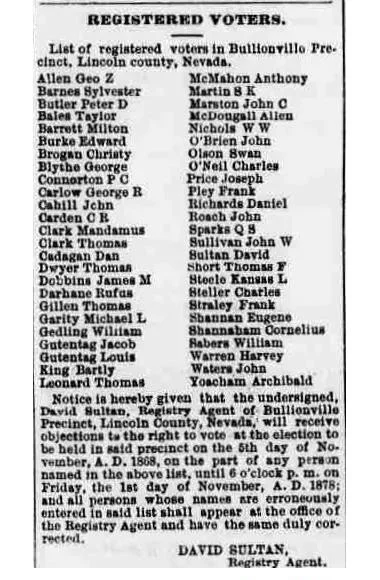
A list like this one from the Pioche Weekly Record in 1878 named every registered voter in Bullionville Precinct, Lincoln County, Nevada, in two alphabetical columns. If your ancestor was registered to vote there that year, their name is in print. The notice at the bottom also named the Registry Agent, which points toward another potential record to follow.
Local election results.
After elections, papers printed results by town, ward, or precinct. These weren't just vote totals. They often named who won each local office, sometimes down to constable, assessor, and justice of the peace.
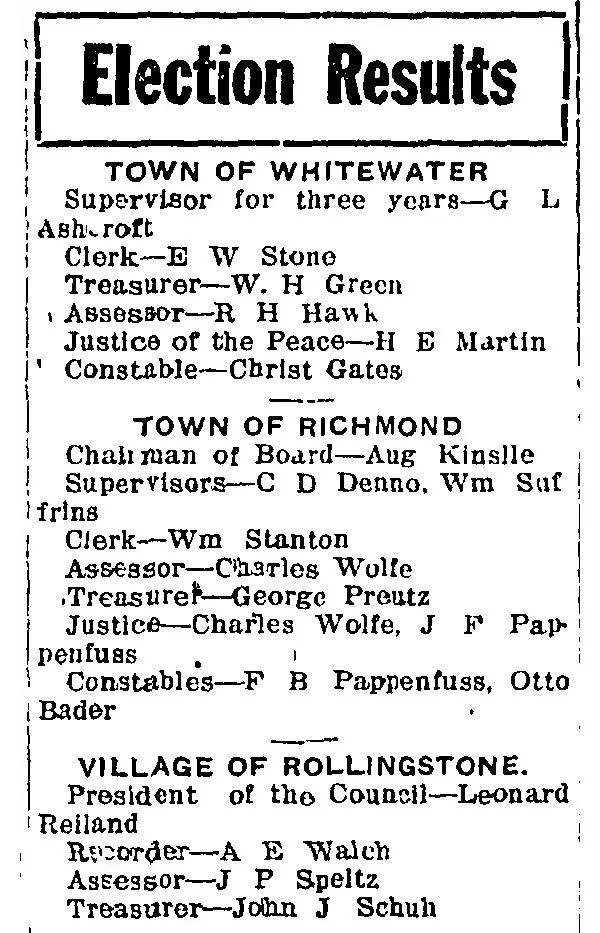
This 1923 clipping from the Winona Republican Herald listed election results across three small towns, naming the winner of every local office. If your ancestor held or ran for a position as supervisor, treasurer, or constable, a clipping like this one may confirm it. These results also give you a picture of who else was active in local civic life at the same time, which can be useful for understanding the community your ancestor lived in.
Convention and nomination notices.
When a local party held a convention to nominate candidates, papers reported who was nominated and sometimes who attended. These weren't statewide events. They were held at the town or county level, and they named local people.
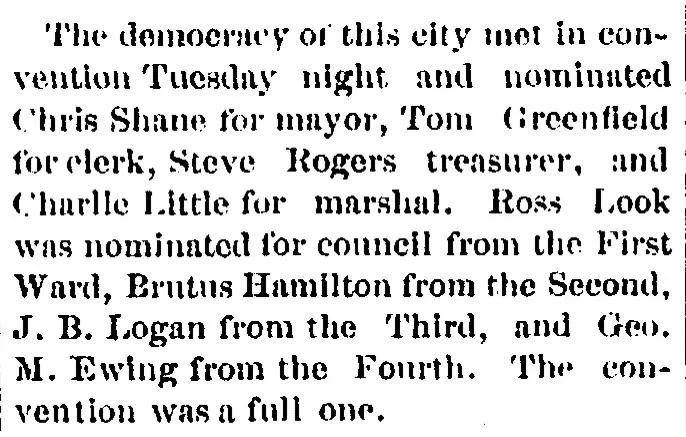
This item from the Greensburg Saturday Review in 1881 reported a local Democratic convention that nominated candidates for mayor, clerk, treasurer, marshal, and four separate ward council seats, all in one short paragraph. Eight names in roughly a hundred words. If one of them belonged to your family, you'd have a date, a party, an office, and a community context you didn't have before.
Primary ballot and candidate lists.
Many papers published the complete list of candidates appearing on the primary ballot, by party, by race, and by office. These lists were dense with names. Even if your ancestor wasn't a major candidate, they may have run for a local seat that appeared in a list like this one.
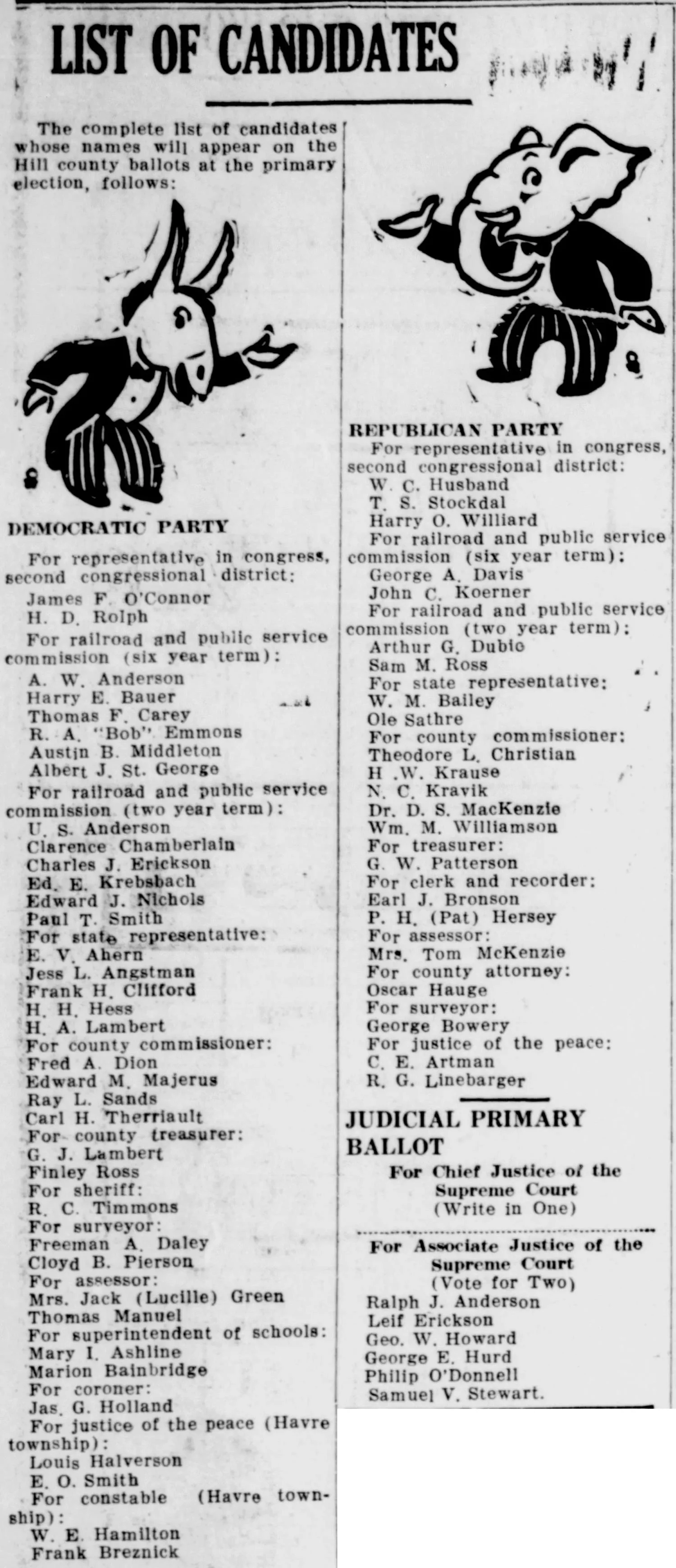
This 1938 Hill County, Montana, primary ballot from the Havre Daily News listed dozens of candidates across both parties for offices ranging from congressional representative to local constable. A name buried in a list like this is still a name, and it tells you something real about how your ancestor was engaged in their community.
Letters to the editor.
Newspapers gave space to readers who wanted to weigh in on local issues, candidates, and community decisions. An ancestor who felt strongly about a school consolidation, a road project, a tax, or a candidate may have written in. Their letter would have appeared under their name, sometimes with their town or township listed below.
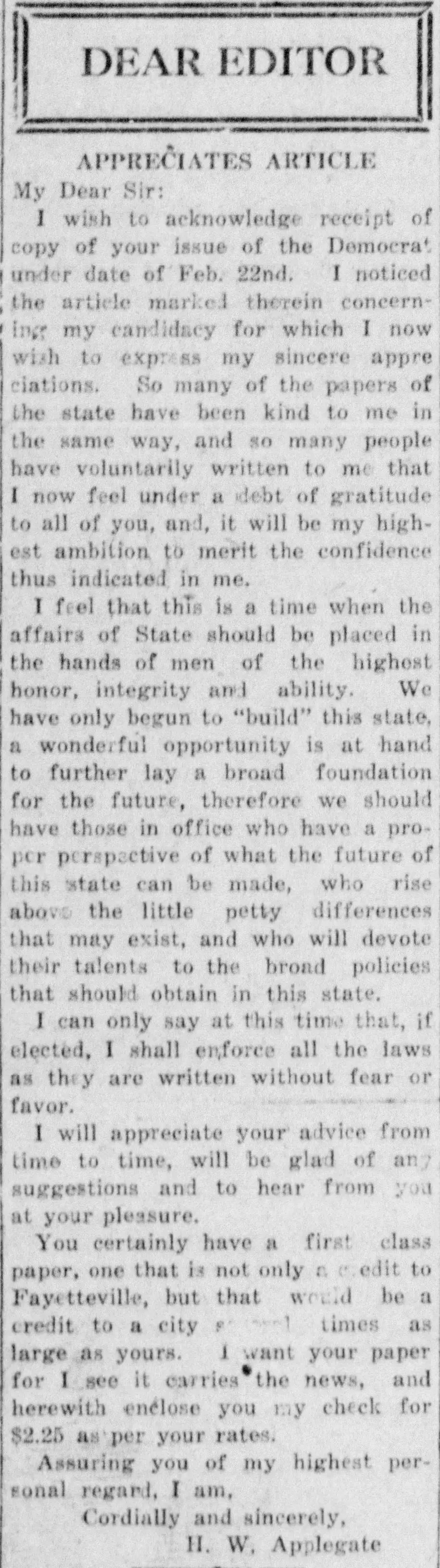
This 1924 letter to the Fayetteville Daily Democrat was signed by H. W. Applegate, who was writing to thank the paper for its coverage of his candidacy and to express his sense of what the office required. Whether your ancestor was a candidate, a concerned citizen, or a longtime reader with opinions, the letters column is worth searching. It's one of the few places in old newspapers where a person's actual words and name appear together on the page.
Why Small-Town Newspapers Are Worth Searching for Political Records
Larger city papers covered state and national politics. Small-town weekly papers covered the school board race, the county commissioner vote, the township trustee appointment, and the names of every person who showed up to a party caucus on a Tuesday night.
That local focus is exactly what makes them useful for family history. Your ancestor may not have running for Senate, but they may well have served as a precinct election judge, signed a petition, been appointed to a road commission, or had their name published in a voter list in the county paper.
NewspaperArchive is particularly strong in small-town and rural newspaper coverage, which is where most of these civic records appeared. Searching a county-level or township-level paper from the years your ancestor lived there gives you a much better chance of finding this kind of record than searching a major metropolitan daily.
How to Search for Ancestors in Political Newspaper Records
Start with what you know: a name, a county or town, and a decade. From there, a few focused searches will cover most of the record types above.
Search around election years. In the United States, major elections fell in even-numbered years, with local elections sometimes in odd years. Search your ancestor's name with a date range that covers the two or three months before and after a November election.
Try the name of the town or county alongside your ancestor's name. Many political records were published under a town or precinct heading. Adding a place name can narrow results quickly.
Search for office titles. If you suspect your ancestor held a local office, try searching their name alongside words like "assessor," "constable," "supervisor," "trustee," or "commissioner."
Look for convention and nomination coverage in September and October. Local parties typically held their nomination conventions in the weeks before an election. Papers covered these in short news items that named every person nominated.
Try searching for "registered voters" or "election results" with a county name. These were often published as standalone items with their own headlines, which makes them easier to find.
If your searches keep turning up nothing, it may be a name spelling issue rather than a missing record. Ancestors' names were often recorded phonetically or abbreviated, especially in older papers. NewspaperArchive's guide to searching name variants in historical newspapers is a useful companion when exact-name searches come up short.
Beyond Elections: Other Forms of Civic Engagement in Old Newspapers
Not every ancestor showed up in election coverage, but many appeared in civic records that newspapers published just as regularly.
Look for your ancestors in:
Board and committee appointments. County boards, school boards, road commissions, and drainage committees were often appointed rather than elected, and the appointments were announced in local papers.
Petition signers. When citizens petitioned for a new road, a license, a school change, or a local ordinance, the full list of signers was sometimes published.
Party organization notices. Local party central committees were named in the paper. If your ancestor was involved in party work at the township level, their name may appear in organizational notices.
Town meeting coverage. Papers reported on town hall meetings, sometimes with detailed accounts of who spoke and what positions they took.
Jury lists. Grand jury and petit jury lists were regularly published in local papers and included ordinary citizens drawn from the community.
Each of these record types can place an ancestor in a community at a specific time, connect them to neighbors and associates, and point toward other records worth searching.
Frequently Asked Questions
Can I find my ancestor in old newspaper political records if they never ran for office?
Yes. Voter registration lists, jury lists, petition signers, party committee members, and letters to the editor all named ordinary citizens who held no office. Election result items also sometimes named precinct-level officials, like election judges or poll workers.
What years are most likely to have political records about my ancestors?
Any year with a federal, state, or local election is worth searching. In the United States, presidential elections fell every four years and congressional elections every two years. Local elections varied by state and municipality. Searching October and November of any even-numbered year is a reasonable starting point.
How do I find voter registration lists in old newspapers?
Search for "registered voters" combined with a precinct, township, or county name. These lists were often published two to four weeks before an election. Try date ranges in October for fall elections. Not every paper published these, but smaller papers covering rural precincts often did.
What if my ancestor's name doesn't appear in political records?
Several factors could explain a missing record. Women were not eligible to vote in most U.S. states until 1920. Immigrants who had not yet naturalized could not vote in federal elections. Some communities had lower newspaper coverage. And name spelling variations in older records are common enough to cause missed results. Try alternate spellings and initials before concluding a record doesn't exist.
Are political newspaper records available for ancestors outside the United States?
NewspaperArchive includes newspapers from 48 countries, so international coverage exists. The availability of local civic records will vary significantly by country, region, and time period. Searching a specific region and date range is the most practical approach.
Start Looking for Your Ancestor's Political Footprint
Most people searching for ancestors in old newspapers start with obituaries. That makes sense. But political records can give you something an obituary rarely does: a picture of your ancestor as a person with opinions, civic commitments, and a place in their community's public life.
The voter who showed up year after year. The neighbor who wrote to the paper when something felt unfair. The farmer who sat on a drainage committee or served as an election judge one November. These are small roles, but they are real ones, and they leave real records.
Start with a name and a place. Add an election year or a civic role you suspect they held. Then look at what the local papers were printing in those months. You may find nothing. Or you may find the sentence that finally makes your ancestor feel like a person who lived in a specific time, cared about specific things, and left a mark worth finding.