
How to Search Newspaper Archives for Family History: Proven Strategies That Work
Learn how to search newspaper archives for genealogy using proven strategies like name variations, location filters, and uncovering hidden ancestor mentions.
Searching newspaper archives for genealogy requires a strategic approach that goes beyond simple name searches. Effective techniques include starting with known details, prioritizing obituaries, expanding to marriage and birth announcements, using name variations, and narrowing results by location and date. Researchers should also explore social columns, legal notices, and community news to find indirect mentions of ancestors. Searching for relatives and neighbors can uncover additional connections, especially in small-town newspapers where individuals were frequently mentioned. With these methods, NewspaperArchive helps users uncover detailed family stories and connections that are often missed in traditional records.
Finding your ancestors in newspaper archives isn’t just about typing in a name and hoping for the best.
Historical newspapers require a different approach—and once you understand how to search them effectively, the results can be incredibly rewarding.
Here’s how to actually find your ancestors using NewspaperArchive.
Step 1: Start with What You Know
Begin with a known person, place, or event.
Search using:
Full name (if known)
A specific town or region
An estimated date range
If you’re unsure where to start, begin with a more recent relative and work backward.
Step 2: Search Obituaries First
Obituaries are often the easiest and most information-rich records to find.
A single obituary can include:
Birth and death dates
Names of relatives
Locations tied to the family
Clues about migration and occupation
Example:
Searching for “John Smith + Indianapolis + obituary” may reveal not only his death notice but also names of children, siblings, and previous residences.
Step 3: Expand to Marriage and Birth Announcements
Once you’ve identified key individuals, search for earlier life events.
Try:
Bride or groom names
Parents’ names
Keywords like “wedding,” “nuptials,” or “engagement”
Example:
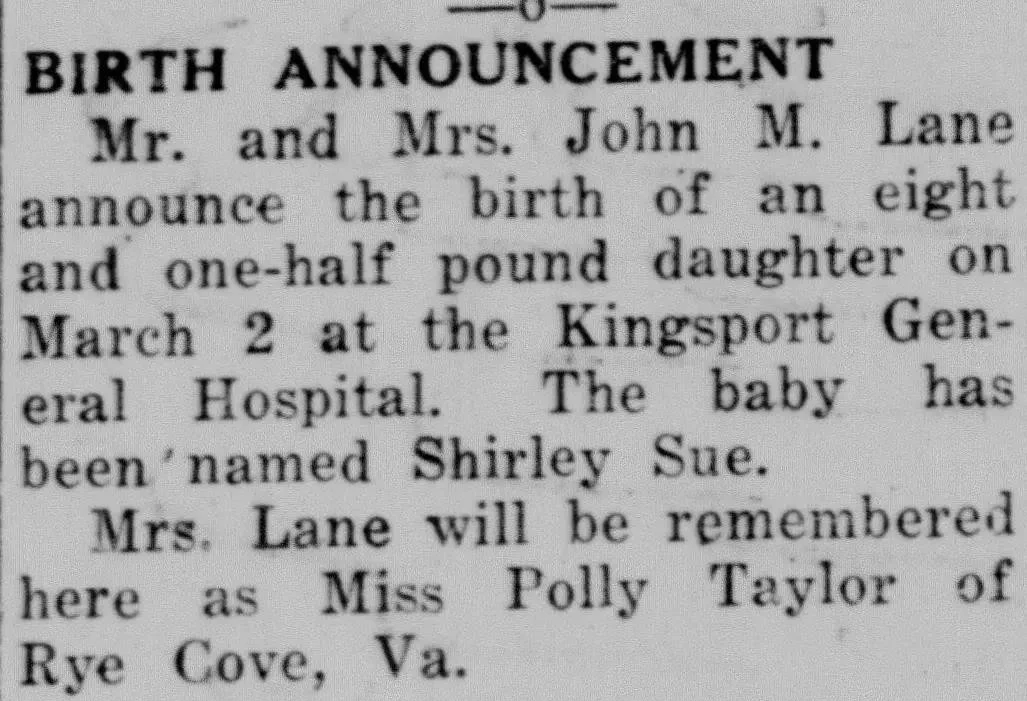
A birth announcement like “Mr. and Mrs. John M. Lane announce the birth of a daughter, Shirley Sue…” can reveal the child’s name, birth date and place, and even the mother’s maiden name—connecting multiple generations in one short notice.
Step 4: Use Name Variations and Misspellings
Names in newspapers were often misspelled or recorded differently.
Try:
Alternate spellings (Smith / Smyth)
Initials instead of full names
Nicknames
Example:
“William Johnson” might appear as “Wm. Johnson” or even “Bill Johnson.”
Step 5: Narrow by Location and Date
If you’re getting too many results—or none at all—adjust your filters.
Focus on specific towns or counties
Expand your date range slightly
Search nearby communities
This is especially helpful if your ancestor moved or if their story was reported in multiple locations.
Step 6: Look Beyond Major Life Events
Not every mention will be an obituary or announcement.
Search for your ancestor in:
Social columns
School or church events
Business ads
Legal notices
Example:
A simple mention like “Mrs. Clara Brown visited relatives this week” can confirm relationships and locations between census years.
Step 7: Search for Other People Around Them
If your ancestor isn’t showing up, search for:
Spouses
Children
Siblings
Neighbors
Newspapers often mentioned people together, especially in small communities.
Step 8: Keep Track of What You Find
As you search, keep a simple log:
Names searched
Locations
Dates
Articles found
This helps you avoid repeating searches and builds a clearer research path.
Why Small-Town Newspapers Give You an Advantage
If your ancestors lived in smaller communities, you’re in luck.
Small-town newspapers often included detailed, frequent mentions of residents—far more than large city papers. These small entries can reveal movements, relationships, and everyday life in ways other records can’t.
Frequently Asked Questions
What if I can’t find my ancestor by name?
Try searching for relatives, locations, or events connected to them. Many people appear indirectly in newspaper mentions.
How do I handle common names?
Use location filters, date ranges, and associated family members to narrow results.
Do I need exact dates to search?
No. Start with an estimated range and adjust as needed.
Start Searching Smarter
Searching newspaper archives takes a bit of strategy—but once you know how to approach it, the results can be surprising.
Start with one ancestor, apply these steps, and follow where the clues lead.
Conclusion
The key to successful newspaper research is knowing how to search. By using targeted strategies—like name variations, location filters, and expanding beyond major life events—you can uncover stories that would otherwise remain hidden. With NewspaperArchive’s vast collection, those discoveries are closer than you think.