
How to Find a Specific Article in a Historical Newspaper Archive
Learn how to find a specific newspaper article using flexible search strategies, OCR tips, and step-by-step methods for historical newspaper research.
To find a specific article in a historical newspaper archive, use flexible search terms that include names, locations, and dates. Because OCR text can contain errors, exact matches often fail. Broader searches, name variations, and adaptable search systems improve your chances of success.
Finding a specific article in a historical newspaper archive can feel frustrating, especially when you know it exists but can’t seem to locate it. The issue usually isn’t the archive itself. It’s how historical newspaper search actually works.
Unlike modern search engines, newspaper archives rely on imperfect text recognition and varying search systems. Once you understand how those systems behave, your chances of success improve dramatically.
Quick Answer
To find a specific newspaper article, search using names, locations, and dates, then adjust your terms as needed. Because OCR text isn’t perfect, broader and more flexible searches often return better results than exact ones.
Why Standard Searches Often Fail (And What to Do Instead)
Searching historical newspaper archives is fundamentally different from searching the modern web.
Most newspaper databases rely on Optical Character Recognition (OCR), which converts scanned pages into searchable text. While this makes millions of pages searchable, it also introduces errors, especially in older newspapers printed with worn type, unusual fonts, or damaged paper.
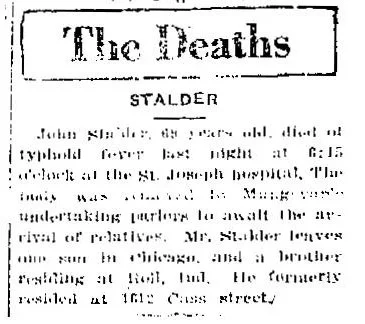
You may encounter:
Letters misread (like “rn” instead of “m”)
Words merged together or split apart
Older characters misinterpreted
Names that don’t match exactly
This means a perfectly correct search can still return zero results.
Instead of assuming the article isn’t there, the goal is to adjust your search strategy to account for how the text was interpreted. Once you shift your approach, you’ll often begin to see results appear.
Step 1: Know What You're Looking For Before You Search
Strong searches start with strong context.
Before you begin, take a moment to gather what you already know:
Full name (including possible variations or nicknames)
Approximate date or date range
Location (city, county, or state)
Type of article (obituary, marriage notice, legal notice, crime report, etc.)
Even partial information helps. For example, knowing that an event happened “sometime in the early 1920s” in a specific town is far more useful than searching without any filters at all.
If you’re missing details, consider checking:
Census records
Family documents
Cemetery records
City directories
These can provide the clues needed to make your newspaper search much more effective.
Step 2: Match the Archive to Your Target Era
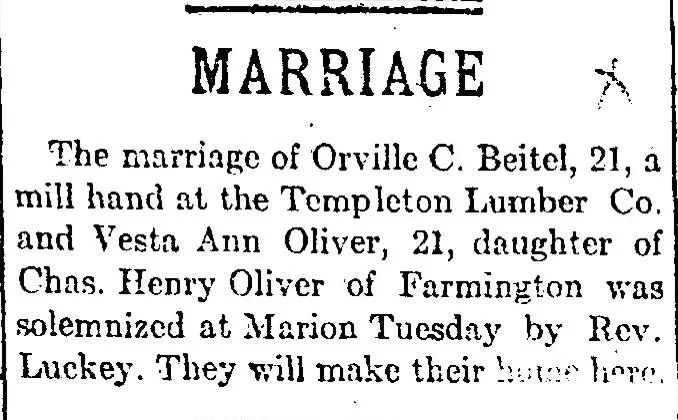
Different newspaper archives excel in different time periods, locations, and types of content.
Choosing the right starting point can save significant time and prevent frustration.
If you’re unsure where to begin, start with a broad archive that spans multiple regions and time periods. This allows you to quickly test your search before narrowing your focus.
Archives to Be Aware Of
There isn’t just one newspaper archive, and no single platform includes everything.
NewspaperArchive – Covers all 50 U.S. states and multiple countries, with an estimated 85% unique content. It is especially strong in small-town and regional newspapers, where detailed, community-level stories are more likely to appear
Chronicling America – A free resource with strong coverage from 1770–1963
Newspapers.com – Known for large metro newspaper collections and more recent publications
GenealogyBank – Focuses heavily on obituaries and historical records
Fulton History – Particularly strong for New York State newspapers
State and regional digital newspaper projects – Often excellent for local and community coverage
Coverage and search behavior vary widely. If you’re not finding what you need in one archive, it’s often worth trying another.
Smaller community newspapers, in particular, tend to include the kinds of personal details—names, relationships, everyday events—that larger city papers often overlook.
Step 3: Try Free Sources First
Before committing to a paid archive, it’s worth checking what’s available for free.
Many excellent resources provide access to millions of pages:
Chronicling America
State digital newspaper collections
Local libraries and university databases
Multi-archive search tools
These are especially useful for:
Confirming that an article exists
Narrowing down dates
Identifying the newspaper title
Once you have that information, moving into a broader or more comprehensive archive becomes much more efficient.
Step 4: Use Flexible Search Techniques (Instead of Complex Operators)
Not all newspaper archives support advanced search features, and more importantly, they’re often not necessary.
In historical newspaper research, flexibility matters more than precision.
Start with simple searches:
John Smith
Smith
Smith Ohio
John Smith obituary
Then refine:
Remove words if results are too limited
Add context like location or event
Try partial names or alternate spellings
Because OCR text isn’t always accurate, strict or exact searches can miss relevant results entirely.
Some archives are designed to return results even when names aren’t perfectly recognized, making broader searches especially effective .
A good rule of thumb:
If your search returns nothing, make it broader. If it returns too much, make it more specific.
Step 5: Narrow by Location and Date
Once you begin to see results, the next step is refinement.
Filtering by location and date helps you move from a broad search to a targeted one.
Focus on:
The city or county where the event occurred
A tight date range (even a few years helps)
Specific newspaper titles, when possible
Local newspapers, especially small-town weeklies, often provide the most detailed coverage of everyday life, including events that never made it into larger publications.
Step 6: Try Unconventional Search Terms
If standard searches aren’t working, changing your approach can make all the difference.
Instead of searching only by name, try:
Search by address
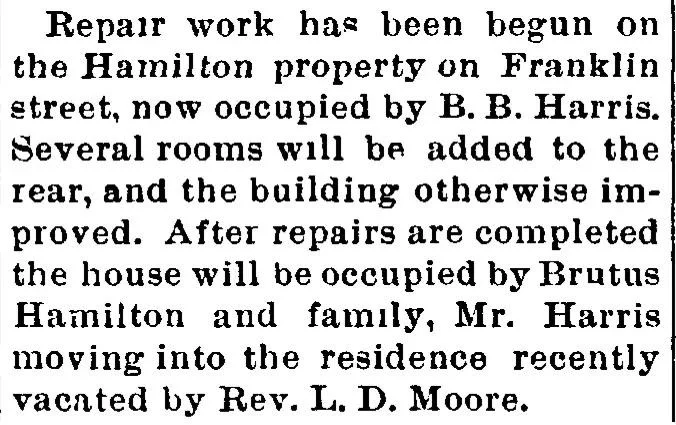
Street names and house numbers often appear in articles, especially in legal notices, crime reports, and community updates.
Search by relationships
Women were often listed under their husband’s name (for example, “Mrs. John Smith”). Searching family members can also reveal indirect mentions.
Search by occupation or affiliation
Combine a name with a job, church, school, or organization.
Example: John Smith carpenter
These strategies help uncover articles that don’t appear in straightforward name searches.
Step 7: Work Around OCR Errors
OCR errors are one of the biggest obstacles in newspaper research, but they also follow patterns.
Common issues include:
“rn” appearing as “m”
“f” instead of “s”
Letters blending together or dropping out
Some archives require very close matches, while others are designed to account for these inconsistencies and return similar results.
As noted earlier, more flexible matching can surface articles that stricter systems miss, especially in older or lower-quality scans.
If a search isn’t working, try:
Using fewer words
Searching only a last name
Adding or removing location details
Small adjustments can lead to entirely different results.
Step 8: Browse When Search Doesn’t Work
Not every article can be found through search alone.
In some cases, browsing is the most effective strategy.
Try:
Opening a newspaper issue by date
Reading surrounding pages
Checking multiple days before and after an event
Important stories often appear as brief mentions, follow-ups, or side notes rather than main headlines.

Step 9: When All Digital Archives Have Failed
If you’ve exhausted online options, there are still paths forward.
Consider:
Contacting local libraries
Reaching out to historical societies
Using WorldCat to locate physical copies
Requesting microfilm
Many newspapers have not yet been digitized, especially smaller or regional publications.
Frequently Asked Questions
Why can’t I find an article I know exists?
The most common reason is OCR error. The article may be in the archive, but the text wasn’t captured accurately. Broader searches and alternative terms can help surface it.
What’s the best way to search historical newspapers?
Start simple with names, locations, and dates. Then adjust your search based on results. Flexibility is key.
Why do some archives return better results?
Each archive uses a different search system. Some require exact matches, while others allow for variation and OCR inconsistencies.
Can I find newspaper articles for free?
Yes, many archives offer free access to portions of their collections. However, coverage varies, and some materials require a subscription.
Search for Your Article
Finding a specific article isn’t just about where you search. It’s how you search.
If you’re working with older newspapers, small-town publications, or difficult-to-read scans, using an archive with broad coverage and flexible search can make a noticeable difference.
If you’re ready to search across a wide range of locations and time periods, try entering a name or place in NewspaperArchive and explore what comes up.
Conclusion
Finding a specific article in a historical newspaper archive takes patience, but it’s rarely impossible.
The most effective researchers stay flexible, adjust their approach, and explore different angles when needed. Small changes in how you search can uncover articles that initially seem out of reach.
With the right strategy, the article you’re looking for is often closer than it seems.