
15 Ways to Search Historical Newspapers When You Don't Have a Name
When a name search comes up empty, try addresses, churches, employers, cemeteries, and more. Here are 15 ways to find ancestors in old newspapers without a name.
You can search historical newspapers without a full name by using the places, organizations, and relationships your ancestor was connected to. Effective strategies include searching a relative's name, a street address, a township or rural community name, a church, a fraternal lodge, a women's club, an employer or business name, a cemetery, a military unit, or a legal notice by topic and location. Small-town papers are especially useful for this approach because they regularly named ordinary people in community news, social columns, club notices, and legal filings. NewspaperArchive offers broad coverage of small-town and rural newspapers, making it a practical resource for finding ancestors through these indirect search paths.
You know the feeling. You have typed the same name into the same search box so many times you could do it in your sleep. You have tried the obvious spelling and six variations of it. You have searched three different databases and come up empty every time. At some point you just sit back and think: where did this person go?
It is one of the most frustrating places to be in family history research, and it happens to almost everyone eventually. Usually it happens with exactly the kind of ancestor who deserves to be found: someone who lived a quiet life in a small town, never made headlines, and left behind just enough of a clue to make you want to keep going.
Here is what most researchers do not realize until someone tells them: that ancestor is probably in the newspapers. They are just not in there by name.
Historical newspapers, especially small-town papers, identified people all the time by where they lived, who they sat next to in church, what club they belonged to, who carried their neighbor's casket, and what business they worked for. The name you cannot find through a direct search might be sitting in a social column, a legal notice, a club meeting announcement, or a funeral notice, waiting for you to come at it from a different direction.
These 15 strategies are for the searches where the obvious path ran out.
If you have a church name, a street, an organization, or even a neighbor's name to work with, try searching NewspaperArchive before you finish reading. Sometimes the angle you have not tried yet is the one that works.
Quick Answer
You can search historical newspapers without a name by using the places, organizations, and relationships your ancestor was connected to. Addresses, churches, employers, schools, cemeteries, clubs, and neighbors can all surface newspaper mentions that lead you to a name or a new research thread. This works especially well in small-town papers, which regularly identified ordinary people by community role, location, and association rather than formal record.
Start With the People Around Your Ancestor
1. Search a relative's name instead
If you know one family member's name but not another's, start with the person you can find. Obituaries, wedding notices, and social columns routinely named siblings, parents, children, and in-laws. A death notice for a known cousin might list six people you have never seen in any other record. Search the name you have and read carefully for everyone mentioned around it. The person you are looking for may be right there in the margins of someone else's story.
2. Search a neighbor's name
Communities moved together. If your ancestor came from a particular county in another state, or a specific township, chances are good that neighbors and extended family traveled with them or near them. Find one person from that community and you may find a whole network. Search a known neighbor's name and read the local columns from the same time and place. Your ancestor is likely nearby.
3. Search a known associate, employer, or business partner
People appear in newspapers in relation to others. An employee might be mentioned in a story about a business owner. A farmhand might appear in a legal notice filed by the landowner. A church deacon might be named alongside the minister. If you know who your ancestor worked for, lived near, or was connected to professionally, that person's name can lead you somewhere you would never have found directly.
Search the Places They Called Home
4. Search a street address or neighborhood
Small-town papers constantly identified people by where they lived, sometimes with no other context at all.
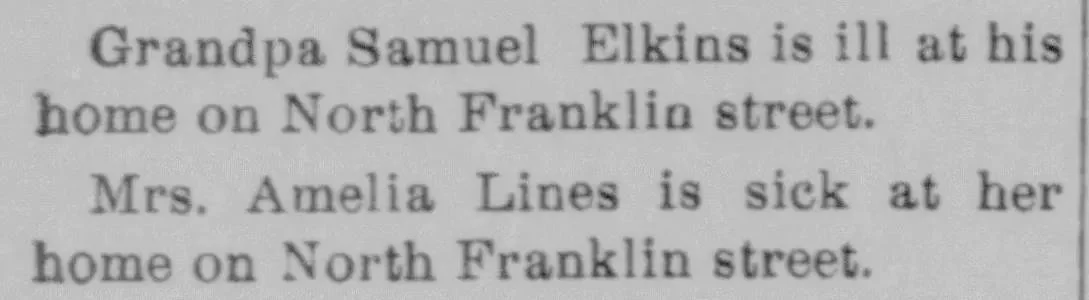
This clipping from the Greensburg Standard names two people who are ill. The only identification given is that they both live on North Franklin Street. That is it. No occupation, no family connection, just a street. But if you had that street name from a city directory or a deed, and you searched it in the local paper, you would have landed here. The name was in the paper the whole time. You just needed a different way in.
Try searching a street name, neighborhood, or rural route in combination with the town and a date range. Social columns, local news roundups, and health notices are good places to look.
5. Search a township or rural community name
Before rural route numbers, people were identified by their township, their post office community, or the name of the settlement where they lived. These place names show up throughout small-town papers in column headers like "Sugar Creek Township News" or "Letters from Flat Rock." If you know the township your ancestor lived in, search it by name and browse the local columns from that era.
6. Search a farm name or property description
Some families were known by the name of their farm. Legal notices, land transfers, and probate records in newspapers often include detailed property descriptions that match deed records. If you have a metes and bounds description from a deed, specific lot numbers, block numbers, or street corners may appear in newspaper legal notices that name the owner directly. It sounds like a long shot until it works.
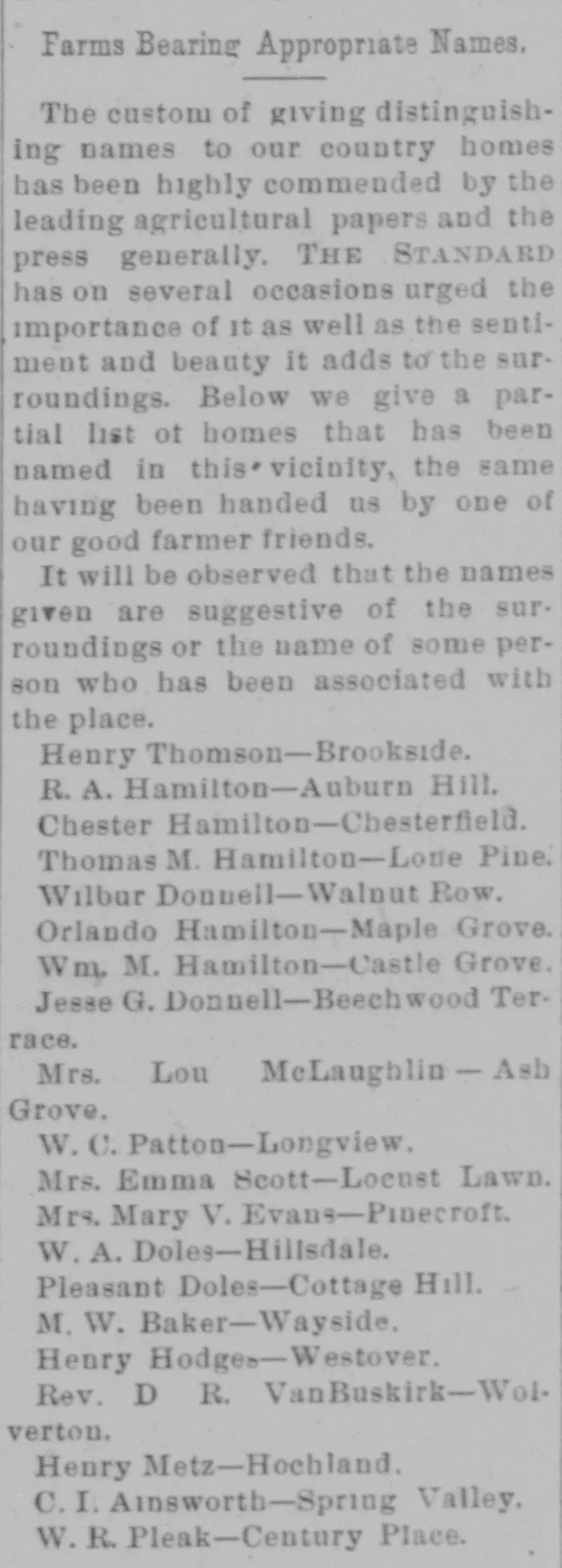
This 1901 clipping from The Greensburg Standard shows how useful farm names can be when you do not have a person’s name, or when you are trying to confirm which family owned or lived at a particular place. The article, titled “Farms Bearing Appropriate Names,” listed local farms by owner and farm name, including several Hamilton properties such as:
R. A. Hamilton — Auburn Hill
Chester Hamilton — Chesterfield
Thomas M. Hamilton — Lone Pine
Orlando Hamilton — Maple Grove
Wm. M. Hamilton — Castle Grove
This kind of clipping turns a farm name into a research clue. A search for “Auburn Hill,” “Lone Pine,” “Castle Grove,” or “Maple Grove” in the same county or nearby newspapers might uncover social mentions, land notices, estate references, advertisements, or later articles connected to the family.
Sometimes the place name is the path back to the person.
Search the Organizations They Belonged To
7. Search a church name
For many ancestors, especially in rural areas, the church was the center of community life. Local newspapers regularly covered church events, pastor visits, building projects, anniversary celebrations, and membership changes. If you know or suspect which church your ancestor attended, search that church's name in the papers from that community and time period. You may find your ancestor named as a member, a committee participant, a donor, or simply someone who attended a particular service.
8. Search a school or district name
School news appeared regularly in small-town papers. Teacher appointments, graduation lists, honor rolls, attendance records, and school closing announcements all named students and families. If you know which school district your ancestor lived in, or which school their children likely attended, search that school's name. A child's name in a graduation notice can lead you straight back to the parents.
9. Search a fraternal organization or lodge
Organizations like the Odd Fellows, the Masons, the Knights of Pythias, and the Rebekahs kept detailed membership records and received regular newspaper coverage. Meeting announcements, officer elections, memorial notices for deceased members, and anniversary celebrations all named names. If your ancestor was the type to join a lodge, and many were, searching that organization's name in the right county and time period can surface mentions you would never find by name alone.
10. Search a club or women's organization
Women's clubs, literary societies, sewing circles, and social clubs were covered extensively in local papers, often in their own dedicated columns.
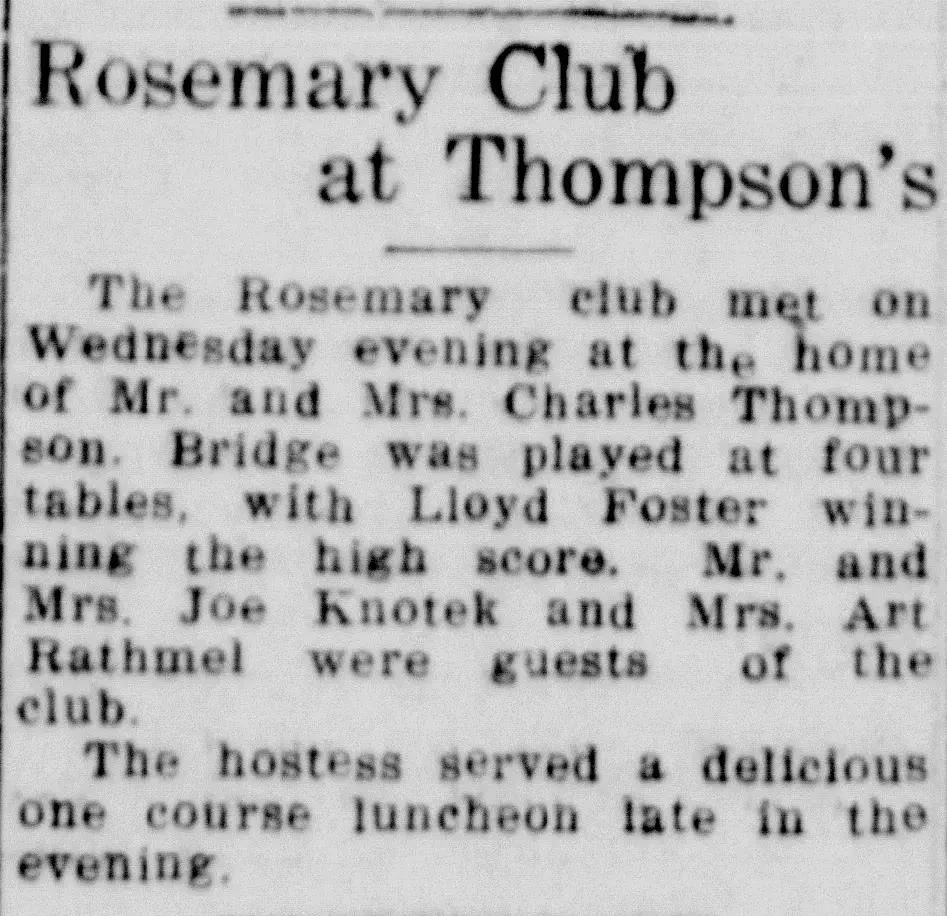
Look at this notice from the Washington Evening Journal. The Rosemary Club met at the home of Mr. and Mrs. Charles Thompson. Bridge was played. Lloyd Foster won the high score. Mr. and Mrs. Joe Knotek and Mrs. Art Rathmel were guests. That is five names in four sentences, none of whom would have appeared in a search unless you already knew to look for them. But if you knew your ancestor was connected to the Rosemary Club in that county, or if you stumbled onto this while searching the club's name, you now have five new people to follow. That is how a social column becomes a research lead.
11. Search an employer or business name
Businesses appeared in newspapers constantly, through advertisements, legal notices, change-of-ownership announcements, and local coverage of commerce.
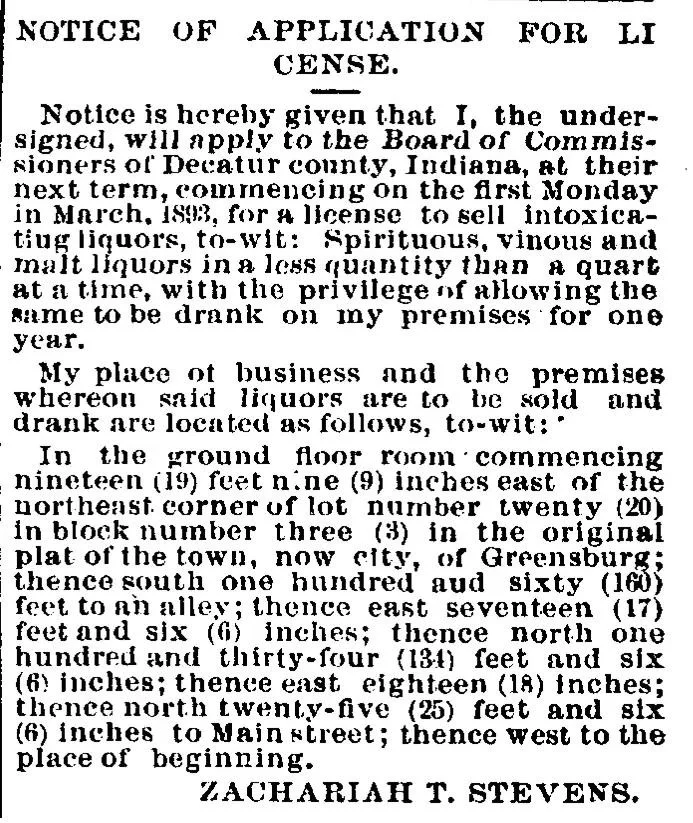
This liquor license application from the Greensburg New Era names the applicant and includes a detailed property description that doubles as a precise street address. If you were looking for someone connected to this business or this block of Greensburg without knowing a name, the legal notice section would have been the place to search. Business filings, license applications, and commercial notices often name people who left almost no other newspaper record.
Search the Records and Events That Shaped Their Lives
12. Search a cemetery name
When someone died, the newspaper often named not just the deceased but the pallbearers, the officiating minister, the burial location, and the surviving family members.
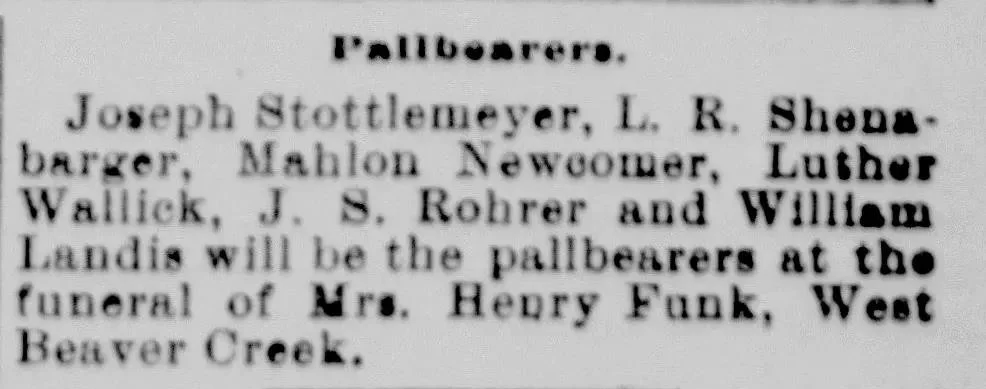
This notice from the Hagerstown Herald and Torch Light lists six pallbearers for the funeral of Mrs. Henry Funk of West Beaver Creek. Joseph Stottlemeyer, L. R. Shenabarger, Mahlon Newcomer, Luther Wallick, J. S. Rohrer, and William Landis. Not one of those men would have appeared in a search for Mrs. Funk. But if any one of them was your ancestor, or if Mrs. Funk was, searching the community name "West Beaver Creek" in the local papers from that period would have led you here. Funeral notices are some of the richest cluster records in historical newspapers, and they are often found by searching the place rather than any individual name.
13. Search a military unit or regiment
If you know your ancestor served in a particular unit, search that unit's name in newspapers from their home county. Muster rolls, departure notices, casualty lists, reunion announcements, and pension news often named soldiers by unit. A regiment name combined with a state and a date range can bring up names you have not been able to find any other way.
14. Search a ship name or port of arrival
For ancestors who immigrated, ship names and port cities sometimes appeared in local newspapers. A notice that a local family had received word from relatives arriving on a particular vessel, or that a community member had returned from abroad, can confirm an immigration connection you could not verify elsewhere. Search the ship name alongside the community where the family settled.
15. Search a court case, legal topic, or public notice by type and location
Legal notices are among the most underused sections of historical newspapers. Probate filings, land disputes, name changes, guardianship notices, tax delinquency lists, and sheriff's sale announcements all appeared in local papers as required public notices, and they named ordinary people who might appear nowhere else in print. If you know the county and approximate time period, searching legal notice terms alongside a location can surface your ancestor in a record you never expected to find.
Why Small-Town Papers Make All of This Possible
Most of these strategies work because of one thing: a paper that covered ordinary people in ordinary moments. That is exactly what small-town papers did.
A city paper in 1910 covered politicians, disasters, and commerce. A small-town paper in the same year covered who visited from out of town, which church had a new minister, what happened at the Tuesday card club, and who was ill on North Franklin Street. Those papers named people because in a small community, everyone was news.
NewspaperArchive is especially strong in small-town and rural newspaper coverage, which is part of why these indirect search strategies work so well there. The papers most likely to have named your ancestor by club, address, church, or employer are often the ones that are hardest to find anywhere else.
If you want to dig into one state's newspaper coverage specifically, the Indiana newspaper archives are a good example of how deep small-town coverage can go, with papers from counties and townships that rarely appear in other databases.
Frequently Asked Questions
Can I find an ancestor in a newspaper without knowing their full name? Yes. Historical newspapers, especially small-town papers, frequently identified people by where they lived, what organizations they belonged to, who they were related to, and what events they attended. Searching by any of these connections can lead you to a name you did not have before.
What is the best way to search old newspapers when I only have a location? Start with the most specific place name you have. A township name, a street name, a rural community name, or even a farm name can appear in local columns and notices. Combine it with a date range and look through the social news, legal notices, and community columns from that area.
Do small-town newspapers actually name ordinary people? Regularly. Local editors covered their communities closely, and ordinary people, farmers, shopkeepers, club members, churchgoers, and neighbors appeared in the paper far more often than most researchers expect. A brief illness, a visit to relatives, a club meeting, or a business filing could all put someone's name in print.
How do I use a church or cemetery to find newspaper records? Search the church name or cemetery name in the newspapers from that county and time period. Church news, funeral notices, and community columns often named members and attendees right alongside the organizational name. The church or cemetery is your search term. The names follow from there.
What if my ancestor did not belong to any organizations or appear in public records? Start with the people around them. Neighbors, relatives, employers, and associates all left newspaper records that may name your ancestor in passing. A death notice for a neighbor might list your ancestor as a pallbearer. A legal notice for a landowner might name a tenant. A club meeting notice might list a guest. You are looking for the edges of your ancestor's life, not just the center.
The Name Is in There. You Just Need a New Way In.
Most people who lived in a small town between 1880 and 1950 appear in the local newspaper at least a few times. The challenge is usually not that they were never mentioned. It is that the trail stopped because you were searching for them directly when the paper identified them indirectly.
Start with what you have. A church and a township. A cemetery and a relative's name. An employer and a year. Two or three of these strategies used together can open a search that felt completely closed.
When you are ready, NewspaperArchive is a good place to begin, especially if your ancestor lived somewhere small, somewhere rural, somewhere the local paper was the closest thing to an official record of everyday life.