Time and clocks through history from sundials to mainsprings
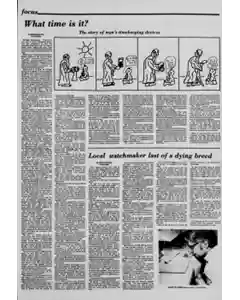
Time has long fascinated mankind from sundials to digital watches. Early methods used shadow and water clocks with limited accuracy, then hourglasses and clepsydras. By the 14th century monumental clocks spread in Italy, followed by smaller indoor clocks and portable mainspring timepieces, transforming daily life and work rhythms.
MENTIONED IN THIS ARTICLE
Samuel Gaye
Henri Michel
T. P. Camerer Cuss
Gaye
Michel
Cass
Italy
Eric Burtor
Burton
The long arc of timekeeping from clocks to wristwatches
The article traces timekeeping from early portable clocks to pocket watches, ring and pendant forms, and evolving cases. It covers 16th to 20th century innovations, fashion shifts, technical advances like balance springs and pendulums, tavern clocks, self winding mechanisms, secret watches, and the rise of machine production leading to modern watches and digital time. It notes strong entities such as Gaye and Michel, Cass, Pitt, and various composers linked to musical clocks.
MENTIONED IN THIS ARTICLE
Gaye
Michel
England
Cass
Bach
Handel
Hydn
Mozart
Beethoven
Rossini
Schubert
America
P. S. Meylan
Michel Say
Local watchmaker keeps fading craft alive in Iowa
James Peterson, a 20 year veteran watchmaker from New London, Iowa, operates a home business repairing wholesale watches for eight southeast Iowa stores. He notes dwindling interest in the trade, believes youth prefer other careers, and highlights machine advances while defending hands on work and the role of women in watchmaking. He licenses in Iowa and plans to stay active with antique cars in his spare time.
MENTIONED IN THIS ARTICLE
James Peterson
Peterson
New London
West Washington St
Janet
Carol
Iowa
Timex

 This is just the beginning! Our collection holds over 300 years of history, including rare newspapers, obituaries, marriage records, birth records, and so much more—most of which you won’t find anywhere else!