ProARHES and ETT 7 Approval Report
An itemized note records approvals for ProARHES and ETT 7 across council or committee proceedings. It outlines the actions taken, dated entries, and the expected next steps for implementation or compliance.

 This is just the beginning! Our collection holds over 300 years of history, including rare newspapers, obituaries, marriage records, birth records, and so much more—most of which you won’t find anywhere else!
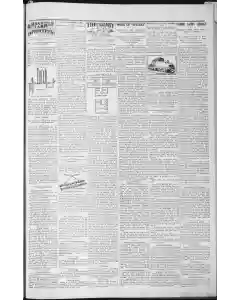
This newspaper page contains 28 articles. Subscribers can read the full text of each article.
Newspaper
The Silver Messenger
Location
Challis, Idaho, United States of America
Date
Feb 25, 1908
Page
7
An itemized note records approvals for ProARHES and ETT 7 across council or committee proceedings. It outlines the actions taken, dated entries, and the expected next steps for implementation or compliance.
A Missouri Valley Farmer extols a simple waterworks setup with a pump tank and pipes enabling instant water flow to troughs and the house. The piece then discusses wagon scales as essential farm tools, praising their value for weighing loads, tracking buyers, and fostering business discipline.
A farm column urges action on storm windows and winter wood, noting farmers who mark time gain little. It praises preserving wood, planning for a better farm home, and avoiding straw burning. Emphasis on practical tools like manure spreaders and the value of confident, steady toil.
Plants alter their characters based on growing conditions, especially when artificially bred. Experiments at the Tennessee station show a wheat variety engineered for protein and starch shifts its composition with moisture and leaf growth. Generations of man-made changes yield more varieties, notably cabbages, differing greatly from older types.
A quick guide on stall cleaning using a steel tool to scrape manure after gathering bedding with a fork. Clean stalls stay drier and healthier for animals as wet manure is reduced and nutrients are retained.
The article argues for maintaining wheat land fertility at cost, noting only a small percentage of war farmers have adopted proper practices. It urges annual fertilizer use, potash and phosphorus, plus crop rotation with leguminous plants to restore nitrogen and soil structure. Draining and gradual tax improvements over years are recommended to revive yields.
A Kansas Farm and Home correspondent praises a road drag and harrow, noting the front piece uses a 4x thick oak strip ten feet long as the core component, detailing its superior design and construction.
Describes attached harrow teeth about three inches apart driven into a rear piece a 2 by 6 oak beam thunderen feet long faced with metal along the bottom and projecting one inch. Wooden blocks and top strips keep pieces apart, forming a fing level road that harrows and scrapes in one pass.
Indiana experiment station results show Ogema soy bean mature in about 95 days while Ito Sat and Early Brown need about 115 days. No 12-309 requires 130 days and Medium Early Yellow about 150 days. Early Brown leads yield per acre in northern Indiana at 294 bushels, Ogema 14.5. in central Indiana Early Brown tops at 19.8 bushels, Ogema last. Also outlines a seed potato scab treatment: soak tubers two hours in a solution of one half pint formalin per 16 gallons of water and avoid recently scabbed ground when planting.
Liming land boosts both heavy and light soils by making heavy soil friable and the heavy golla more cohesive, enhancing workability and performance for farming.
A well mixed pile of prepared soil is essential for growers to have ready before transplanting season. This prep ensures smooth planting transitions and supports healthy establishment of young crops.
There is no farm so valuable and productive that it cannot be made more valuable and more productive by turning it into a dairy farm.
The plan notes a cow-atable 34 by 80 feet forming the head of the T and extending over the driveway floor with above storage for forage bedding and grain. It envisions a stave with a concrete foundation three feet below the feeding floor and rising 27 feet, hidden by the main roof and supporting a water tank for the outfit.
A detailed layout proposes a timber stave silo near the cow stable with a low profile and optional exterior placement. A drive way feeds a blower elevator for ensilage and straw, while a 22 by 30 foot manure shed with concrete base stores manure and aids composting. A powerhouse and single shaft plan supplies power to a feed grinder and cutter, with potential for a small refrigerating plant and a reduced separator load for a 40 cow operation.
A warning against using preservatives like formaldehyde salicylic and boric acid for milk safety stresses strict cleaning methods as the safest preservation. The text claims butter production costs less per pound than beef when proper corn feeds are used and urges price comparisons.
A historical piece explains the formation of railroad special agents or spies to protect railroads, shippers, and travelers from theft. It contrasts early tracing methods with a formal secret police, noting initial limits and later broader duties beyond employee dishonesty to deter freight theft and fraud, likening the role to postoffice inspectors and other associations.
Two electric locomotives delivered Saturday at East Side yards for the O. W. P. company, built by General Electric of Schenectady, N Y. They will run on the Cazidero division and four more engines of the same type are under construction at East Side shops.
The Portland Oregonian reports the Cazadero division will handle freight with new 40 ton electric locomotives while passenger trains and individual cars continue on the line with automotors. Locomotives previously used for passenger service are reassigned to freight, with steam engines retired from that role.
A fragmented historical glimpse recounts a Forest Park youth seeking a railroad career, his nervy job interview missteps, and the moral about conveying industry savvy. It recalls Conductor Gaudam’s embarrassment and a heroic locomotive engineer who sacrificed himself saving a town, framed as duty without reward.
A survey of army cookbooks reveals jambalaya and diverse Creole and Mexican inspired dishes learned in Texas and Mexico. It describes jambalaya ingredients and cooking method, plus heart and giblet stews with beef and vegetables, noting public table reactions to heart meat and a detailed recipe sequence.
Thornton Oakley recalls a Harpers Weekly scene in a mountain town where a fat man in a cassock blocks a third class doorway. The crowd pries him free as the train departs, his cassock torn, his eyes wide with fear, and a woman offers aid.
James M Wibberta of Westfield Connecticut oldest baggagemaster in America resigns at age 87 after 56 years on the New Haven line s first train in 1871. He secures a pension and free wage as he steps down.
A fragment notes Missouri's first railroad ran five miles from Richmond to the Missouri river opposite Lexington between 1849 and 1851. The line used amber track with sawed oak rails and hewed oak ties and was horse powered.
Instructions describe raffling white lawn to create shelf bindings and hems for four pantry shelves. Five yards at five cents a yard buy gives material to make five raffles each five and a half inches wide with a one inch hem. A yard provides mar row binding to sew raffles in and edge-tack with brass headed tacks. The result pretends to improve appearance while costing only a few cents and washable.
When you have cold boiled potatoes heat water to boiling and drop the potatoes in without lowering the temperature. Small potatoes boil one minute, large potatoes ten minutes, producing a white and mealy texture without the warmed over flavor.
After the tablecloth is spread, center mat holds a banquet lamp or candelabra or a small vase with towers or a tail vase with a single rose. For everyday use, a small pot of ferns works if cared for, lasting through the winter.
Honey conkies combine one quart honey with half pound white sugar and butter juice of two lemons. Stir hard then add enough flour to make a stiff paste. Cut the dough into rolled cakes and bake in buttered pans.
Practical tip describes scoring a cork with a groove to count tablets in a bottle. It suggests reinserting the cork and counting doses one by one to avoid pouring too fast. Contains no named people or organizations.
We want people to find what they are looking for at NewspaperArchive. We are confident that we have the newspapers that will increase the value of your family history or other historical research. With our 7-day free trial, you can view the documents you find for free.
People find the most success using advanced search. Try plugging in keywords, names, dates, and locations, and get matched with results from the entire collection of newspapers at NewspaperArchive!
You can also successfully find newspapers by these browse options. Explore our archives on your own!
Browse by location and discover newspapers from all across the world.
Browse by date and find publications for a specific day or era.
Browse old newspaper publications to find specific newspapers.