Water for Poultry: Clean Supply Key to Better Eggs
United States Department of Agriculture advises fresh pure drinking water is as vital as adequate feed for flocks. It compares open vessels and closed fountains, noting open vessels dirtier but easier to clean, while fountains stay cleaner longer but harder to scrub when foul. Regular rinsing and weekly scalding keep systems sanitary.
MENTIONED IN THIS ARTICLE
United States Department of Agriculture
Variation In Barred Rocks Prompts Breed Standard Concerns
The article notes wide variation among Plymouth Rocks and Reds, Wyandottes, and related varieties. Breeders risk losing breed type unless they keep birds true to the standard, as unchecked changes make different varieties resemble one another over time.
Right Qualities of Males Breeding Birds
The male should be gallant and share meals with hens yet not be overly generous or underfeed himself. A glutton becomes overfat while hens miss their share, hurting fertility. The nature of every male bird should be studied.
Save the Hens
The United States Department of Agriculture urges saving pullets and young hens sold for food this winter to bolster next spring and summer egg supplies. Farmers who have not raised poultry will be encouraged to start, freeing beef and pork for the war effort.
MENTIONED IN THIS ARTICLE
United States Department of Agriculture
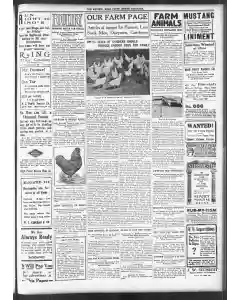
Articles of Interest for Farmers and Gardeners
A compact farmers page highlights livestock care dairy practices crop tips and market insights. It covers live stock health gardening strategies and practical notes for daily farm operations with pointers to local markets and seasonal tasks.
Small Flock Poultry Helps Family With Eggs All Year
The United States Department of Agriculture discusses keeping a small flock of laying hens in towns or backyards to produce eggs and some fowls at low cost. A flock of six to eight hens can supply a family of four or five year-round with seasonal adjustments and proper preservation of surplus eggs. It covers suitable breeds, flock size, space needs, and fall pullet procurement to maximize egg production and potential sales of breeding stock.
MENTIONED IN THIS ARTICLE
United States Department of Agriculture
Plymouth Rock
Wyandotte
Rhode Island
Poor Cockerel as Handicap in Poultry Raising
The note argues that a poor cockerel hinders progressive poultry raising. It asserts not all poor birds are mongrels and calls for using pure bred cockerels from proven producer strains to head the flock.
Use for Home Grown Feeds In Dairy Farms Shift
Farmers switch to home grown feeds due to high bran and millfeed costs. Warm stabling ample bedding and extra care help reduce feed costs and increase milk yield.
Silage Safe for Horses
Good silage is a perfectly safe feed for horses and well relished by them. Feed about one half as much to a horse as to a cow, about a half bushel. Ground oats or middlings with a half pound of cottonseed meal make a good supplemental grain feed. If hay is given the cottonseed meal may be omitted. They should have some dry roughage. If straw or corn stover is used, at least one pound of some high protein feed should be given daily.
Training Colts Halter and a Young Horse's Fate
A young horse that breaks his halter at the first trial is likely to become a puller for life unless properly broken early. Early handling sets the tone for behavior in future trials and work.
Caponizing Rooster Targets This Year’s Poultry Plan
A local agricultural bulletin urges caponizing roosters this year to improve meat quality. Officials emphasize practical techniques and timing are key to successful, humane confinement farming outcomes.
Proper Winter Exercise Boosts Sow Litters
United States Department of Agriculture specialists urge hog growers to keep sows active during winter. Encourage voluntary exercise by letting sows forage for corn in stalk fields and use protein feeds like shorts tankage oilmeat or ground alfalfa hay. Proper ground alfalfa balances the corn ration and supports strong, vigorous litters at farrowing.
MENTIONED IN THIS ARTICLE
United States Department of Agriculture
Sheep Most Profitable Livestock For Farm Profit
Sheep, in proportion to product value, are produced more economically on farms than other livestock. Feed and labor needs are lower, they graze weeds and grass, subsist largely on forage, and require less grain. They provide substantial farm revenue with relatively small expenses.
Bran and Clover for Sheep Feed Recommendation
Feed straw fodder and stubble grasses in winter but lambing ewes need best first crop clover hay daily. Bran and clover hay is the ideal nourishment for ewes with lambs.
Best Feed for Young Pigs After Weaning
Skim milk and middlings provide the best feed for young pigs after weaning. Begin with four small meals daily, then reduce to three feeds a day once the pigs are well started.
Outdoor exercise for pigs care guidance
Outdoor exercise is beneficial but pigs should be protected from cold winds or very hot sun. If the sow is turned out with her pigs do not give a very large range at first as she is likely to travel too far and unduly tire the young.
Also Mentioned on This Page
Rexal
N.S
Mr. Farmer
O. B
N. C. Public Service Co
Main High Point, NC
Morris
High Point Morris Plan Co
Bank of Commerce
W. T. Kiresan
Ome Advertiser
Rou
Liberal Commission
High Point Marble CO
D. R
J. L. Parrish
Justice of the Peace
Notary Public
Richardson
South Main St
Stamney Printing House
J. W. Sechrest
Eneral
Emba

 This is just the beginning! Our collection holds over 300 years of history, including rare newspapers, obituaries, marriage records, birth records, and so much more—most of which you won’t find anywhere else!