Wet Mash Best For Chicks In Growing Fowls Guide
The article asserts the key to fast chick growth is abundant wet mash they like. It details a three week to twelve week feeding plan using bran cornmeal middlings and meat scrap, mixed with skim or sour milk, preferably sour milk, to produce good sized broilers.
COVERING FOR SITTING HENS
Instruction on building a chicken nesting and running frame using five 1 by 12 boards with 18 to 24 inch spacing and a three foot wide roof. The roof back half is hinged for laying hens, and when used for sitting hens the door closes and feed and water are provided through a netting opening.
MENTIONED IN THIS ARTICLE
Maggie L. Long
Hammond
Okla
Hatchery Pen Setup Improves Hatch Rate and Ease
Describes a movable incubator area where hens are not turned out during egg incubation. The eggs hatch better then the setup is easier to manage as it can be moved and cleaned. Chicks can stay in the pen after hatching for a period.
Market for Surplus Eggs and Poultry Clubs
The article urges forming community co operative egg and poultry clubs to secure best prices. It advises contacting the county demonstration agent for organization and post setup market access and stresses thorough grading and packing in club rules to solve marketing troubles.
MENTIONED IN THIS ARTICLE
Uve
Plan for Preserving Eggs in Water Glass Solution
Water glass method described using sodium silicate and boiled water to preserve eggs. One gallon of silicate mixed with fifteen parts water yields enough solution to cover about fifty eggs in cool vessels. Ensure at least two inches of liquid above the eggs.
Cracked Grains for Fowls Cheaper In Mixed Feeds
When few chickens are kept it is easier to buy prepared feeds, but with many birds it can be cheaper to purchase grains and mix them. Many feeds include grit and may vary in quality, so check and guarantee quality before buying.
MENTIONED IN THIS ARTICLE
The
Postal Co
Bell
Need more dairy products
Secretary C. R. George of the Indiana State Dairy association urges farmers to boost dairy production and efficiency. He warns against selling dairy cows for beef, stresses housing for winter, and advocates using superior sires and careful heifer development to maximize milk output and feed use during the war era.
MENTIONED IN THIS ARTICLE
C. R. George
Indiana State Dairy Association
War Department
Silage Feeding for Calves Timeline and Tips
By six weeks calves can gradually start silage, ensure mold free, then increase intake. Grain should balance with the roughage, alfalfa hay is highly digestible but alone plus skim milk creates too much protein relative to carbs and fat, so add silage and corn for proper balance.
Regular milking urged for steady dairy production
A veterinary guidance stresses milking cows at regular twelve hour intervals year round. Milk is partially produced during milking and delays reduce secretion, harming glands and decreasing milk flow. Regular morning and evening milking is essential.
Improper Flavors in Milk
North Dakota Agricultural Extension notes milk flavor comes from cow diet and absorbed odors. Onions garlic and weeds can pass odors into milk. Milk should be produced with cows not fed or kept near odor sources to avoid off flavors.
MENTIONED IN THIS ARTICLE
North Dakota
Ent Station
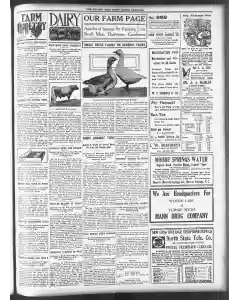
SMALL GEESE FLOCKS ON GENERAL FARMS
Geese can be raised in small flocks on general farms with little grain. Best on low rough pasture with natural water. used to weed cotton fields in the South. They graze on grass and forage, needing extra feed only in winter. Shelters are minimal. goslings need dry shelter and movement to fresh land. Geese are hardy and largely disease free.
Campaign to Exterminate Ticks Boosts Cattle Industry
The United States Department of Agriculture urges a sustained war on ticks to rescue Southern cattle from unprofitable conditions. Elimination promises quicker growth of native stock, better beef and milk, and a firmer foundation for profitable, unquarantined cattle production during wartime.
MENTIONED IN THIS ARTICLE
United States Department of Agriculture
Traffic Patterns Across Regions Build Toward Central Market
Roads carrying the heaviest traffic originate in various county sections and converge at the main market. Drainage-like logic shows market routes grow where descent lines toward the market are followed. Building outside these lines for heavy traffic is wasteful and uneconomical.
Grass and Pasture Plants in Southern Lands
Southern lands face two main barriers to pasture: weed and brush overgrowth and soil wash from exposed or sloped areas. The text highlights weed intrusion as the primary obstacle, with soil erosion as a secondary threat to grazing potential.
Colt During First Summer
Colts need careful care in their first summer to ensure future maturity. Dr C W McCampbell warns scours are common but preventable with prompt treatment. Keep the foal in a ventilated dark stall, avoid exhausting the mare, and feed liberally. If scours occur reduce milk, use castor oil and a bis muth subnitrate mix as directed.
MENTIONED IN THIS ARTICLE
C. W. McCampbell
Kansas State Agricultural College
Harness tips and farm care directions
Do not use road harness, use minimal harness for farm work. Each horse should wear its own collar custom fit. Never leave stubs in limb cutting. Feed chicks often though initial week requires little feed.
Also Mentioned on This Page
Jersey
Toulouse
Emden
High Point Marble CO
D. R. Raper
W. T. Kirkman & CO
Mr. Farmer
N. C
J. W. Sechrest
High Point Milling
High Foint Milling Company
J. J. Hamlin
Bank of Commerce
Hics Point
Norra Carona
Carolina & Yadkin River Railway Company
High Rock Denton Cid
Gordontown
Thomasville
High Point
Ly Daily Ly
Moore Springs
Moore's Springs
W. W. Idol & CO
Moore’s Mineral Springs Co
Moores Springs
Turnip
Mann Drug Company
North State Tele. Co
Postal Telegraph Cable CO
Rornee
Danville
Lynchburg Charlottes
Boarenkers, & Eshington
D. C
Ate, Ge
Qrtsovviu

 This is just the beginning! Our collection holds over 300 years of history, including rare newspapers, obituaries, marriage records, birth records, and so much more—most of which you won’t find anywhere else!