Moving plans noted to avoid missed newspaper copy
Circulation manager asks readers planning a move within two weeks to supply a new address promptly to ensure continued delivery of The Item.

 This is just the beginning! Our collection holds over 300 years of history, including rare newspapers, obituaries, marriage records, birth records, and so much more—most of which you won’t find anywhere else!
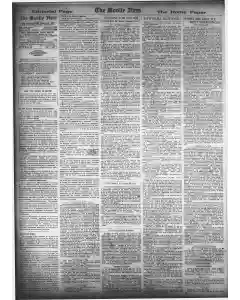
This newspaper page contains 17 articles. Subscribers can read the full text of each article.
Newspaper
The Mobile Item
Location
Mobile, Alabama, United States of America
Date
Oct 24, 1913
Page
6
Circulation manager asks readers planning a move within two weeks to supply a new address promptly to ensure continued delivery of The Item.
Judge F. Odlin of Florida argues the United States should withhold independence for at least five years. He warns against abandoning Filipinos to a native political elite and cites widespread illiteracy, fanaticism, and self interest in opposing immediate self rule. He supports continuing American sovereignty and questions Western capacity to impose foreign government.
A columnist argues the contemporary American girl is shaped by work and industry in offices and shops, gaining confidence and independence. The piece contrasts her with a past, more helpless ideal and notes immigrant pressures and self-reliance linked to labor.
A Mobile businessman defends local merchants against The Register's portrayal of fare refunds and claims the paper failed to back the Panama Celebration. The writer credits the Southern Commercial Congress meeting and President Wilson's visit as the main draws, not the Register's ad efforts.
The Baltimore Sun praises Cleveland for its civic soul and strategic growth. Mayor Baker stresses a city’s character matters more than its population, urging Baltimore to adopt a deliberate program of development and a regenerative spirit to catch up with Cleveland.
In Kansas City Judge Ralph S. Latshaw quashes a nascent movement against close-fitting skirts. He states narrow skirts do not imply immorality and recalls hoop skirts as a worse era. He asserts progress has happened though not as far as cartoons claim.
A clipped fragment describes a plowman plodding through mud with a dull life. The lines hint at hardship and monotony, conveying a somber rural scene without clear events or characters.
Special correspondents report that U S shipper systems are less efficient than Germany in drying potatoes for stock feed and starch. Excess moisture in corn raises costs, limits grades, and could free up about fifteen thousand freight cars if addressed.
The Philadelphia Ledger notes a trend of intimate biographies by close aides on Edward VII Cecil Rhodes and others, arguing kings are not epic figures but fallible, human and driven by belief. The piece frames Rhodes as fatigued yet self confident, praising creative genius while acknowledging limits.
Secretary Garrison condemns hazing at the Military academy after cadets disciplined for insubordination. He denounces pressure from relatives to ease sentences and demands firm discipline. He warns Congress against leniency and supports expulsion for hazers.
A critical view argues census value hinges on accuracy comparability and prompt publication. The thirteenth census is faulted for delays and lax methods, reflecting nationwide dissatisfaction with how the Census Bureau has operated.
Janet Braithwaite encounters her former lover Jack Jefferson at a dinner after ten years apart. He hints at a renewed, risky affair, challenging her current marriage to Dennis Braithwaite as she battles memory, pride, and temptation. The encounter stirs old feelings as she debates following the past.
New York reports bankers are meeting emergency calls with ample liquidity as tariff revisions and banking-system changes loom. Analysts note freight costs and regional protections influence imports, while U S Steel and telecommunication firms weigh tariff effects and transport logistics on Midwest and West production. Ottawa and Washington observers foresee full impact only in 1914 spring.
A satirical quote from the Billville Banner mocks a claim by Dr. Wiley that four-year-old whiskey can be produced in forty minutes. The piece imagines a thirsty man waiting long for booze and uses a humorous echo of voice to imply instant access in Billville.
The Whitsett Courier questions future foreign missions for the president and urges removing rivals from the progressive section as commented by a Constitution source. The letter hints at political maneuvering and opposition to reform efforts.
A New Orleans States quote notes Carnegie admires Wilson but cautions that Carnegie is the country’s sly lobbyist figure and a skilled “little hustler” in dealings with power.
A terse message titled The Test asserts trust in people and asks for money addressed to Tham-Alright in New York. The note presents a personal appeal and request for funds without further context.
We want people to find what they are looking for at NewspaperArchive. We are confident that we have the newspapers that will increase the value of your family history or other historical research. With our 7-day free trial, you can view the documents you find for free.
People find the most success using advanced search. Try plugging in keywords, names, dates, and locations, and get matched with results from the entire collection of newspapers at NewspaperArchive!
You can also successfully find newspapers by these browse options. Explore our archives on your own!
Browse by location and discover newspapers from all across the world.
Browse by date and find publications for a specific day or era.
Browse old newspaper publications to find specific newspapers.