
Passport to the Past:
A Guide to Locating Immigration Stories in Online Newspapers
Search Immigration Records in Newspapers
Introduction
Do you ever wonder about your ancestors' immigration stories? The tales of their journeys to new lands, the challenges they faced, and the lives they built? If you're eager to delve into your family's immigration history, you're in luck. The vast treasure trove of online newspapers, including platforms like NewspaperArchive, provides an invaluable resource for discovering immigration-related announcements and articles. In this guide, I'll explore how to navigate these archives effectively and share numerous examples to help you embark on your genealogical journey.
Tips for Finding Immigration Stories in Online Newspapers
Examining your ancestor's immigration journey can provide fascinating insights into their experiences coming to America. But how can you find relevant articles and stories in the vast depths of online newspaper archives? The key is knowing where to look and what search strategies to use. In the tips below, I'll share key techniques for locating immigration-related newspaper coverage about your relatives. From broadening your keywords to searching foreign-language papers, these pointers will aid you in pinpointing stories about passenger lists, citizenship, immigrant communities, and more. Implement these strategies to uncover rich details about your family's passage to America tucked away in newspaper pages.
1. Choose a Reputable Online Newspaper Archive:
Start by selecting a reliable online newspaper archive or collection. NewspaperArchive is well-established, with a vast collection of newspapers from around the world. What I like about NewspaperArchive is the uniqueness of the newspapers in its collection. More than 85% of the content is unique to NewspaperArchive - you won’t find it on another site. The abundance of small-town newspapers in the collection is another aspect I adore. It's through these publications that I've unearthed the most fascinating stories about my ancestors, stories that would have otherwise remained undiscovered.


2. Use Advanced Search Options:
NewspaperArchive’s advanced search options are powerful. I can narrow down my search using a variety of filters and criteria. I can enter first, middle, and last names, keywords, locations, and dates. The NewspaperArchive YouTube channel has a great video tutorial on using the Advanced Search features. Click HERE to check out the Advance Search video. Be sure to check out the other videos on their channel that make using NewspaperArchive’s site easy.
3. Utilize Keywords:
When searching for immigration, consider using keywords like "citizenship," "naturalization," and "arrival." Be creative with your keyword choices to cast a wider net. I created a keyword list to give you ideas on things to search for immigration and all things related. You can download it HERE. The list is not exhaustive, but it will get you started.


4. Filter by Location:
This tip is incredibly vital for your research, and I can't emphasize it enough! If you have information about the area where your ancestor immigrated to or their port of entry, make sure to narrow down your search by filtering it based on location.
5. Review Various Newspapers:
Have you conducted a search based on location? Broaden your scope beyond a single newspaper. Immigration details might surface in city, county, state, or even national publications, so be sure to explore a diverse range of newspapers.


6. Port-Specific Websites:
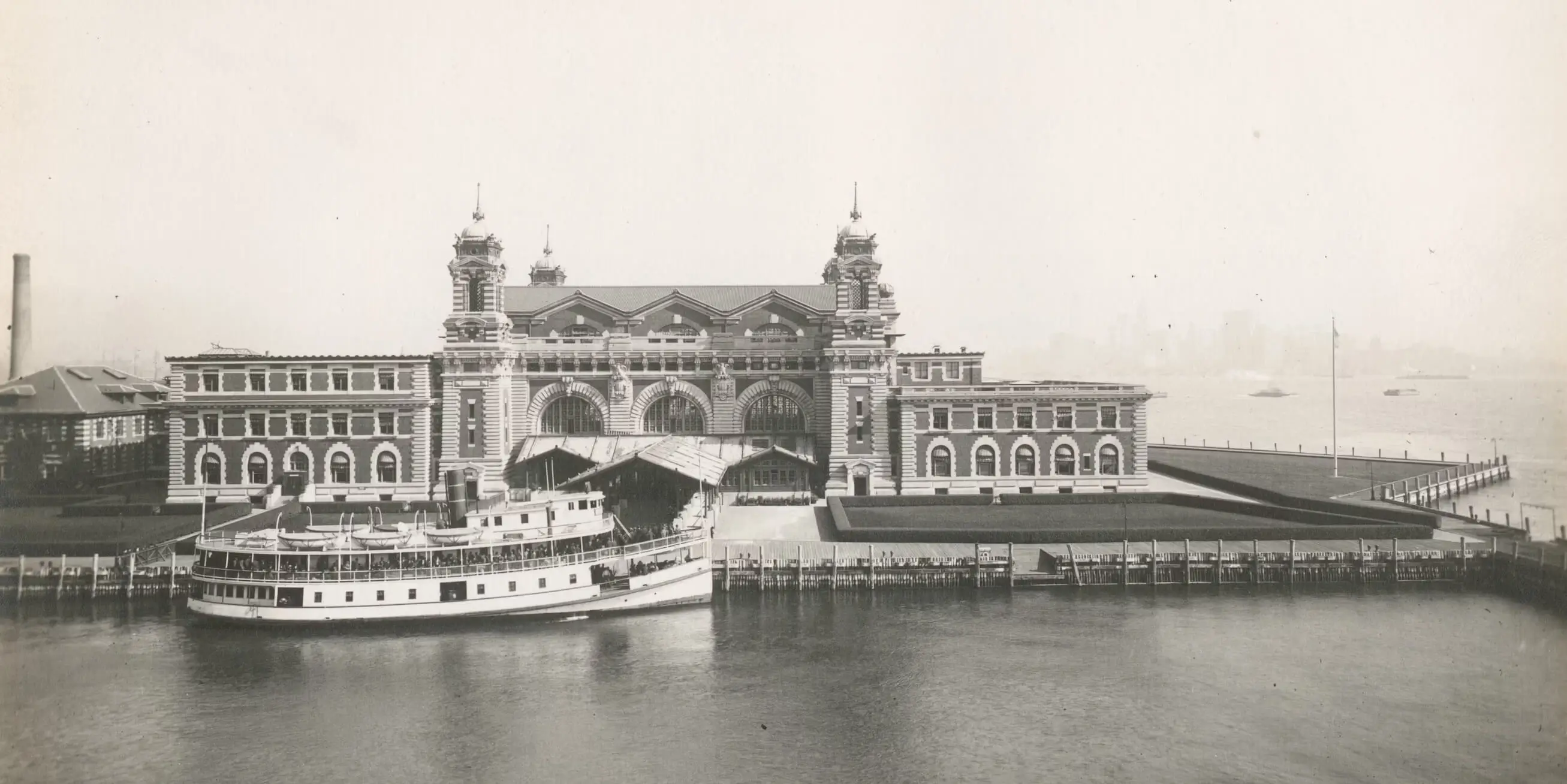
In addition to searching in newspapers for immigrant ancestors, don’t lose sight of the value of port-specific websites. Utilize the information they provide to help build an even better story of your ancestors and their immigration journey. During a sixty year period, more than twelve million immigrants entered the United States at Ellis Island. Two websites documenting the immigrant arrival are: The Statue of Liberty - Ellis Island Foundation and The National Park Service - Ellis Island.
7. Patience and Perseverance:
Finding immigration information is not always straightforward and demands perseverance. Be patient, as uncovering the particular information you're looking for may take time. Returning to your search and utilizing a research log designed for tracking newspaper searches can provide a new outlook and assist in organizing your efforts. You can download an Immigration Research Log HERE.

The Richness of Immigration Stories in Newspaper Archives
For centuries, newspapers have documented the fabric of daily life, and their archives offer glimpses into bygone eras. With the widespread adoption of digitalization, the ease of accessing historical newspapers online has reached unprecedented levels. While finding articles specifically about your ancestors is the goal, don't overlook the value of reading general immigration articles to contribute to the broader narrative of your ancestor's life and the times they lived in. Here are some great articles about immigration:
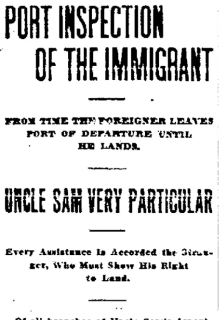
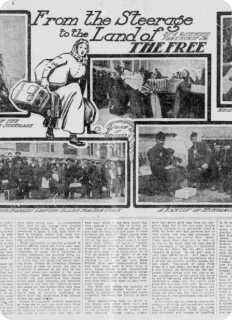
Publications for Immigrants
The collection at NewspaperArchive is rich with newspapers specifically for immigrants and the communities in which they lived. While many of them are written in the native tongue of the immigrants, they can be incredible sources of information. Here are a few of the hundreds of publications available:
A Comprehensive Guide to Immigration Stories in Newspapers
Here are various types of immigration-related content you might come across:
01

Passenger Lists
Passenger lists provide concise records of individuals arriving or departing a specific location by various modes of transportation. These lists typically include names, ages, occupations, and sometimes additional details such as birthplaces. Valuable for genealogical research, passenger lists offer insights into family migration patterns, aiding in the tracing of ancestors and understanding historical movement.
Example:
“La Bourgogne’s Passenger List. It Contains 517 Names - The Ship’s Company Numbered 233 - Total 750. Paul Faguet, New York agent for the Compagnie Generale Transatlantique, stated that La Bourgogne carried 502 passengers - 83 first cabin, 122 second cabin and 297 steerage; . . . [T]he first and second cabin passengers were: Arrouet, Mrs. M; Angel, E.A.; Achard, Mrs. Antoine; Achard, Antoine A. https://newspaperarchive.com/other-articles-clipping-jul-07-1898-4143386/
Key Insights
- Description of all passengers aboard
- Name of the ship
- List of the passengers, but doesn’t distinguish between class
02

Immigration Notices
Documented ancestors' arrivals in America with key details. These announcements may list names, ages, occupations, residence plans and travel specifics of newly-landed foreigners. Some notices gave general information about immigration, laws, and ports of entry.
Example:
“Immigration Conference. Recommendation That Facilities Be Improved at South Atlantic and Gulf Ports. New York, Dec. 9 - The immigration conference of the National Civid Federation adopted resolutions advising radical changes in the present immigration laws, including a recommendation that the facilities of South Atlantic and Gulf ports for handling immigrants be improved so that immigrants steamers will regularly unload at those ports, thereby better distributing immigrants over the South and West. . . . [b]y making provision so that the air and space allotted on the main deck to each person in ships carrying immigrants be not less than 200 cubic feet, instead of 110 cubic feet, and the service of food at tables with seats in compartments not used for sleeping.” https://newspaperarchive.com/other-articles-clipping-dec-09-1905-4143418/
Key Insights
- While it might not include the name of your ancestor, if you know they traveled through the port(s) named, it can give you valuable insight in their journey
- Included here are specifications for new requirements onboard immigrant ships
03

Naturalization Records
Naturalization records document the process of an immigrant becoming a legal citizen. In the 18th-20th centuries, many newspapers published notices announcing upcoming naturalization proceedings or successful citizenship petitions, listing names, birthplaces, ages, new addresses, court dates, and exam details. These notices allow family historians to pinpoint when an immigrant ancestor became a citizen, opening access to additional documents from the naturalization process.
Example:
“51 Naturalized At One Sitting Friday Breaking All Records. Fayette county’s citizenry was increased 51 Friday when that number were granted naturalization papers, breaking all records of the Fayette county courts for a single session of naturalization court. Judge J. Q. Van Swearingen presided. Of the 85 persons 51 were accepted, 27 were denied and three were continued. . . . [F]ollowing is a list of the men admitted: Steve Kacur, Giuseppe Rosa, Emery Pato, Francesco Falatta. https://newspaperarchive.com/other-articles-clipping-apr-06-1912-4143551/
Key Insights
- Lists the men granted naturalization
- Gives details and numbers for that date
- Twenty-seven were denied - further research opportunity - why were they denied?
04

Immigrant Profiles
Immigrant profiles are biographical newspaper articles highlighting the background and success stories of individuals who migrated to America. For family historians, these published profiles give rare glimpses into ancestors' pre-immigration lives, voyages, occupations abroad and adopted hometowns, preserving colorful narratives that vital records alone cannot capture.
Example:
“Di Giogio Enlarges Huge Delano Winery. Agriculturalist, Once Penniless Immigrant, Amasses Fortune in Kern. . . . [S]tarts With $50. Born June 10, 1874, at Cefalu, 40 miles from Palermo, in Sicily, Di Giorgio was more interested as a boy in the growing, harvesting and marketing of lemons than he was in school. By the time he was 14 years old, he was determined to make his way to America. His father gave him $50.” https://newspaperarchive.com/other-articles-clipping-may-12-1942-4149776/
Key Insights
- Name of immigrant
- Date of birth
- Location of birth
- Details about his immigration
05

Immigrant Ship Arrivals
Immigrant ship arrival listings in historical newspapers documented the ships carrying newcomers that had just docked at American ports. These notices listed the vessel names, departure dates and ports, passenger rosters and arrival dates - key details that allow family historians to pinpoint their ancestors' Atlantic or Pacific crossings as the first step to building their story in the new world.
Example:
“Steamship Chemnitz In With Immigrants. Brought 221 Steerage and 17 Cabin Passengers. Only 37 Immigrants Detained for Further Examination - Birth at Sea - Marriage on Deck Tuesday.” https://newspaperarchive.com/other-articles-clipping-jan-12-1910-4149787/
Key Insights
- Passenger names are not listed, but the article provides a wealth of information about those aboard and the journey itself - incredible details to include about an ancestor
06

Port of Entry Updates
Updates to ports of entry found in historical newspapers document changes made to facilitate the processing of newly arrived immigrants. These notices provide context around relatives' arrival experiences, whether updates to infrastructure expanding immigration capacity, new regulations requiring medical inspections, or enhanced border security measures ancestors may have encountered. Tracking ports of entry over time allows descendants to better understand their immigrant forebears' transition into America.
Example:
“Immigration Station Is Assured For Galveston. Members Of Committee Say That Money Will Be Raised. City Commissioner I.H. Kempner Is Confident That Work On New Station Will Commence Soon. . . . [E]very immigration facility enjoyed by the Ellis Island station in New York City will be embodied by this station in Galveston for the handling of immigrants. The money that will be expended by the city and individuals will be a good investment and pay immense returns. The Galveston station, when completed, will be the only immigrant station south of Baltimore.” https://newspaperarchive.com/other-articles-clipping-sep-23-1909-4149784/
Key Insights
- Detailed information about the plan for a new immigrant port in Galveston, Texas
07

Immigrant Communities
Immigrant communities refer to ethnic enclaves that formed as newcomers settled into American cities and towns. For family historians, notices about these communities provide social histories, documenting cultural events, economic enterprises, places of worship, population statistics, occupational trends and civic activities unique to an ancestral group.
Example:
“Warm weather has brought out for the first time in six months all the inhabitants of “Little Italy,” and revealed to thos who on pleasure or business bent are compelled to pass along South Seventh street some very foreign and picturesque sights and scenes.” https://newspaperarchive.com/other-articles-clipping-apr-26-1896-4143569/
Key Insights
- “Little Italy in Philadelphia” is an incredible depiction of life in the Italian community in Philadelphia in 1896 - great historical and social context to add to family history
08

Local Immigrant Stories
Local immigrant stories from newspapers preserve unique portraits of ancestors, documenting singular lives through first-hand interviews on topics ranging from voyages braved, cultures maintained, livelihoods built, to prominent roles held in ethnic communities woven into the new homeland.
Example:
“Thriving Syrian Community Keeps Many Old Customs. . . . [C]ame After Chicago Fair. The Syrian community in La Crosse dates fro a period immediately after the world’s fair in Chicago.” https://newspaperarchive.com/other-articles-clipping-jan-29-1916-4149828/
Key Insights
- Detailed information about the Syrian community in La Crosse
- Further detailed information about their work in the chicken industry
- Showcases several individuals of importance in the community and poultry business
09

Immigration Statistics
Immigration statistics found in historical newspapers offer hard data about an ancestral group’s population within a local area over time - tracking growth rates, countries of origin, settlement patterns, occupations, and demographic mixes to contextualize the migrant community.
Example:
These two charts are included in larger articles about immigration statistics. https://newspaperarchive.com/other-articles-clipping-dec-30-1905-4154249/ https://newspaperarchive.com/other-articles-clipping-aug-22-1915-4154257/
Key Insights
- The chart from 1905 gives a breakdown of the number of each race that arrived in the United States that year.
- The chart from 1915 is similar, but instead of the number, it gives the percentage of foreign born that immigrated to the United States.
10

Immigrant Health and Wellness
Reports on immigrant health in historical papers chronicle ancestors’ medical hurdles, tracing disease outbreaks in ethnic communities, changing policies around healthcare access for newcomers, as well as social support systems unique cultural groups created to care for their own.
Example:
“Dangers of Ignorance. The immigrant ship Wm. Nelson was recently destroyed off our coast by the captain fumigating his vessel as he approached port, with pitch, into which were thrust red hot irons. The pitch took fire, the ship was destroyed, and with the exception of a few persons, including the captain and the other officers, all the passengers nearly - over four hundred persons - were burned to death or went down with the hulk. It is a very common practice of shipmasters to fumigate their vessels to rid them of disease and vermin. . . . [T]his being an immigrant ship, it is likely that is was infected with fever.” https://newspaperarchive.com/other-articles-clipping-aug-10-1865-4149778/
Key Insights
- Name of the immigrant ship
- Details of the disaster (crime)
11

Immigrant Detention and Deportation
Stories of immigrant detentions or deportations in newspapers document ancestors caught in shifting political crosswinds - preserving forgotten tales of relatives expelled, imprisoned under harsh conditions, or tragically separated from families bound to American soil.
Example:
“An immigrant story now going the rounds of the press shows the folly to which a rigid enforcement of poorly drawn laws may lead. On a vessel entering New York harbor, late in the evening of June 30 was a Belgian woman, coming as an immigrant to the United States. June 30 closed the fiscal year, and the Belgian quota for that year was already full. If the vessel had been delayed just enough to bring it into harbor after midnight, she would have been eligible to enter on the quota of the new year. But under the law as it stands, she had to be sent back on the same vessel on which she had come. While her case was under examination, the ship sailed, and she had to be held at Ellis Island until it go back on the next trip.” https://newspaperarchive.com/other-articles-clipping-aug-16-1922-4149817/
Key Insights
- Details (but not naming the immigrant) of detention at Ellis Island due to quota laws
12

Immigration Scandals and Controversies
Immigration scandals uncovered in newspapers expose ancestors caught in the complex politics of their times - revealing overlooked stories of migrant communities unfairly targeted, wrongfully accused, or turned away due to prejudice rather than policy.
Example:
“Fine Capt. Keen? Never. He Saved Eleven Lives, and What if He Did Break the Laws to Do It? All Pose As Members Of The Crew. Four Were Ladies and Played Stewardesses on the Ship Delcomyn - No Passenger List, Hence Trouble Hero.” https://newspaperarchive.com/other-articles-clipping-apr-25-1894-4143374/
Key Insights
- Incredible story with great detail of misinforming officials regarding passengers versus crew - passengers were not immigrants, but an example of falsifying passenger information for safety
13

Missing Friends
The Missing Friends section of the Boston Pilot newspaper offered a vital lifeline for Irish immigrants separated from loved ones by the famine and migration. From 1831 to 1921, readers posted poignant personal messages seeking information about family, friends, and acquaintances lost in the upheaval who'd embarked to American shores. For descendants, these fragments can reconstitute broken ancestral lines. For more detailed information about Missing Friends, read the blog post Information Wanted - The Search for Missing Irish Family.
Example:
“Information Wanted. Of Thomas Rooney, a journeyman baker, a native of Ireland, who worked in St. Louis two years ago, and worked also about a year and a half in Pittsburgh before he went to St. Louis. He is supposed to be about New Orleans, or in that direction. Should any kind-hearted individual know anything of him they would greatly oblige an only brother, by addressing a few lines to James Rooney, Baker, 276 South Fourth street, below Shippen, Philadelphia, Pa. He may perhaps be in the Northern States.” https://newspaperarchive.com/other-articles-clipping-jun-06-1846-3082517/
Key Insights
- Name of the missing individual
- His occupation
- Locations where he worked
- When he was supposed to be headed
- Relationship to the missing person
- Name of the person placing the ad
- Location and address of the person placing the ad
- Additional information that might help locate the missing person
Conclusion
The search for your family's immigration history can be a captivating and deeply meaningful journey. With the vast resources available in online newspapers like NewspaperArchive, you can uncover the stories of your ancestors and gain a richer understanding of their experiences. By effectively searching and interpreting the diverse range of immigration-related content, you can connect with your heritage, preserve your family's legacy, and honor the struggles and successes of those who paved the way for your existence.
So, dive into the newspaper archives, explore the articles, and let your ancestors' stories come to life. Happy family history hunting!