Avoid Overcrowding of Chicken House in Fall
Poultry experts urge gradual adaptation from range to confinement to prevent overheating and illness in fall. Start with few birds, expand as they adjust. ensure air flow from one direction, avoid drafts, provide dry litter and exercise, and offer succulent feed as birds lose access to green range.
MENTIONED IN THIS ARTICLE
University Farm
A. G C. Smith
Division of
Poultry Husbandry
Bone Cutter Cuts Feed Costs for Laying Hens
The bone cutter is a cheap, durable aid for poultry, reducing grain use and boosting egg production. It enables balanced rations by providing essential bone meal, saving feed costs and improving overall hen health.
Chickens Self Feeders When Given Free Range
Chickens on free range will largely provide their own food by pecking weeds insects and scraps. They can convert waste into value and help control orchard pests by eating larvae and insect eyes. In orchards where chickens range brown tail moths decline while non ranging areas suffer more pest pressure.
Guinea Fowl Prove Hardy With Minimal Care
Guinea fowl thrive with little attention and feed, doing well on limited food and foraging. The birds show improved varieties and potential for expanding their role in poultry farming in the United States.
MENTIONED IN THIS ARTICLE
Guinea
United States
Egg production hinges on protein in hen feed
Production depends more on the type and amount of protein than on other feed. Hens are grain eaters and thrive on varied grain mixtures if provided with milk or meat scrap. Keeping most of the whole grain until night feeds keeps hens hungry and encourages them to eat concentrated protein feed later.
Poultry Health and Nesting Standards for Flocks
guidelines advise avoiding strict restrictions on chicks and promoting free movement. emphasis on healthy birds, gentle handling, clean nests, and closed nests angled to prevent soiling. stress constitutional strength and disease resistance to keep the flock vigorous.
Parasites Found To Combat European Earwig Nuisance
Dr. L O Howard reported two European parasites discovered during a 1930s Europe trip to curb the European earwig, now a pest around Seattle and Portland. The bureau will study the parasites in Hyeres France and ship them to the United States for release while noting earwig biology and control options.
MENTIONED IN THIS ARTICLE
United States Department of Agriculture
L. O. Howard
Bureau of Entomology
Europe
Seattle
Wash
Portland
Ore
Newport
M. I
Howard
Bureau
Hyeres
France
Hog pest remedies and dipping for lice on hogs
A livestock article discusses lice on hogs and methods to control them. It covers dipping with oil or kerosene mixtures, cautions on safety, and notes canal tar dips and oiling posts as useful when applied correctly.
Mash for Growing Ducklings Ingredients and Care
A duckling mash uses 2 parts cornmeal 1 part middlings and 1 part bran with 10 percent beef scrap and little green feed. Care varies with range conditions which may supply most or little of the ducks' food.
Roughage Important for Dairy Calves Rearing
An article notes the importance of roughage in calf nutrition to develop capacity for a large feed intake at maturity. It states roughage provides the most economical part of the ration for milk production and emphasizes careful feeding during calf rearing.
Judge Work of Hen Based on Feathers and Molting
The article explains how to judge a hen's past work by yellow pigment in beak and shanks the season she began molting and her condition at cubling time.
Clean Up the Garden for Healthy Next Season
Garden guidance urges clearing decayed vegetables and plants to prevent disease and insect damage. Timely cleanup reduces illness risk and promotes robust future yields.
Bees Need Overcoats During Cold Weather
Beekeepers at the New York College of Agriculture in Ithaca describe two wintering methods. Packing-case hives require four colonies per case with insulations of four inches bottom eight inches sides and a foot on top. prepare in late September or October. Cellaring in barns is favored in northern New York with a 45 to 50 degree Fahrenheit constant temperature, dark conditions, minimal ventilation, frost-proof cellars, and outdoor reintroduction in April.
MENTIONED IN THIS ARTICLE
New York College of Agriculture
Ithaca
New York
Propagating Currants and Gooseberries in Autumn and Spring
Currants propagate by stem cuttings from the previous season with variable lengths from three to nine inches, planted six inches apart in rows three to four feet apart. Gooseberries are typically started by mound layering and later cuttings from shoots about a foot long are planted like currants. Nurserymen sell currant and gooseberry plants as one or two years old, with two-year plants offering better developed root systems.
Make Cuttings in Fall for Best Vineyard Start
Farmers are advised to prepare grape cuttings this fall for spring planting. From one vine, several cuttings can be made, then stored in damp sand or buried to protect them, with two to three buds per cutting. In spring, plant with rows three feet apart and four inches spacing, allowing only the top bud to emerge.
MENTIONED IN THIS ARTICLE
The
Farm Journal
Buttermilk Mashes Boost Growth in Chick Ration
Buttermilk mashes are the most popular element in the growing chick ration among commercial poultry breeders. They stop and prevent bowel trouble in young stock and at the same time enable greater growth than other feeds.
Twin brother to tuberculosis Johne's disease harms dairy herds
Veterinarians warn of Johne's disease also called Johne disease or paratuberculosis a fatal dairy herd scourge resembling tuberculosis. It mostly strikes young heifers spreads quickly and causes rapid weight loss diarrhea and reduced milk flow. Detection via Johnnn test and strict culling and isolation can limit spread. Madison bulletin 43 outlines symptoms detection and prevention.
MENTIONED IN THIS ARTICLE
Johne
T. B
B.A. Beach
Wisconsin College of Agriculture
Wisconsin
Joeline
Johnnn
Mir Mustings
Mr. Hastings
Denmark
Madison
Wis
Economical Hog Ration Guide From Ohio Experiment Station
Ohio experiment station reports on supplements to corn for fattening swine. Data compare cost per 100 pounds of gain using 17 corn to tankage versus one corn to two skim milk. skim milk shows higher feeding value but tankage beats milk when milk supply is limited.
MENTIONED IN THIS ARTICLE
Ohio Experiment Station
Eorn
Making Most Rapid and Economical Pork Gains
The article argues that simply feeding hogs unlimited corn is inefficient. Balanced rations with corn supplemented by protein-rich feed yield faster, more economical gains, based on experiments and practical experience.
Livestock Farming Tips From The Farm Journal Notes
Severe weather may require artificial heat for sow farrowing pens. Siloes reduce labor as cattle are fed easily from a nearby feeding source. A combined hay and cattle barn is economical. Build hay doors under eight by twelve feet to allow slings. Sheep need constant salt to avoid overconsumption and scours. Let sheep eat freely. Steers fed succulent feeds gain more but cost of feed and water should be considered.
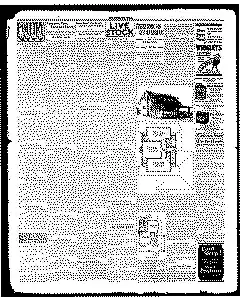
Stucc o Home For City Of Country With Large Inviting Porch
William A. Radford offers free building advice in this feature on a stucco city of country house. The design emphasizes a low spreading roof line a corner fireplace a bay window and a spacious porch wrapping to the side with a reception hall stairs and three upper bedrooms. Landscaping with maples elms shrubs and boxes completes the inviting look. gray tinted stucco with white trim is recommended for harmony with local conditions.
MENTIONED IN THIS ARTICLE
William A. Radford
Prairie Avenue
Chicago
A Husband Refuses Widow’s Plea Cites Sleep Loss
Jabson recalls denying his wife a small sum of money, a decision that haunted him with sleeplessness. Madson commends his softness of heart, prompting the confession and the reveal that the claimant was his spouse.
MENTIONED IN THIS ARTICLE
Madson
Another Street Car Tragedy
First trolley conductor Kelly was fired for failing to ring a nickel after a passenger was struck. The second conductor reported his car hit a man on Steenth Street, dragging him a block on the fender and collecting a nickel in the confusion, revealing the man was a spotter.
MENTIONED IN THIS ARTICLE
Kelly
Steenth Street
Glowworms Brightest Before Storm
Glowworms glow brightest when a storm nears, a curious natural mystery not yet explained. Snowy linens are a housewife’s pride and can be kept bright by using Red Cross Ball Blue in laundry at all grocers.
How She Felt About It
Mrs. Carter visits the office and accuses the stenographer of flirting with her husband. The stenographer overhears and denies the charge while Mrs. Carter demands the girl be fired. The exchange unfolds in a Kansas City Star column style anecdote.
MENTIONED IN THIS ARTICLE
Mrs. Carter
John
Origin of Halibut Name Explained in Halibut
Nature Magazine notes halibut derives from holy plus butte, with holy days linking to its use as a diet staple on holidays. The spelling halibut is standard, reflecting the old English term for the flounder and its festive association.
MENTIONED IN THIS ARTICLE
Nature Magazine
Sun Spots versus Freckle Fuss
Quote contrasts vast sun spots with a girl’s complaint over a freckle. Published in the Boston Transcript reflecting a humorous comparison of scale and emphasis.
MENTIONED IN THIS ARTICLE
Boston Transcript
Also Mentioned on This Page
Powde
Las
Ohio
Jabson
America
International Metal Polish Company, Inc
Indianapolis
Indiana
Blue Ribbon Battery CO
W.N. Y
Sol

 This is just the beginning! Our collection holds over 300 years of history, including rare newspapers, obituaries, marriage records, birth records, and so much more—most of which you won’t find anywhere else!