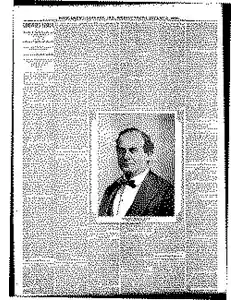
Bryan Campaign Address At Indianapolis On Imperialism
In a keynote speech at Indianapolis, William Jennings Bryan argues the 1900 campaign is a clash of democracy against plutocracy, denounces imperialism in the Philippines, and urges government by consent. He cites Lincoln, Jefferson, and Clay to demand self government for colonized peoples and warns against a large standing army and forced annexation.
MENTIONED IN THIS ARTICLE
Bryan
Indianapolis
Iausas City
Tepublican Party
Lincoln
Republican Party
Max m
Jefferson
Dane
Democratic Party
Lhou
Republicans Charged With Evading Philippine Issue
Policy in the Philippines becomes a partisan test as Republicans face claims they dodged the vital question. The piece recalls Lincoln and Clay supporting debate during wartime while criticizing the current administration, noting the convention's platform favored self-congratulation over a clear plan.
MENTIONED IN THIS ARTICLE
Lincoln
Clay
Our History Warns Against Philippine Imperialism
The author argues against U S imperial rule in the Philippines and defends the principle of self government. Citing Lincoln Jefferson and Washington the piece warns that empire would erode liberty at home and abroad, urging Republicans to oppose conquest and imperial domination. It notes current South African conflict tests liberal values and colonial policy.
MENTIONED IN THIS ARTICLE
United States
Philippine Islands
Republican Party
Patrick l Henry
Jefferson
Washington
LinculIn
Lincoln
Philippines
South Africa
Jefferson Denounces Conquest As Un-American
The passage cites Jefferson to argue conquest contradicts American principles. It quotes him stating that he should have nothing to do with conquest and that conquest is inconsistent with our government. It emphasizes opposition to forcible annexation and imperial expansion.
MENTIONED IN THIS ARTICLE
Jefferson
What Are We to Do with Him Now That We Have Him?
The piece argues over Philippine status under American rule. It contrasts Republican and Democratic lines on whether Filipinos can be citizens or must be subject, opposing colonial rule and asserting rights and self governance. It questions force versus consent in imposing government.
MENTIONED IN THIS ARTICLE
House
Senate
Spain
Cuba
Philippine Islands
United States
Philippines
Lincoln
Bacon
Manila
Archy
Democratic Party
Republic
Louisiana
Florida
Texas
House of Representatives
Blause
Liue Luc
George III
Republican Party
Jefferson
Franklin
Miral Dewey
Navy Department
Clay
Chanuitepec
Mexico
Rio Grande
Babylon
McEnery
Democratic Platform
Iorce
Title to Philippine Islands and the People Debate
A rhetorical inquiry questions U.S. possession of the Philippines. It asks whether title rests on treaty, conquest, or purchase, and whether people are included with land or separately secured. The piece cites divine bond imagery and mocks Republican positions.
MENTIONED IN THIS ARTICLE
Philippine Islands
Bec
The Obligation to Self Government in the Philippines
The argument asserts the United States must remain true to its own governmental theory in the Philippines, arguing no foreign obligation overrides the nation's right to govern itself. It states obligations to Filipinos outweigh any ties to other nations and rejects doctrines contrary to American national life.
MENTIONED IN THIS ARTICLE
Philippine Islands
Four Republican Contentions on Imperialism and Trade
The piece analyzes four arguments used to defend imperialism. It contrasts a pride based claim to world power with commercial aims in the Philippines and the Orient, a claim that Christian expansion justifies colonization, and a stance against retreat. It contrasts Republican and Democratic views on humane trade expansion versus war for profit.
MENTIONED IN THIS ARTICLE
Philippine Islands
Orient
Philippines
Franklin
Ifranklin
Democratic Party
Also Mentioned on This Page
William Jennings Bryan
Porto Rico
Oriiental

 This is just the beginning! Our collection holds over 300 years of history, including rare newspapers, obituaries, marriage records, birth records, and so much more—most of which you won’t find anywhere else!