Rural Electrification Progress Sees 92 Percent Farm Service
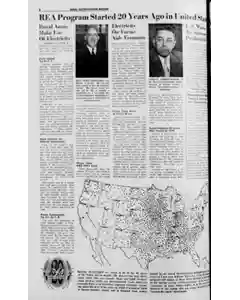
The REA program has connected over 92 percent of American farms to electric service by mid century. Grassroots, locally owned cooperatives and public bodies built the networks with private investment and government loans. Energy sales rose by 2.8 billion kWh year over year, and average monthly farm usage reached 226 kWh. Rates fell to 3.06 cents per kWh in 1954 while margins grew nearly 40 percent.
MENTIONED IN THIS ARTICLE
America
REA
Ancher Nelson
Congress
Riral
Electricity On Farms Aids Economy
REA loans have funded electric systems for 1 075 borrowers, expected to serve over 4.4 million rural consumers on about 1.4 million miles of line. By January 1, 1953 repayments totaled 569 million, with only 307 thousand delinquent over 30 days. Farmers benefit from milking and cooling equipment, and future plans include telephone service expansion.
MENTIONED IN THIS ARTICLE
REA
REA Electric
U S Steel Seeks Ways to Boost Productivity
A brief item notes efforts by U S Works To Inc to improve output and efficiency. The one line fragment hints at continued coverage on another page.
MENTIONED IN THIS ARTICLE
U.S
Lehman Praises REA Program As National Economy Builder
Senator Bert H. Lehman of New York told the Senate on the anniversary of rural electrification that the REA program has been among the most fully conceived plans ever adopted by government. He said it helped build a robust rural economy and its loss would push the sector into a low mood akin to past hardships.
MENTIONED IN THIS ARTICLE
Uncle Sam
Rea
Bert H. Lehman
New
Senate
Also Mentioned on This Page
United Sta
Morris L. Cooke
Joe Doakes
Bill Smith
Rural Electrification Administration
Minnesota
The
Union
Alaska
United States
Sen
Lehman

 This is just the beginning! Our collection holds over 300 years of history, including rare newspapers, obituaries, marriage records, birth records, and so much more—most of which you won’t find anywhere else!