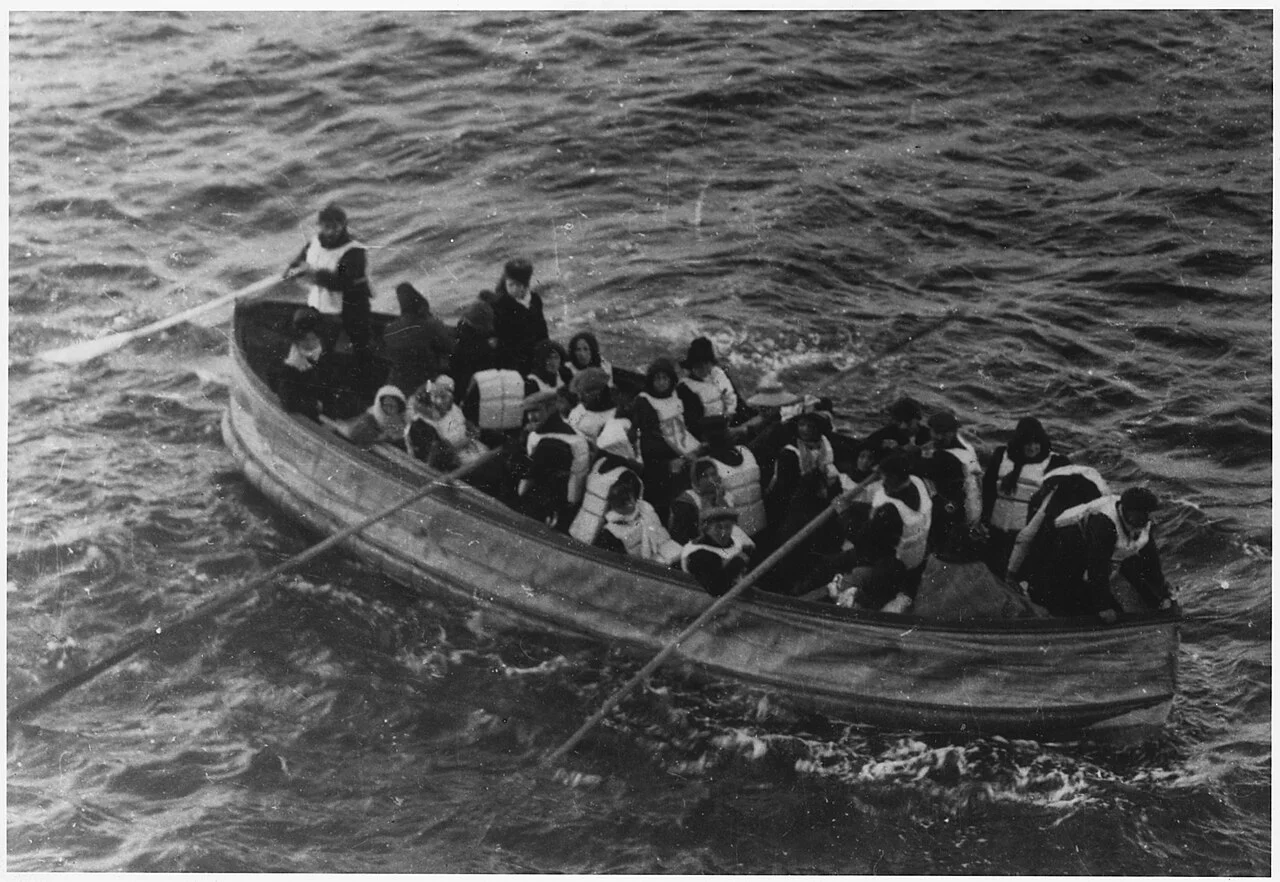
Untold Titanic Survivor Stories Found in Old Newspapers
Discover real Titanic survivor stories from 1912 newspapers. Learn how to find firsthand accounts, survivor lists, and hidden details in NewspaperArchive.
Newspapers captured Titanic survivor stories in real time, preserving firsthand accounts, emotional family reactions, and details not found in official records. By searching April–May 1912 coverage, using keywords like “survivor” or “rescued,” and exploring interviews and local reports, researchers can uncover powerful, personal stories that bring the disaster to life beyond passenger lists and historical summaries.
Late on the night of April 14, 1912—and into the early hours of April 15—the RMS Titanic slipped beneath the Atlantic Ocean. More than 1,500 lives were lost. Just over 700 survived.
More than a century later, the Titanic disaster still captures our attention. But here’s the truth most people don’t realize:
The real stories didn’t end when the ship went down.
They continued—line by line, column by column—across the pages of newspapers in the days and weeks that followed.
And those stories are still waiting to be found.
Why Titanic Survivor Stories Still Matter
We often think of the Titanic as a single moment in history—a tragedy frozen in time. But newspapers tell a very different story.
They show:
Survivors trying to make sense of what happened
Families desperately searching for names on survivor lists
Firsthand accounts that are raw, emotional, and immediate
These aren’t polished histories written years later.
They are voices from 1912—captured as events were still unfolding.
How Newspapers Captured the Titanic in Real Time
In the days after the sinking, newspapers across the country raced to report new details. Early editions were filled with confusion—conflicting survivor lists, incomplete information, and desperate hope.
But as the days passed, something remarkable happened:
Survivors began to speak.
Reporters documented their experiences in vivid detail—what they saw, what they felt, and what they endured in those final hours.
These accounts didn’t just report the tragedy.
They humanized it.
If you want to see how those early reports unfolded—often with conflicting headlines and misinformation—read how newspapers first covered the Titanic disaster.
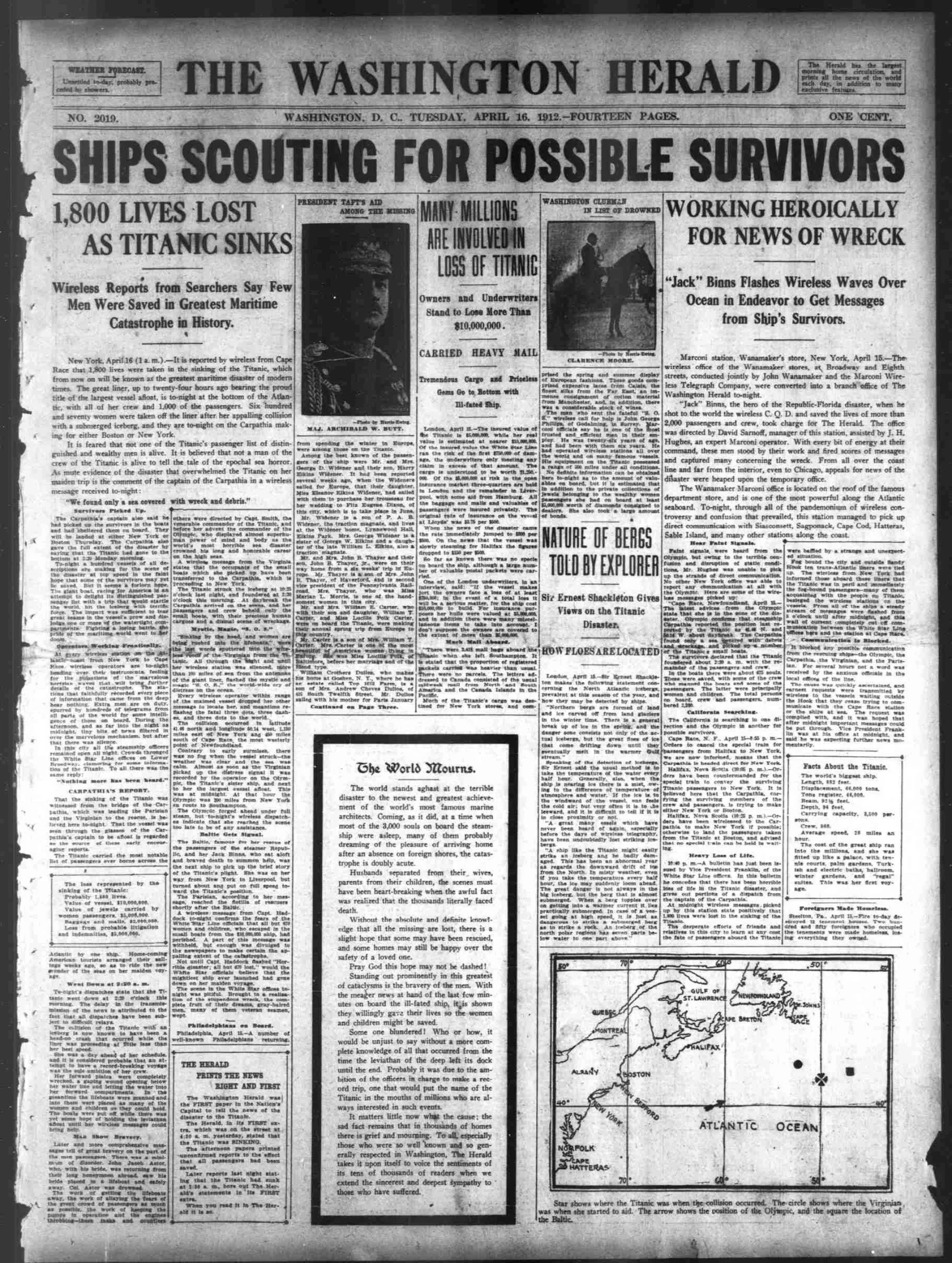
Real Titanic Survivor Stories from 1912 Newspapers
Shock, Grief, and the Weight of Survival
His experience was shared through a letter to his brother, describing how he leaped into the sea, clung to a small raft, and drifted for hours in the freezing water before being rescued. Back home, his family only realized he had been on the Titanic after spotting his name—first on a passenger list, then among the survivors—unsure at first if it was truly him.
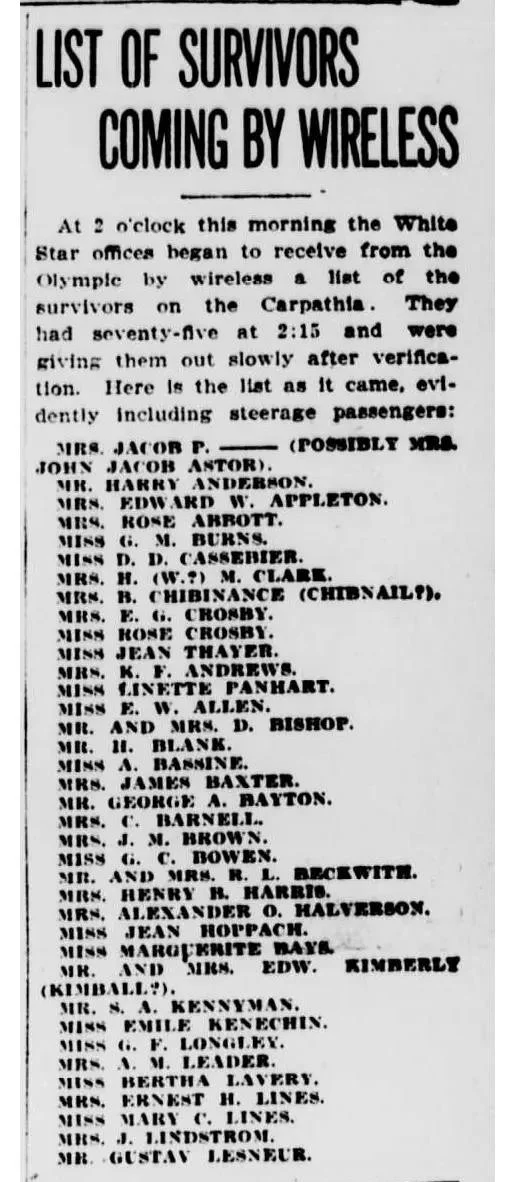
The article below includes one of the many printed survivor lists—reminders of how uncertain and chaotic those early reports were.
A printed survivor list like this left families scanning every line for familiar names.
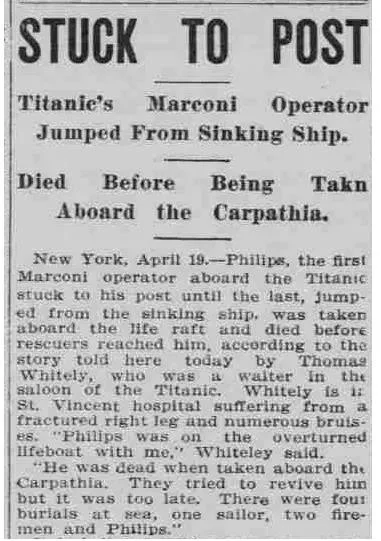
A Voice from the Water
An article from The Topeka Daily State Journal tells the story of a Marconi radio operator who stayed at his post until the very end.
The account isn’t secondhand—it comes from someone who shared an overturned lifeboat with him in the freezing water.
You don’t just read this story.
You feel it.
Stories That Sound Almost Unbelievable
Some newspaper accounts feel almost too extraordinary to be true—and yet, there they are in print.
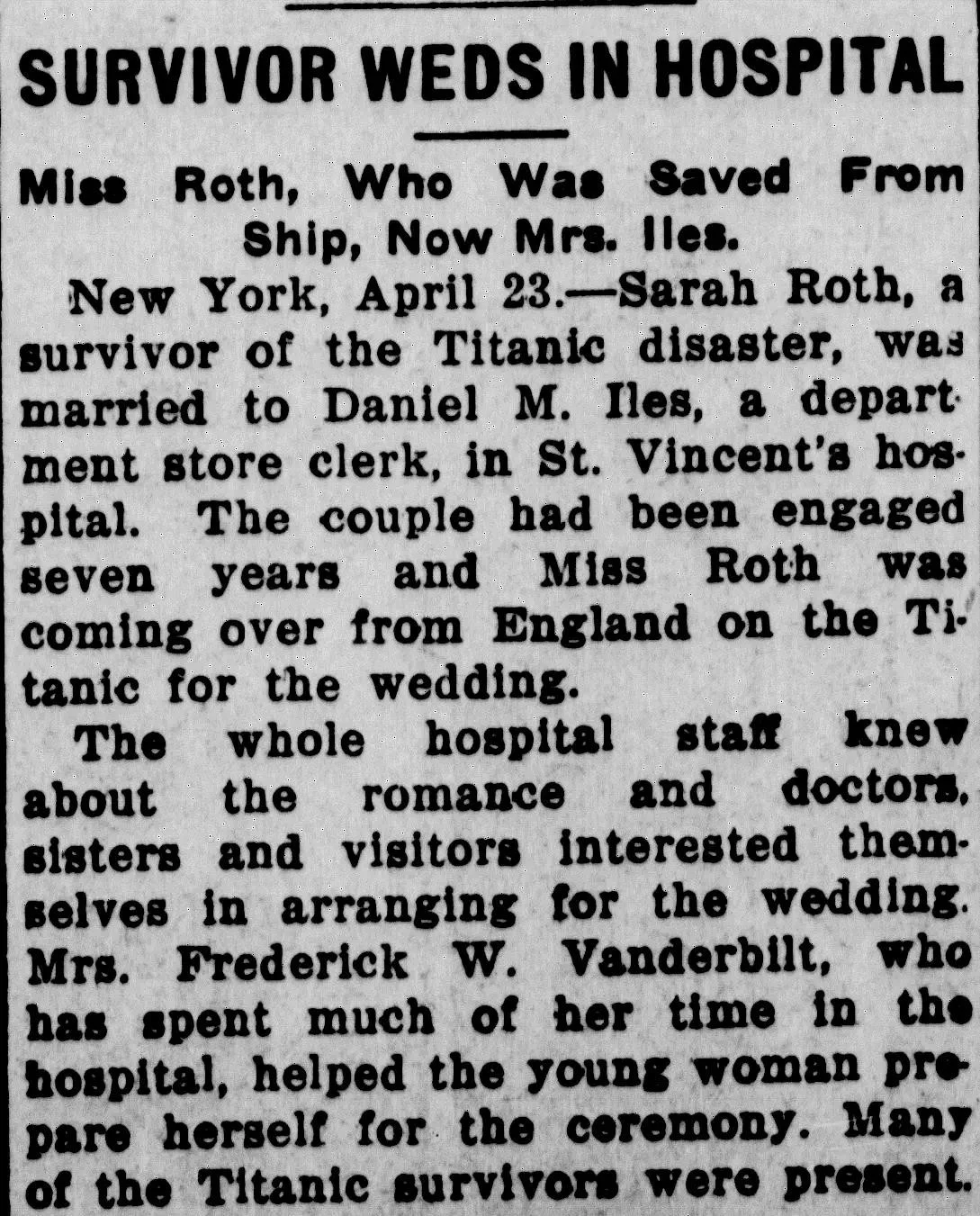
In The Daily Times, a young woman who had been engaged for seven years boarded the Titanic to reunite with her fiancé. After surviving the disaster, the two were married in St. Vincent’s Hospital as she recovered.
These aren’t just stories of survival.
They are stories of interrupted lives, unexpected reunions, and unanswered questions.
Telling the Story of Survival
In The Sun, Isaac C. Frauenthal tells his story, still grappling with the shock of the sinking—recounting the confusion, the hurried escape, and the lingering disbelief that they had made it out alive. Like many accounts published at the time, the story blends fact with emotion, offering a glimpse into what survival actually felt like in the days after the Titanic went down.
Why Small-Town Newspapers Matter in Titanic Research
Some of the most powerful Titanic stories didn’t appear in major city headlines—they were told in small-town newspapers.
These local papers focused on people, not just the event. Instead of broad summaries, they published deeply personal accounts: a survivor writing home, a family recognizing a name on a list, or a community reacting to the news in real time.
In many cases, small-town newspapers included details you won’t find anywhere else:
Personal letters and firsthand accounts
Mentions of relatives and hometown connections
Follow-up stories days or even weeks later
Local perspectives on a global tragedy
This is where the story becomes more than history—it becomes personal.
NewspaperArchive’s extensive collection of small-town newspapers makes it possible to uncover these kinds of details. Whether your ancestor lived in a large city or a rural community, their story—or someone connected to them—may have been captured in ways you wouldn’t expect.
The Survivors Who Lived On
For some survivors, the story didn’t end in 1912.
It followed them for the rest of their lives.
Millvina Dean, only two months old during the voyage, lived until 2009—the final living link to the disaster.
Their stories resurfaced decades later in newspapers once again—proof that the Titanic was never just a moment in history, but a lifetime of memory.
What These Stories Reveal That Records Don’t
Passenger lists can tell you who was on board.
Official reports can tell you what happened.
But newspapers?
They tell you:
What it felt like to survive
How families responded in real time
The human details that never made it into official records
This is where history becomes personal.
How to Find Titanic Survivor Stories in NewspaperArchive
If you want to uncover these kinds of stories yourself, here’s where to start:
1. Search by date
Focus on April–May 1912 for the most detailed survivor accounts.
2. Use targeted keywords
Try combinations like:
“Titanic survivor”
“rescued Titanic passenger”
“Carpathia survivors” (the RMS Carpathia rescued many survivors)
3. Look beyond headlines
Some of the best stories appear in:
Local news columns
Interviews
Human interest pieces
4. Search by names
If you know a passenger or crew member, search their name—you may uncover unexpected details about their experience.
Would You Have Found These Stories Without a Newspaper?
This is where newspapers change everything.
Without them, you might know:
A name on a passenger list
Whether someone lived or died
But with them?
You discover:
What they experienced in those final hours
How their story was told at the time
The ripple effect on families and communities
These are the details that turn history into story.
Start Your Search for Titanic Stories
The stories of Titanic survivors aren’t lost.
They’re waiting—preserved in the pages of newspapers.
Because sometimes, the most powerful stories…
are the ones hiding in plain sight.
Frequently Asked Questions
What did Titanic survivors say in newspapers?
Newspapers published firsthand interviews with Titanic survivors, describing the collision, the chaos of evacuation, and their experiences in lifeboats. These accounts often include emotional details and perspectives not found in official reports.
How can I find Titanic survivor stories in old newspapers?
Search newspapers from April–May 1912 using keywords like “Titanic survivor,” “rescued passenger,” or specific names. Look beyond headlines into interviews, local news sections, and human interest stories for the most detailed accounts.
Why are newspaper accounts of the Titanic important for research?
Newspaper articles capture real-time reactions, survivor voices, and community responses that official records don’t include. They add depth and context, helping researchers better understand what people experienced during and after the disaster.