How to Find an Ancestor’s Address Using Newspapers
Learn how to find an ancestor’s address using newspapers. Discover records, search tips, and strategies to trace where your family lived over time.
Old newspapers frequently include ancestor addresses in obituaries, classified ads, legal notices, and social columns, making them one of the best sources for tracking where someone lived between census years. By searching names, locations, and even known addresses, you can uncover street-level details, follow moves over time, and use those addresses to connect to additional records like city directories, property records, and neighboring family members.
I didn’t set out looking for addresses.
I was just trying to find mentions. Anything that would tell me a little more about my great-grandfather Harry. Where he was. What he was doing. Who he was around.
At the time, I thought I already understood his life. He started in a small Indiana town and, as far as I knew, stayed there.
Simple. Steady. Predictable.
And then the newspapers started telling a completely different story.
The Moment an Address Changes Everything
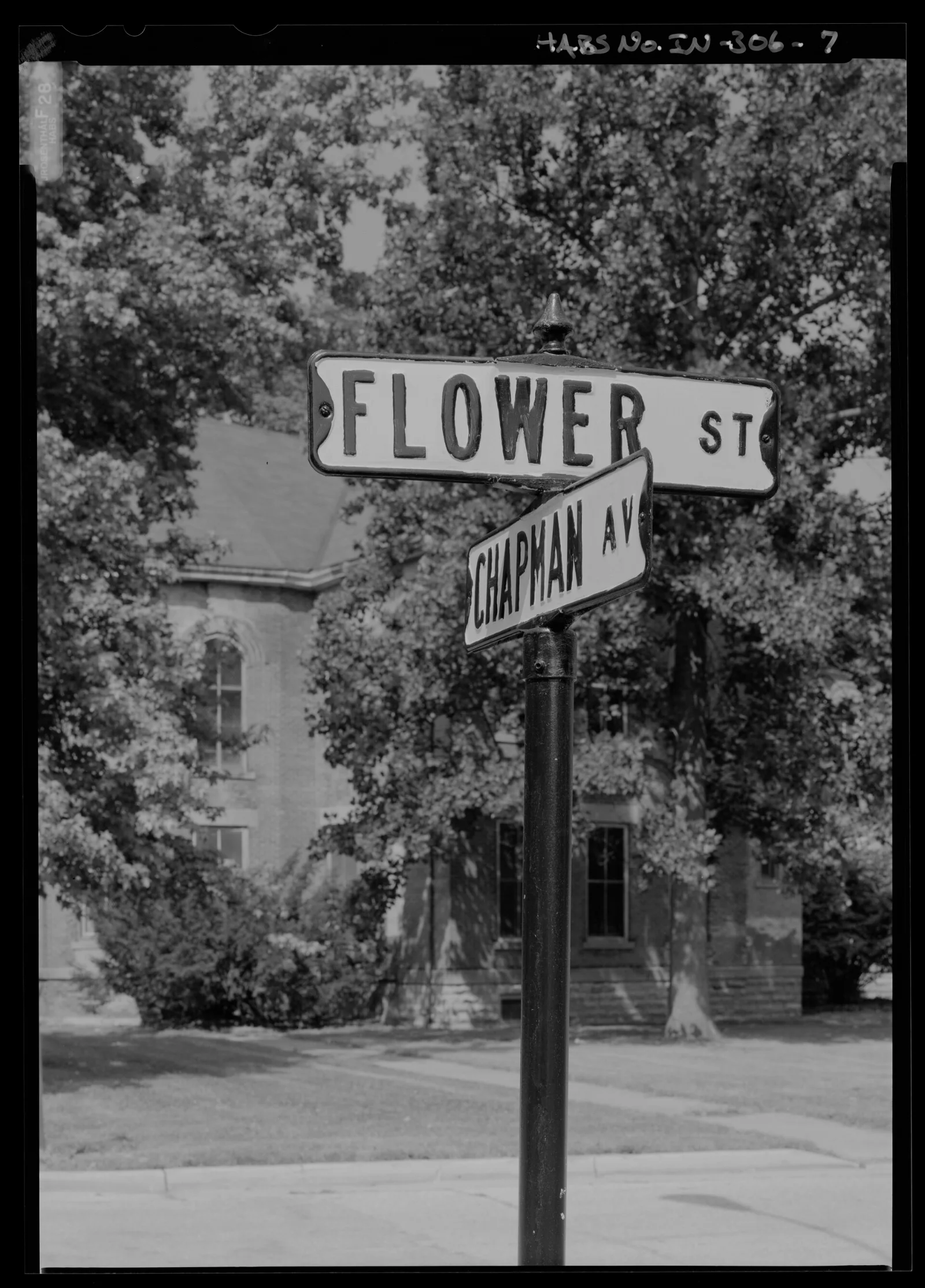
There’s a difference between knowing a place and knowing an address.
“Greensburg, Indiana” is one thing.
“North Franklin Street” is something else entirely.
The first time I saw a street name tied to Harry, I stopped.
Because now I could picture it.
I could imagine him walking out the front door. Who might have lived next door. What that part of town felt like.
It grounded him in a way that no census record ever had.
And once I saw one address, I started seeing them everywhere.
Why Newspapers Fill in the Gaps Better Than Anything Else
Census records are snapshots. I use them all the time. But they only show up every ten years, and life doesn’t politely wait for the next enumeration.
Newspapers catch everything in between.
They record people:
leaving town
coming home
visiting relatives
renting houses
buying property
showing up where you didn’t expect them
And mixed into all of that are these small, easy-to-miss details…like where someone actually lived at that moment.
Sometimes it’s exact. Sometimes it’s just a clue.
If you’ve never tried this before, just search a name you already know on NewspaperArchive and read a few results straight through. Don’t overthink it. The address clues usually show up when you’re not even looking for them.
What Harry’s Addresses Actually Revealed
When I started pulling together Harry’s newspaper mentions, I wasn’t looking for a pattern.
But one showed up anyway.
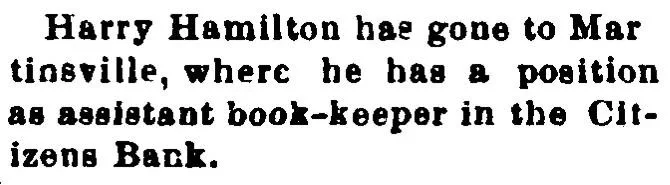
At 16, he’s in Martinsville, taking a job at a bank with his uncle.
A few months later, he’s in Lafayette, connected to Purdue.
Then he’s back in Greensburg.
Then Des Moines.
Then, unexpectedly, I see this:
“His address will be San Francisco.”
That stopped me.
San Francisco?
That’s not a short move. That’s a completely different version of his life than I had imagined.
Then more pieces:
“Harry Hamilton, of Minneapolis…”
“Arrived from San Francisco…”
“Will make their home…”
“Rented the property on East and Hendricks…”
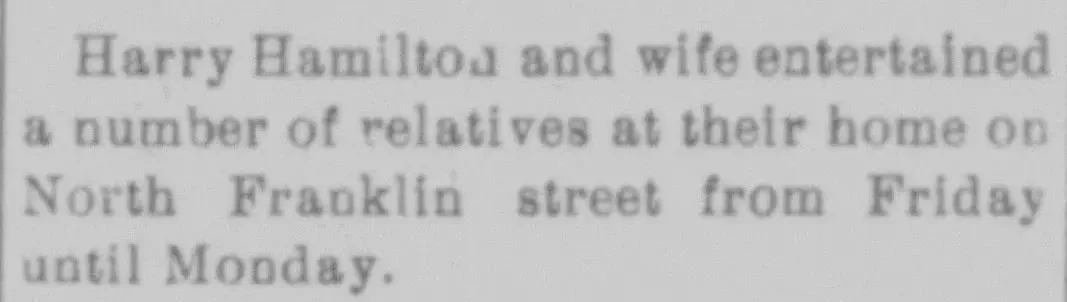
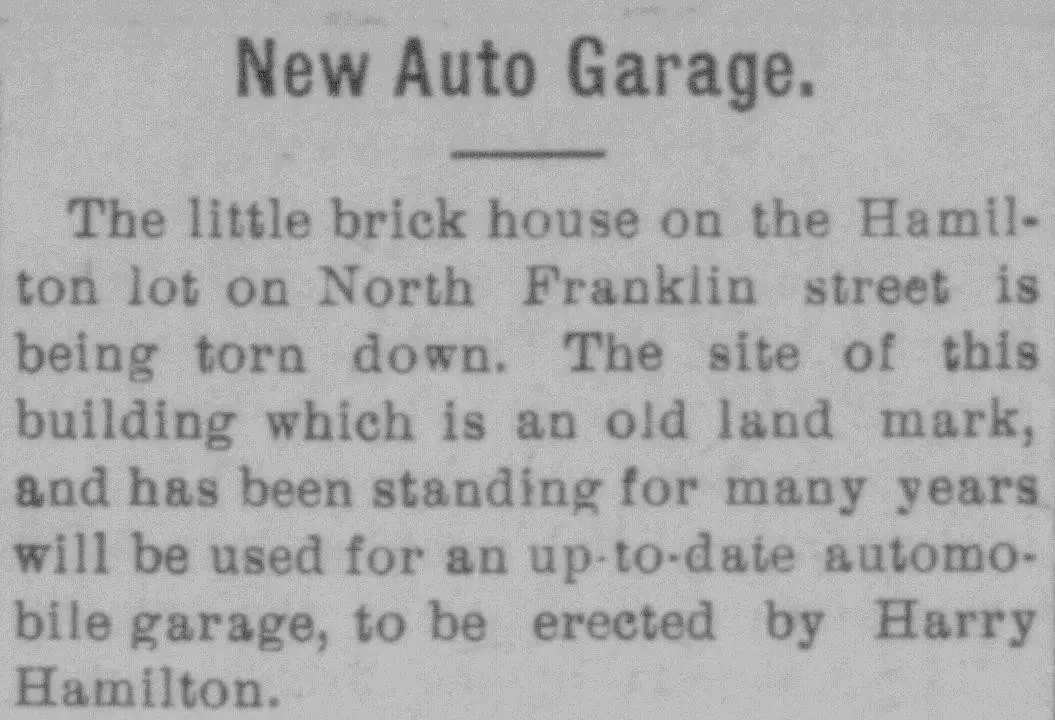
“Residence on North Franklin Street…”
And suddenly, I wasn’t just collecting mentions. I was tracking movement.
Where I Consistently Find Address Clues
I don’t sit down and think, “I’m going to find an address today.”
I read. And I watch for patterns.
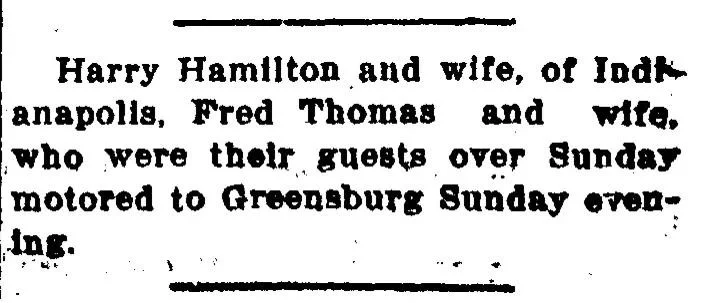
Social Columns
This is where Harry showed up the most.
These lines feel throwaway. They’re not.
They tell you exactly where someone was on a given day.
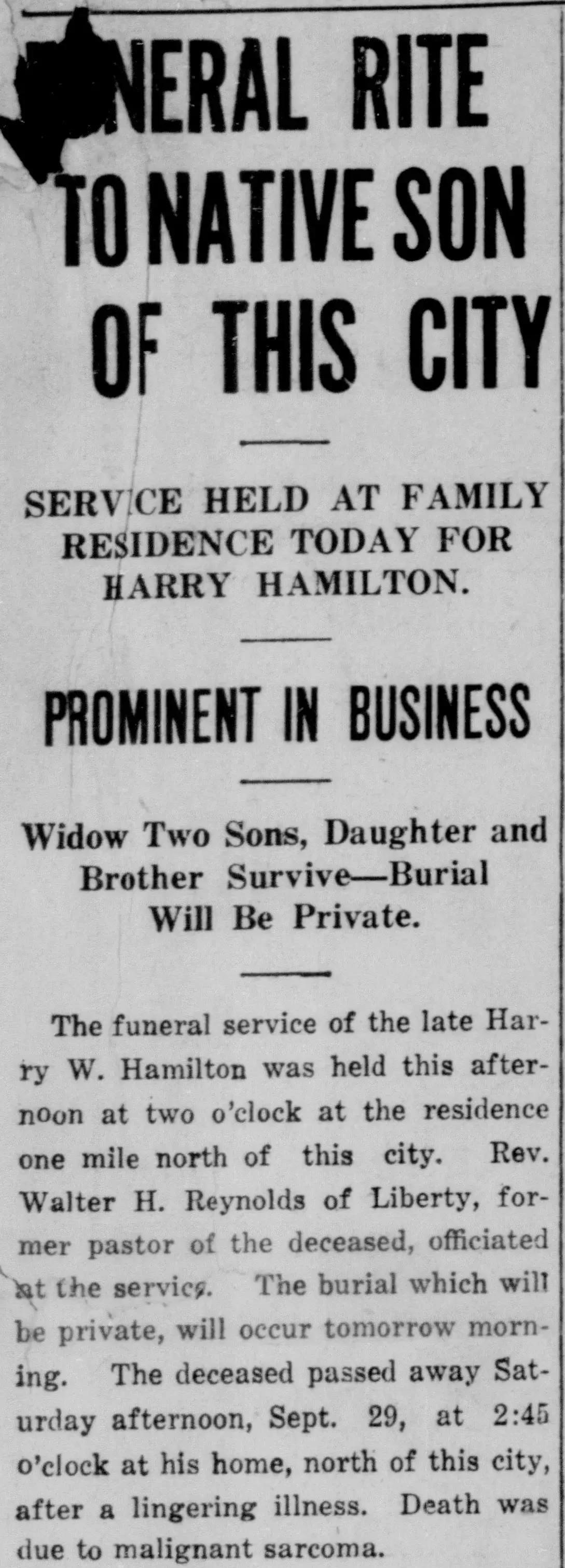
Obituaries
Later in life, these become anchors.
last residence
sometimes former homes
Classified Ads
rentals
property listings
business addresses
Legal Notices
probate
land transfers
News Articles
Sometimes the only place an address appears.
How I Actually Work Through This
I wish I could say I follow a perfect system. I don’t.
I just follow what shows up.
I start with the name
Harry shows up in multiple forms. I expect that.
I add a place
Even loosely. It helps.
I watch for anything tied to location
Street names matter more than you think.
Then I flip the search
Once I saw “North Franklin Street,” I searched it.
That’s when other people started showing up.
Neighbors. Connections. Patterns.
The Part That Changed My Research: The Neighbors
Once I had Harry tied to a street, I started seeing the same location in other articles.
Different names. Same place.
That’s when everything expanded.
People lived near:
family
in-laws
business partners
If I get stuck now, I search the people next door.
Why Small-Town Newspapers Matter So Much Here
If Harry had only lived in a big city, I would have missed half of this.
Small-town papers recorded everything.
visits
moves
who lived where
It feels small when you read it.
But when you step back, it becomes a map.
A Few Questions I Get All the Time
Can you really find full addresses in newspapers?
Yes. More often than you’d expect, especially in legal notices and classifieds.
What if I only find part of an address?
That’s enough. A street name can lead you to census records, maps, and neighbors.
Are addresses more common in certain time periods?
Late 1800s into the mid-1900s is where I see them most consistently.
Should I search by address first?
No. Start with the name. Let the address come to you.
If You Want to Try This, Start Here
Pick someone you already know.
Search their name.
Read slowly.
Look for place.
Look for movement.
Look for anything tied to where they were.
Once you find a street name, it’s hard not to get curious. That’s usually the point where I stop searching just the person and start following the place instead. If you have someone in mind, try it for yourself.
What Finding an Address Really Does
It gives your research a place to stand.
It turns movement into something you can follow.
It connects records that didn’t make sense before.
And sometimes, like it did with Harry, it completely reshapes the story.
Because he didn’t stay in one place.
He moved. He explored. He built a life that stretched far beyond what I originally thought.
And I only know that because I started paying attention to where he was.