Lowry Bale Wins Blue Rib for Effective Baling Method
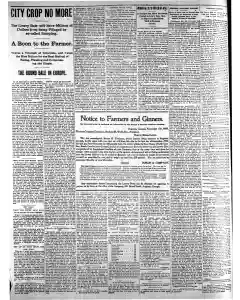
The Lowry Bale is hailed as a boon to farmers saving millions by preventing pilferage through sampling. It scores a triumph at Columbia, earning the blue rib for the best method of baling, pressing, and compressing the staple.
MENTIONED IN THIS ARTICLE
Lowry
Columbia
Round bale debates sweep Europe and England
A continental broker lauds Lowry round bales attesting they pack neatly in compact forms, ease sampling, and curb weight discrepancies, while U S consular reports note European spinners favor the bale to cut freight losses and shift packing costs. An English trial describes a cylindrical bale built by winding cotton web, bound with four wires, and easy sampling, facing concerns over weight, handling, and trucking.
MENTIONED IN THIS ARTICLE
England
Ash and
Royton
Liverpool
Bale innovation wins top prize at Georgia cotton exhibit
The Lowry Bale, 26 inches long and 18 inches around, weighs 250 pounds and is packed in cotton duck. It requires no bagging or cutting to inspect, saves 6 percent on European shipments, and draws praise from prominent farmers. Inman Co and South cotton firms offer 45 points extra for bale packing. The Georgia and Caroejing Planters Company produced the exhibit, which won the blue ribbon for best packing method.
MENTIONED IN THIS ARTICLE
Europe
The
Cotton Gunners' Journal
Waco
Texas
Inman & Co
South
Georgia and
Caroejing Planters Company
Dally Record
Columbia
8. C
Lowry
Chemnitz
Georgia
Carolina Planters Co
T'S Mill
City Crop Losses From Bale Miscalculations
Hester reports in New Orleans on season receipts showing a miscalculation in bale weight and packing. He cites a $12 million annual difference in tare between Lowry bales and current square bales, totaling about $20 million in inaccuracies to farmers each year.
MENTIONED IN THIS ARTICLE
Hester
New Orleans
Lowry
Lowry bale stops the city crop and crop empire tale
A historical note warns against cotton bale thefts and misdeeds in the city trade. It cites large losses from stealing and mixing bales, detailing estimates of up to 160 000 to 250 000 bales tied to the practice. It then pivots to a reflection on the British Empire as the largest in the world with vast title holdings.
MENTIONED IN THIS ARTICLE
Lowry
Spinner's View on the Importance of Baling Reform
A veteran observer in New York stresses that over the past twenty years manufacturing and science have advanced, predicting future breakthroughs in cotton handling. He cites reform in baling as crucial for the South, facing vested opposition but offering infinite benefits to planters and the cotton industry.
MENTIONED IN THIS ARTICLE
Ealing
Lovering
New York
South
Cotton Planters’ Journal of Memphis
Georgia State Fair Revival Favored in Atlanta
Badntor Hay promotes a revival of Georgia State Fairs to benefit agriculture. The Georgia Agricultural Society urges a State Fair at Piedmont Park next year to bring farmers and planters together, exchange ideas on new machinery, and strengthen the industry amid hard times. The Constitution endorses Atlanta hosting the event with ample preparation time.
MENTIONED IN THIS ARTICLE
Badntor Hay
Albany
Georgia
Atlanta
Macun
Americus
Georgia Agricultural Society
State Agricultural Society
Piedmont Park
Round Bale Converts Cotton Costs to Improve Market
Letter to the editor argues that replacing square bales with round bales cuts handling and packing costs for cotton. It cites lower interior marketing costs, bagging losses, and pluckage, claiming substantial savings per bale when shipped to foreign markets.
MENTIONED IN THIS ARTICLE
the Herald
Liverpool
Lowry Bale Cotton Offer For North Carolina South Carolina Georgia
Notice from Inman & Company Augusta Georgia cotton buyers offering growers and ginners a premium of forty five cents per hundredweight for Lowry Bale cotton in North Carolina South Carolina and Georgia from date to September first 1900. The Lowry Press compresses lint to high density at a weight of 250 pounds per bale and can be attached to existing gins without plant changes.
MENTIONED IN THIS ARTICLE
Inman & Company
Augusta
Georgia
North Carolina
South Carolina
Lowry Press
Georgia & Carolina Planters Company
Planters Compress Company
Boston
Massachussetts
Iletter
Broad Street
Indian Territory
Arkansas
Louisiana
Oklahoma
Mississippi
TeXa
Florida
Department
The Cotton Bale Form Debate and Economic Reform
A 1898 Cotton Growers Journal excerpt argues that price pressures and inefficient farming practice harmed profits. It urges adoption of improved baling methods, endorsing the cylindrical bale as a permanent, superior standard amid calls to educate producers and curb monopolistic influence.
MENTIONED IN THIS ARTICLE
Thal
Cotton Growers’ Journal
Waco, Tex
How to Tell Anyone's Age Card Trick
A dated instruction describes a party trick to reveal a person's age by steps with birth month and arithmetic. It explains the result shows the age on the right and the birth month as a remainder, then adds a note to try it and ends with a tip to remove nut grass by moving away.
Georgia could lead in hay and beef, promotes native grasses
The article urges reducing farm and household costs with home made hay to boost Georgia as the nation’s top hay and beef region. It argues grasses foster cattle, notes cotton yield figures, and advocates round bales to cut handling costs, warning against monopolies and emphasizing farmer self interest.
MENTIONED IN THIS ARTICLE
Georgia
How to Preserve Eggs in Lime Salt Brine
Directions describe preserving eggs using 201 two pints of fresh stacked lime and one pint of common salt per bucket of water. Submerge eggs after June and allow to cure for one year with revival as needed.
Propositions for Settlement of Loss in Country Damaged Cotton
Discussion in Liverpool over who bears losses from country damaged cotton sent from the United States. Insurance firms seek to exclude country damage or raise rates while growers face uncertain liability. Experts like Mr James McCabe criticize handling and packing, noting many damaged bales must be recased and sold at a loss, with exporters pricing in premiums for risk.
MENTIONED IN THIS ARTICLE
Liverpool
Manchester
America
Liverpool Marine Salvage Association
United States
Jas. McCabe
New York
GicCabe
Thomas Ellison
Liverpool Daily Post
Japan
United
Far East
Mance
England
Cotton quality and bale system critiques by James Barrett
James Barrett writes from Charleston in The News and Courier praising the Lowry bale as a cure for cotton plunder and country damage. He argues climate and soil affect cotton quality, critiques Egyptian seed failures, and urges cost reductions in handling bales to save Southern planters.
MENTIONED IN THIS ARTICLE
James Bo
United States
Liverpogts
Bea
India
Rojue
Boyle
New Orleans
James Barrett
Charleston News and Courier
Aishing
Also Mentioned on This Page
Ghent
Belgium
Great Britain
Globe
Maman &C
Planters‘Compress.Company
Stephen IM. Weld
Massachusetts
United States Department of Agriculture
Intereet
Farmer
Auguste Evelling
Oal
Lowry Bald
Bremen
Maschinenpabrie
Solem
Jamaica

 This is just the beginning! Our collection holds over 300 years of history, including rare newspapers, obituaries, marriage records, birth records, and so much more—most of which you won’t find anywhere else!