Jet propelled P-59 Airacomet dazzles pilots and fans
The XP-59 Airacomet, Bell Aircraft’s jet fighter, impresses observers with speed and simplicity. Test pilot Alvin M. Johnston extols jet propulsion for high altitude and velocity, noting easy handling, lack of vibration, and rapid takeoff. Ground handling relies on brakes due to absent prop wash. The jet’s performance promises significant tactical advantages.
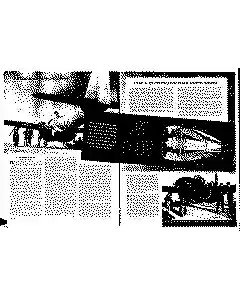
How a Jet Propulsion Plane Engine Works
A jet engine draws in cool air, compresses and heats it, then expels it at high speed. Air enters via ducts to a compressor impeller, then to a two cell combustion chamber where fuel is burned. air passes through holes to cool the chamber, allowing temperatures over 2,500 degrees F. The hot gas drives a turbine on the same shaft, powering the compressor, and exits through a conical jet for thrust. A small 24-volt electric start spins the shaft until self-operation occurs in about 15 seconds. Lube needs are minimal as only one moving part operates in flight. The P-59’s stall and spin characteristics are noted, with high-speed maneuvering limits and oxygen requirements at high altitude.
MENTIONED IN THIS ARTICLE
Mars
Army
Navy
Bell Aircraft Corporation
Adec Fatus
N. Y
Johnston
U.S
Also Mentioned on This Page
Sgt
Georg N. Meyers
YANK
Muroc Dry-Lakes
California
U. S
Buffalo
Niagara Falls
Alvin M
Tex) Johnston
Emporia
Hicks and Curtis Fields
Texas
Ferry Command
Bell Aircraft
Senate

 This is just the beginning! Our collection holds over 300 years of history, including rare newspapers, obituaries, marriage records, birth records, and so much more—most of which you won’t find anywhere else!