The Hidden Life of a Song Creator and Hit Songs
A look at how songs become hits through chance, talent, and publishing plays. Howard Johnson and Teddy Morse write M O T H E R for Leo Feist, rejected then revived by Eva Tanguay, who makes it a sensation. The piece notes Tip of the Tongue and other cues of mass appeal in early 20th century songwriting.
MENTIONED IN THIS ARTICLE
Fercy Wenrich
Leo
Feist
Phil Kornhisar
Leo Feist
Howard Johnson
Teddy” Morse
Mr. Kornhiser
Kornhiser
Eva Tanguay
Mr. Johnson
Mr. Morse
Miss Tanguay
Kernhiser
Mr. Kernhiser
Messrs. Johnson and Morse
How to write a hit marching song in wartime
An explainer on selling songs during war eras. It notes the surge of patriotic tunes, the profit potential for songwriters, and stories of pieces like Missouri Waltz and Billy illustrating how obscure origins or lucky runs can create national hit records.
MENTIONED IN THIS ARTICLE
Missouri
John W. Ippel
Iowa
Frederick K. Logan
I. J. A. Forster
Chicago
Abe” Olman
Johnny
Abe
Auth
Mr. Olman
Billy
Jimmy” Kenns
Kendis
Eugene Brewster
Mexico
Montreal
J.ater
Brewster
Sophia Tucker
Who Is Happy
A country physician in a suburb reflects on happiness in marriage and home life. He argues most families value homemaking, children, and stability, while some women seek careers. He notes men and women find comfort differently and that genuine joy centers on home and family.
MENTIONED IN THIS ARTICLE
William
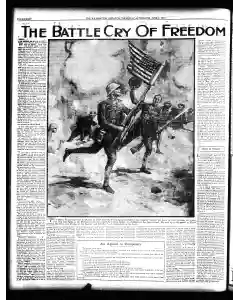
Appeal to Composers for Patriotic Songs in 1917
The New York Herald invites composers to submit march and patriotic songs with lyrics and music. Prizes include gold, silver, and bronze medals and cups. winners may be published starting July 1, 1917. Submissions due by 5 p.m. June 15, 1917 to Song Cent Editor.
MENTIONED IN THIS ARTICLE
France
San Juan Hill
Old Town
NEW York Herald
Herald Square
New York City
Also Mentioned on This Page
Tipperary
England
Soldier Boys
New York
Hegate
Fivo
Ontario
United States
Thelus

 This is just the beginning! Our collection holds over 300 years of history, including rare newspapers, obituaries, marriage records, birth records, and so much more—most of which you won’t find anywhere else!