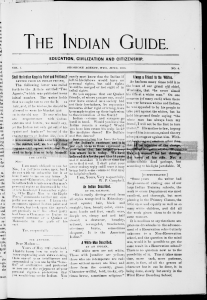
Indian Paint and Feathers Debate in Civilizatio n Letter
A reader asks whether Indians should keep traditional dress and customs. The editor and W. P. Campbell respond that education and civilization must reshape tribal life, arguing against sentimental preservation of savage attire and dances while urging thoughtful discussion of Indigenous rights and self-improvement. Campbell vows to print both sides to provoke further comment.
MENTIONED IN THIS ARTICLE
AiaponesiJo
Laminuen
Iife
South
Tom
W. P. Campbell
An Indian Described. By Dr. Talmage.
A fragmentary characterization describes an Indian with varied traits and a mix of cultural references. The text notes features such as hair, face color, eyes and limbs, and ascribes moods like haughtiness and treachery, with occasional bravery and eloquence.
All white men described by an Indian narrator
A condensed excerpt presents a Native American description of white men noting varied colors and traits. It depicts judgments based on money, temperance, and origins, labeling some as bold or religious while others are deceitful or deficient.
Washakie the steadfast friend of whites in tribal tale
A fragment recounts Chief Washakie’s claim of never aiming at a white man and his stance during tensions with settlers. It notes his resolve to not attack whites, despite pressure from kin and critics, and mentions family dynamic in the broader narrative.
MENTIONED IN THIS ARTICLE
Washakie
Trator
Sequa
Learning Progress at Wind River Boarding School
The writer recalls visiting a large Indian Training school where primary classes show bright literacy among Native children. It notes grievous drawbacks in Reservation schools but confirms success is possible and underway at Wind River Boarding School with time effort and patience.
MENTIONED IN THIS ARTICLE
Wind River
Also Mentioned on This Page
Aere the
Weil
the Indian Guide
DR. Talmage
Vesd
Barra

 This is just the beginning! Our collection holds over 300 years of history, including rare newspapers, obituaries, marriage records, birth records, and so much more—most of which you won’t find anywhere else!