The Newspaper Man's Creed
A convention of editors produced the creed affirming honest work and fair reporting. It proclaims belief in a square deal, writing without prejudice, preserving confidences, and striving to print all the news fairly.

 This is just the beginning! Our collection holds over 300 years of history, including rare newspapers, obituaries, marriage records, birth records, and so much more—most of which you won’t find anywhere else!
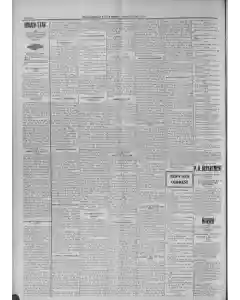
This newspaper page contains 36 articles. Subscribers can read the full text of each article.
Newspaper
Steubenville Herald
Location
Steubenville, Ohio, United States of America
Date
Aug 11, 1911
Page
2
A convention of editors produced the creed affirming honest work and fair reporting. It proclaims belief in a square deal, writing without prejudice, preserving confidences, and striving to print all the news fairly.
An Ohio State Journal reader reports crowds of women in Canton and Massillon, white fashions, social chatter, and a striking gender balance that favors women. He notes many girls outnumber men, predicts statewide pride in beauty, and suggests female voters could push suffrage, while men seem uninterested.
The Cleveland Leader diacritics a crisis in democracy as Senator Owen’s extreme radicalism pushes the initiative and referendum beyond restraint. It argues his stance harms the cause he claims to champion and warns voters away from following him.
The Ohio State Journal argues against entrenching class privileges or sweeping reforms in a constitution. It urges a simple charter that limits actions in favor of justice and the square deal, preserving rights for future generations rather than binding the majority to current fashions.
A Senate speech by Oklahoma's Senator Owen advocates recall for Supreme Court Justices as the next step in populist intervention. He argues the recall could erode presidential powers and vetoes, challenging foundational ideas about governance and constitutional history.
Bishop Quayle of the M E church spoke at the Des Plaines camp meeting and compared dry Oklahoma soil to a miracle. He noted two years without rain or dew yet watermelons thrived, illustrating miracles by turning dry soil into nourishing fruit.
The Kansas City Times notes tangled factors pulling fans from local town games toward majors. Distance and vivid press hype lift stars like Cobb and Mathewson, while Missouri leagues falter and bush league crowds prefer discussing distant greats Wagner and Lajoie over hometown hopefuls.
Ohio State Journal comments on Speaker Clark predicting House passage and presidential veto of the Senate wool tariff bill. The piece notes Underwood’s doubt, argues the House will pass it but the President will veto, shaping next year’s campaign and party strategy around protectionism vs free trade.
The Springfield Republic and Ohio State Journal compare the current Ohio Legislature’s salary increases to 1883. They note higher deputy clerks pay and veto overrides, arguing that large salaries do not attract talent and may reduce legislative quality.
The piece argues that constitutions are not essential for freedom, asserting that individual spirit and public purpose define a nation's liberty. It warns that expanding a constitution with opinions burdens the people, while the national life and its aspirations are the true constitution courts interpret. It stresses focusing on core values over rigid legal text.
An Ohio State Journal editorial warns that a constitution crafted by misty headed men could erode liberty rather than protect it. The piece argues the danger lies in choosing ill suited individuals for the task.
The Bentztown Bard urges men to bring a thoughtful gift to a woman to brighten her life and ease her sadness. A small token like candy, a trinket, or a show ticket is praised as a path to happiness, not wealth or bargain. The piece cites the Ohio State Journal on gifting amid hardship.
Colonel Roosevelt testifies before the Stanley committee on the US Steel Corporation inquiry. He details the Tennessee Coal and Iron purchase, defends the action as lawful and crisis facing, and argues the absorption benefits the industry and region. His frank evidence seeks to counter partisan doubt and restore confidence in the nation’s industrial leadership.
The piece argues that court orders dissolving Standard Oil and Tobacco trusts cannot recreate genuine competition. It says separated units will still avoid rivalry, and that only by clearing the field for willing rivals and ensuring fair access to common carriers can true competition arise, noting capital advantages and logistics as factors beyond legal remedy.
The Cleveland Leader argues that if trusts extend mercantile reach worldwide and block fair competition, radical measures beyond field clearing are required. It suggests government regulation or even minimum price fixing as possible tools to restrain powerful corporations.
The Columbus Dispatch urges a new state board of control to place capable, devoted managers at the heads of state institutions. Politics should yield to efficiency, with servants of the public focus on aiding children, patients, and inmates rather than spoils.
An Ohio State Journal passage lauds a swift charity act after an accident. Donors raised $40 in under an hour, praising the felt nobility and civic virtue gained. The piece links generosity to better business, home life, and voting.
A special grand jury will convene before the upcoming primaries to hear charges under the corrupt practices act. Judge Corn aims to curb money politics, insisting that any voter bribery or expense falsification be prosecuted to enforce the law and cleanse political life.
A Washington humorist notes the wool bill deadlock between La Follette and Underwood as the House and Senate wage a fierce clash over duties ranging from 20 to 45 percent. The conflict centers on who will yield first, with no side likely to concede without a tariff board report.
The Pittsburgh Dispatch notes the tariff dispute split among leaders La Follette Underwood and Democratic and Republican factions. They fear adjournment could derail insurgents, while urging tariff revision wait for the tariff board report due in the regular session.
The public seeks rationale for express firms as investigations begin in Indiana and Illinois while an interstate inquiry proceeds. Critics argue railroads should handle express service or the post office take it over, urging express companies to defend their high rates or face public opposition and possible government action.
Secretary of State Charles Graves sparks a controversy by temporarily cutting school book discounts to 40 percent, then restoring 25 percent after an unauthorized action. The move, seen as a bid for spotlight, fuels debate on a feared book trust and Graves’ gubernatorial ambitions for 1912. Cincinnati Commercial Tribune notes the political theater and questions the method.
The Ohio State Journal criticizes lawmakers for neglecting to scrutinize bills and for reliance on lobbies. It argues many laws are flawed due to inattention, and that capable public officers must study duties seriously rather than socialize or drift.
Former President Theodore Roosevelt testified before the congressional investigating committee on the Tennessee Coal and Iron absorption by United States Steel. He rebutted critics who doubted his approval of the merger while in office, and the expected trap failed as he met the challenge directly.
The text portrays Roosevelt as fearless and consistent, asserting he took responsibility for the Tennessee Coal and Iron merger, arguing the deal averted a financial panic. It stages him as the Roosevelt of the White House, unchanged in stance against big capital: ready to enter the lists and strengthened by scrutiny.
The death of Maine Senator Frye shocks colleagues and the nation. As president pro tempore for 15 years he was known for impartial rulings and steadfast duty. A lifelong public servant, his loss narrows the Republican Senate margin and opens Maine seats to Democrats, a blow amid party misfortunes.
A rugged manifesto urges men to embrace strength and courage over gentleness. It proclaims the world’s dirt and struggle demand bold, fiery spirit, rejecting satin, lace, and passive comfort in favor of post and perseverance in the face of hardship.
A short notice warns residents to boil drinking water due to potential contamination. It urges boiling for at least one minute before use and repeating if the water appears cloudy or off taste. Authorities advise using bottled water for drinking and cooking until further notice.
Fragmentary notes describe cold snaps and farming cues such as sowing feed corn and cider making. The text mentions open city incorporation and calls to abolish unsafe crossings, reflecting a tense, miscellaneous community snapshot with missing details.
The blackberry harvest winds down as fruit ripens quiets and seasonal picking slows in orchards and roadside stands. Growers expect a brief push before the season ends with berries available at local markets while supplies last.
A political-sounding call urging accountability and integrity in public service. It condemns corruption in Ohio agencies, praises church and civic virtue, and urges voters to choose men of duty who enforce laws and act with courage.
A revised version recounts Solomon Grundy born on Monday and meeting nine sequential illnesses and fateful ends from tonsils removal to autopsy, ending with his death on Saturday and an autopsy on Sunday.
President Taft sent to the Senate the nomination of Major William H. Davis as postmaster of Pittsburgh. A renomination extends his term about 15 months, set to run until August 1915, following a prior May 1910 appointment and the need to reappoint after the spelling clarification of Pittsburgh.
In Newark Ohio on August 9 George Davis shot and fatally wounded Charles Davis during a quarrel over how to trace a five dollar bill that had been lost or stolen from a workman. The men were not related.
Attorney George McKee and Jos Meister as executors of the Joseph Waterman estate paid the first Belmont County inheritance tax since 1894, amounting to $149.16. The Waterman will directs 4 percent of 5 percent to collateral heirs, with a total estate bequest of $2,050.99.
A Wright Bros Biplane Co representative visited the Country Club to examine the proposed flight course and stated it satisfactory and that they would guarantee the upcoming flights.
We want people to find what they are looking for at NewspaperArchive. We are confident that we have the newspapers that will increase the value of your family history or other historical research. With our 7-day free trial, you can view the documents you find for free.
People find the most success using advanced search. Try plugging in keywords, names, dates, and locations, and get matched with results from the entire collection of newspapers at NewspaperArchive!
You can also successfully find newspapers by these browse options. Explore our archives on your own!
Browse by location and discover newspapers from all across the world.
Browse by date and find publications for a specific day or era.
Browse old newspaper publications to find specific newspapers.