Satori At November 8 1592 Journal Entry
Fragmentary note mentions a campaign, an eagle symbol, and references to persons and dates. The text is garbled with misspellings and unclear actions. Key names or events are not clearly identifiable.

 This is just the beginning! Our collection holds over 300 years of history, including rare newspapers, obituaries, marriage records, birth records, and so much more—most of which you won’t find anywhere else!
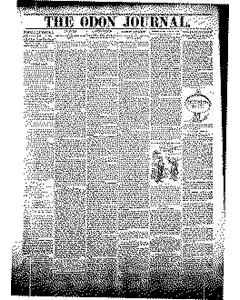
This newspaper page contains 20 articles. Subscribers can read the full text of each article.
Newspaper
Odon Journal
Location
Odon, Indiana, United States of America
Date
Nov 05, 1892
Page
5
Fragmentary note mentions a campaign, an eagle symbol, and references to persons and dates. The text is garbled with misspellings and unclear actions. Key names or events are not clearly identifiable.
The letter argues political arrests should target Democrats and Republican figures after a Senate report claims wage increases and living costs were affected. It questions selective prosecutions and broadens blame to officials from New York, Tennessee, and Kentucky, and commissioner Pek.
In his second annual message to Congress President Jefferson advocates protective duties to foster domestic manufacturers and reduce foreign dependency, stressing the need to encourage home production and deter reliance on imports. The message emphasizes prohibiting imports that can be produced at home to safeguard national industry.
Fragmentary OCR discusses protection under President Jackson and 1832 revolutions. It argues for adequate protection for American prosperity and unitary revenue tariff purpose while criticizing misused phrases. It mentions Chicago convention context and Republican protection without coercive powers.
The excerpt shows fragmented remarks about Cleveland, New Hampshire, and McKinley measures. It references Mr Carlisle, tariff policy, and party integrity with chaotic phrasing implying opposition to free traders and a call to rally voters against the opposing platform.
Fragmented text references the National something in Chicago, mentions Leete Sbaethson and John Calhoun, and discusses presidential authority and military action. The passage appears to critique constitutional protections and wartime measures, with oblique allusions to 1815 era events and figures in the United States.
In a confrontation over New York labor data, Commissioner Peck defends his ninth annual report showing wage and production gains since the McKinley act. Democrats allied with Cleveland dispute the figures, planning a trial by two expert free traders to discredit his statistics and label American labor as worse off.
A writer argues that free trade Britain imposes higher taxes and lower wages than the United States, presenting per capita figures on taxes, savings, money in circulation, national debt, interest, pauper rates, and trade balances to claim the United States fares better under protection. The piece contrasts wages, debt reduction, and export balances between the two nations with numerous statistical comparisons.
The piece reviews British newspaper and trade journal criticism of the McKinley tariff and U S reciprocity, noting London's Times backing Democratic free trade and The Colliery Guardian lamenting U S advantages. It cites Brazil and Cuba Porto Rico treaties as examples where Britain fears reduced influence and harmed English industry.
An 1890s investigation shows the House did not fund or entertain G A R recognition in the DC appropriation bill. President Harrison urged aid. Senate proposed 100000, then Cockrell proposed funding from DC revenues. House conferees pushed to 90000, shifting final burden to the district amid Democratic support and Republican opposition.
A remark by Rev. G. B. Suedeker notes a general belief among loyal people that Stevenson belonged to the Knights of the Golden Circle, which was later disputed, claiming he was.
The excerpt notes Kuhlow's German Trade Review for January 20 discusses the election issue and related commentary in Saxony. It highlights how German observers view the local political climate and the impact on trade policy.
The excerpt envisions a commission with patriotic impartial men to study evils in election systems and methods. It reflects Harrison’s acceptance letter urging a body free of party bias to review voting issues and reforms.
The text warns that enacting the Chicago convention declaration or tariff would plunge the nation into a sweeping business convulsion and sharply lower job opportunities, claiming such measures harm both business and workers. It frames the issue as a decisive political dilemma.
Hon Charles F Peck former New York labor commissioner under Cleveland releases figures showing a net wage increase of 6 277 925 dollars in the state during the first year of the tariff act and a rise in labor output totaling 31 515 180 dollars He estimates 285 000 state workers saw salary hikes and calls the data cheering for free traders.
Trade balance shows a favorable turn with continued gains in imports and exports. Analysts note the positive shift reflects stronger domestic production and resilient demand across key sectors during the period.
Ex-Congressman J H Barth of Iowa disparages northern Democrats and slams pension allocations as he speaks to a Raleigh audience. He cites a 150 million dollar annual pension bill and accuses opponents of cowardice and desertion while praising soldiers.
A garbled New York Sun fragment quotes a phrase about a letter by Mr. Cleveland. The text reads as a stray, permeable round of words, suggesting editorial looseness or typographical error with no clear event or outcome.
Carter in conversation at the Fifth Avenue hotel argues voters must reject free trade and wildcat currency. He warns losing the presidency would also cost the Senate and House, urging immediate policy revision to preserve prosperity and avert economic chaos.
Governor Prince of New Mexico reports tariffs have uneven effects but now aid silver and lead mining. He says mining is flourishing and that removing Mexican labor improves American miners wages. The annual interior department filing stresses tariff immediate benefit to mining of silver and lead ores.
We want people to find what they are looking for at NewspaperArchive. We are confident that we have the newspapers that will increase the value of your family history or other historical research. With our 7-day free trial, you can view the documents you find for free.
People find the most success using advanced search. Try plugging in keywords, names, dates, and locations, and get matched with results from the entire collection of newspapers at NewspaperArchive!
You can also successfully find newspapers by these browse options. Explore our archives on your own!
Browse by location and discover newspapers from all across the world.
Browse by date and find publications for a specific day or era.
Browse old newspaper publications to find specific newspapers.