Post Office Notice From Jackson Georgia
Entered as second class matter at the post office at Jackson Georgia.
MENTIONED IN THIS ARTICLE
Jackson

 This is just the beginning! Our collection holds over 300 years of history, including rare newspapers, obituaries, marriage records, birth records, and so much more—most of which you won’t find anywhere else!
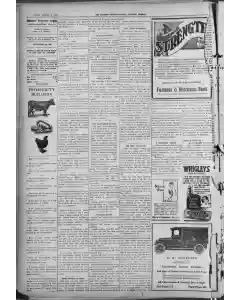
This newspaper page contains 17 articles. Subscribers can read the full text of each article.
Newspaper
Jackson Progress Argus
Location
Jackson, Georgia, United States of America
Date
Mar 14, 1924
Page
5
Entered as second class matter at the post office at Jackson Georgia.
Cards of thanks will be charged at fifty cents for the first 50 words and one cent per word for each additional word. A minimum notice length is required and cash must accompany the copy in all instances.
The article reflects political chatter about counting ballots and candidates with a farmers’ focus. It notes support for Underwood by former Governor Hardwick and the Watson faction in Georgia, amid low interest and continued campaigning.
The piece urges Georgia and the South to attract white farmers from the Northwest, boost paving, and vote next Wednesday. It highlights boll weevil concerns, tax revenues from gasoline and tobacco, and the need for prudent spending to reduce state indebtedness. It also notes candidate interest in Butts County and urges civic participation.
Hogs hens and cows added five million dollars in new wealth to Georgia farmers income last year. Wealth flowed steadily throughout the year boosting farm income and agricultural earnings statewide.
The Greensboro Herald-Journal notes a rise in dairy cows shoats and hens across Georgia this year highlighting increased livestock production and support for rural farming communities.
A snippet from the Jackson Progress-Argus proclaims Georgia as a land of opportunity, inviting people to come to the growing Southeast to share in the prosperity expected in the coming years, as cited by the Columbus Enquirer-Sun.
The executive committee requires a majority vote or a runover primary between top two candidates. The practice, criticized for wasting time and distracting from business, draws criticism from readers in multiple counties.
The Sylvania Telephone argues Georgia should enact a modern voter registration law. It cites outdated rolls from Governor Hoke Smith era and urges registration updates every four years. It questions poll tax payment for women voters and notes Attorney General Napier's ruling that all may vote in county primaries without tax payment.
Georgia farmers averaged a bale of cotton per acre despite boll weevil and bad weather. Tobacco and sugar cane tied in value last year while pecans surged over threefold. Home grown tomatoes graced Christmas tables and winter blooms filled rose and poinsettia displays. Reports note tenant farming, absentee ownership, and ongoing strawberry plantings in South Georgia. Captain James Thomas named as master in colonial voyage record.
Georgia still contains extensive wild tracts where wild deer persist. The text notes the abundance of deer in forested and rural regions, highlighting ongoing wildlife habitats.
The Progress Argus notes county wide interest in the upcoming primary for county officers serving four years. The paper states it has given fair, impartial coverage with open advertising space for all candidates and urges voters to select the best men, ensuring faithful and efficient county service.
The article criticizes Georgia's evolving poll tax law for women, noting conflicting interpretations and an attorney general ruling that women face no tax until 1924 but must file and pay that year. It highlights the messy statute and ongoing voting implications as citizens navigate the muddle.
The letter argues against annual votes and urges a universal yearly poll tax for all registrants, claiming men and women should be treated equally in law and voting. The writer condemns voters who delay registration and calls for a law imposing annual poll taxes to deter abstention.
A Kansas editor announces a week of printing the truth and reports that Miss Sylvania Rhodes married James Cannaham last Sunday evening at the Baptist church. The bride is described as an ordinary town girl who knew little of domestic duties and is not considered a beauty.
A fragment describes an editor in the hospital after injuries while his staff rushes to publish. The text blurs with harsh social commentary about a groom and a hard life. It ends noting reader expectations and skepticism toward truth in newspapers.
Nebraska cost records show ten farmers spent 35.3 cents per bushel to grow oats. Three other farmers spent 41 cents per bushel to grow corn. The 10 farmers grew 286 acres at an average of 34 bushels per acre.
We want people to find what they are looking for at NewspaperArchive. We are confident that we have the newspapers that will increase the value of your family history or other historical research. With our 7-day free trial, you can view the documents you find for free.
People find the most success using advanced search. Try plugging in keywords, names, dates, and locations, and get matched with results from the entire collection of newspapers at NewspaperArchive!
You can also successfully find newspapers by these browse options. Explore our archives on your own!
Browse by location and discover newspapers from all across the world.
Browse by date and find publications for a specific day or era.
Browse old newspaper publications to find specific newspapers.