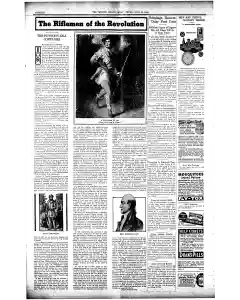
The Riflemen of the Revolution The Pennsylvania Companies
In summer 1775 new rifle companies sprang from Pennsylvania backwoods towns led by Patents via Lancaster Reading and Bethlehem. Ethan Allen and Washington loom in the news as colonists rush to arms, marching from Sunbury to Reading Easton toward Boston. Captains Doudel Nagel Miller Cluggage Chambers Hendricks and Ross raise eager units, with two more companies authorized to form a battalion for defense of American liberty.
MENTIONED IN THIS ARTICLE
Pennsylvania
Sunbury
Concord
Les‘Ington
Massachusetts
New York
Green Mountain Boys
Ethan Allen
Lake Champlain
Jehovah
Continental Congress
Burgoyne
Clinton
Howe
Boston
Gage
Philadelphia
Second Continental Congress
Colony of
Maryland
Virginia
George Washington
Washington
Braddock
Monongahela
Tommy Gage
Pontiac
Buffalo Valley
West Branch
Susquehanna
John Lowdon
Lowdon
Society of Friends
Lancaster
Committee of Correspondence
London
John Hancock
Charles Thomson
Northumberland
Continental
Dick Grosvenor
Reading
Easton
Congress
Colonial Assembly
Convention
Samuel Getty
Gettysburg
York County
Michael Doudel
Berks County
George Nagel
Northampton County
Abraham Miller
Bedford County
Robert Cluggage
Cumberland County
James Chambers
William Hendricks
Lancaster County
James Ross
Smith
Doudel
Chambers
Nagel
Miller
Hendricks
New Windsor
West Point
Philadelphia Evening Post
Cambridge
Tim Murphy
Sam Brady
Peter Bentz
Captai Lowry
Harvard College
Ross
Pennsylvania Riflemen and the Founding of a Legendary Regiment
The article traces the formation of a rifle battalion led by Col. William Thompson and Lt. Col. Edward Hand, detailing their diverse makeup including Irish, German, Welsh, Scots, and Native American members. It highlights notable figures like Sam Brady, Peter Pence, Timothy Murphy, and James Wilkinson, their march to Cambridge, and the unit’s evolution into the Army of the United Colonies, later the First Regiment of the Continental Army, with Hand’s brigade earning renown at Long Island, Brandywine, Germantown, Paoli, and Monmouth.
MENTIONED IN THIS ARTICLE
Erty
William Thompson
Carlisle
Edward Hand
Lancaster
Robert Magaw
William Penn
Ulster
Ireland
America
Pennsylvania
Lowdon
John Shawnee
Peter Bentz
Peter Pence
Samuel Brady
Sam Brady
Rangers
Ohio
Brady
Cuyahoga River
Timothy Murphy
Simon Fraser
Saratoga
North America
New York
Smith
Cluggage
Miller
Washington
Pennsylvania Riflemen
Edward Burd
Jesse Lukens
Matthew Duncan
John Joseph Henry
James Wilkinson
Tidewater
Philadelphia
Royal Irish
Thompson
Cambridge
Army of the United
Army of the United Colonies
Congress
Hendricks
Arnold
Montgomery
Quebec
Lechmere’s Point
Hand
Long Island
Brandywine
Germantown
Paoli
Monmouth
Roughage Reduces Dairy Feed Costs Says NC Extension
The NC State College extension notes that roughage lowers dairy feed costs while boosting milk and cream yield. Plan hay and silage for winter, totaling about 1.5 tons legume hay and 3 tons silage per cow. if no silage, 2.5 tons hay. A trench silo enables affordable winter silage for farms with four or more cows.
MENTIONED IN THIS ARTICLE
John Arey
Dairyman
North Carolina State College
WNU
Farm Home Needs Shown by Recent Investigation
An investigation by Purdue University’s agricultural extension division for 17 981 cases shows farm homes mainly lack sewerage, paint, and screening. Percentages cite 95 percent need safe sewage disposal, 55 percent new paint, 41 percent better screening, 31 percent miscellaneous repairs, 28 percent foundation work, 25 percent more closet space, and 14 percent better kitchen sinks, aiming to promote sound, attractive homes and reduce depreciation.
MENTIONED IN THIS ARTICLE
Department of Agricultural Extension
Purdue University
Federal Housing Administration
Purdue
Variation in Butterfat Tests Puzzles Dairymen
Missouri College of Agriculture expert Chas W Turner notes wide daily and lactation variation in milk fat percent. Factors include feed milking interval weather animal condition season lactation stage and advancing age.
MENTIONED IN THIS ARTICLE
Chas. W. Turner
Missouri College of Agriculture
Trees for Shelter Belts With Increased Interest
Farmers plan shelter belts around farmsteads using evergreen trees for best protection. Deciduous trees shed leaves and do not break winter wind. Species like Douglas fir, western yellow pine, Austrian pine, blue spruce, and white spruce can provide protection in five to twelve years with proper care.
Useful crochet design for six tumbler doilies set
A home craft offer describes a six doilies and six cup holders crochet set in simple stitches. Package 730 includes materials and instructions for 40 cents. illustrations only cost 10 cents. Address Home Craft Company, Department BC, 919th and St Louis Ave, St Louis Mo. enclose stamped envelope for info.
MENTIONED IN THIS ARTICLE
Home Craft Company
BC Nineteenth and
St. Louis Avenue
St. Louis
Millet and alfalfa hay form balanced horse rations
Millet hay provides nutrition but may cause joint swelling if fed alone. Combine millet with other roughages. Corn fodder offers more feed value than timothy, while alfalfa hay is highly palatable and excellent for horses. A balanced ration often uses alfalfa hay with corn fodder.
MENTIONED IN THIS ARTICLE
A. L. Harvey
Division of Animal Husbandry
University of Minnesota
Care of Brood Mares in Foal Endorsed for Health
A Missouri Farmer authority advises brood mares in foal should be kept at moderate daily work to improve foal quality and ease parturition. Proper feed must cover the mare’s maintenance and fetal development with slightly higher protein and ash than a working gelding.
MENTIONED IN THIS ARTICLE
Missouri
Also Mentioned on This Page
Elmo Scott Watson
Capt
Chappel
Clark
Gample Mantle
Coleman Lamp & Stove CO
Wicutra
Kana
Dept
Doan
Doans
Ambico Tailors
Stout St
Denver
Colo

 This is just the beginning! Our collection holds over 300 years of history, including rare newspapers, obituaries, marriage records, birth records, and so much more—most of which you won’t find anywhere else!