Postage Rates Note Bristol County
Postal brief notes 20 cents per year for Bristol county with no charges described for other parts of the state or nation.
MENTIONED IN THIS ARTICLE
Bristol County
State
United States

18 Jul 1863
Page 1
 This is just the beginning! Our collection holds over 300 years of history, including rare newspapers, obituaries, marriage records, birth records, and so much more—most of which you won’t find anywhere else!
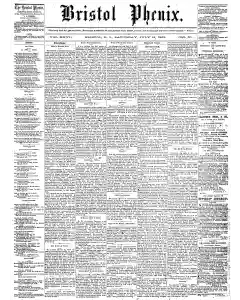
This newspaper page contains 26 articles. Subscribers can read the full text of each article.
Newspaper
Bristol Phenix
Location
Bristol, Rhode Island, United States of America
Date
Jul 18, 1863
Page
1
Postal brief notes 20 cents per year for Bristol county with no charges described for other parts of the state or nation.
The poem proclaims unwavering Union under divine ordinance. It speaks of unity against danger, the South and nation bound by shared heritage, and readiness to fight until victory. It evokes the Mississippi and the loom of cotton as symbols of a single national plan and destiny.
Wise maxims urge living with purpose and virtue. The poem extols honesty, charity, and integrity as the harvest of a life well spent, urging daily truth, selflessness, and a steadfast creed. It speaks of sowing truth love and peace to reap a bright, enduring harvest of light.
A devotional verse contemplates fate and hope through trials at sea. The speaker seeks strength in faith as waves rouse fears yet assure divine guidance. The refrain promises safe land and bliss beyond, with divine tempering of hardship.
A reflective poem about summer companionship turning cold in adversity. It contrasts cheerful gatherings with grim loneliness during a tempest, warning that earthly friends fade, betray, or become hollow when misfortune strikes. The speaker urges not to lean on earth for solace.
A reflective poem speaks of old friends scattered by time and fate. Some lie in graves, others drift apart or mask emotions, while faith and truth influence reunion in later life. The speaker finds lingering companionship in memory as daylight fades.
The piece argues to cultivate antagonistic virtues to steer youth toward truth, industry, purity, and propriety. It warns against softening terms for misdeeds and favors a positive, benevolence driven approach, emphasizing patience, hope, and consistent moral development across body, mind, and character.
The piece notes extreme touch sensitivity from practice. It cites blind readers using raised letters and a case where lip touch enabled reading when fingers were damaged. It adds that a Bank of England clerk may detect counterfeit notes by touch that others cannot discern even with knowledge of fakes.
Advice on marriage costs and stability highlights the burden of supporting a large family and the toll on health strength and character from constant upheaval and ungodly decrees.
The fragment ponders human life and the courage to face birth as a conscious act, reflecting on mortality and the human drive to endure from the moment of existence.
An observer notes how residents mispronounce city names across the country. La Salle becomes La Sell, Bellfontaine Bellfountain, Evansville Joansville, Terre Haute as Hish-Iand, Trafford in Connecticut, Bromwick in Maine, and Portsmouth as spoken humorously in New Hampshire.
The piece warns parents and adults that words spoken in the presence of children shape their attitudes and future behavior. It cites a writer on how careless talk can imprint lasting, sometimes horrifying, impressions on impressionable youngsters and emphasizes mindful, kind speech at all times.
An exchange argues gossip and tattling harm social peace more than crime. It condemns liars who destroy innocent reputations and warn virtuous people to live honestly and ignore wicked slander, which cannot outlive a good life.
The article recounts a Northern New Hampshire legend about Winona, daughter of a Native American chief who helps a traveler named Thornton. They marry, inner tragedy follows as she kills herself after his plan to rejoin society, and Thornton later dies near Winona's grave in Winchester, New Hampshire.
The article urges people in easy circumstances to practice vigorous breathing to enlarge the chest and boost health. It describes standing erect with shoulders back, inhaling full lungs, then exhaling while stretching the arms, repeated in a cold room for denser air and greater chest expansion.
Flowers symbolize marriage, death, and worship in many cultures. They adorn the cradle, the bridal altar, and the tomb, with perfumes and wreaths linking humanity to renewal and reverence across civilizations.
Mr. M of northern Vermont purchases a tallaw cake at ten cents per pound. On breaking it open a large cavity is found. He demands restitution claiming deceit and theft, but the merchant agrees to fix it. Mr. M leaves with the hollow tallow unsatisfied, still feeling cheated.
A brief meditation on not overreacting to rumors. Seek truth and avoid spreading falsehoods, since deceit harms all sides. The text urges listening to the other party before judging and treats unverified tales with caution.
A Rochester bishop censures an incumbent for pursuing agriculture and socializing with farmers, while the accused defends himself saying he sells grain and cattle via an agent and remains a gentleman. Sir Astley Cooper cautions us about mistakes in eye anatomy. Dr. Traln notes English health hinges on quiet sleep, while Americans suffer from premature wear due to lack of rest.
An essay argues that a sharp mind without a strong body is like a keen blade in a poor hand. It urges ambitious youths to ensure their physical condition keeps pace with intellect, so their talent can be wielded effectively.
An Irish British Legion member in Saint Sebastian stops a stranger at the border asking who goes there. The reply is a jocular friend saying he was finishing time in state prison, prompting a warning that he is the first person met in the murderous country.
A Spoorman visits a miser and asks a favor. The miser counters with a request that the other grant him nothing, and the exchange spirals as both demand nothing. The tale hinges on shared paradox and the humor of mutual denial.
Aunt Sally disperses wealth to her kin while Frederick Strong irks her with tricks. After her death a will codicil reveals the muff and a sly final joke, leaving villagers puzzled over Aunt Sally’s money and its fate.
In a quiet village tale, Frederick and his wife uncover a hidden stash of over thirty thousand dollars inside an auntly muff left as a legacy. A will dispute arises but the couple maintain calm, hosting an annual mansion soiree dubbed the Aunt Sally's Muff anniversary.
A job seeker is invited to test medicines by a drugstore clerk named John Wews on Market Street. The test includes consuming boosters like castor oil and rhubarb. The result is a grotesque, foaming reaction and the prank ends with the applicant fleeing toward a tavern, never returning.
The text cites Deuteronomy chapter five verse seventh as opposing wartime drafting for men recently married. It states a man with a new wife is free at home for one year to comfort his spouse and not be assigned new duties or war.
We want people to find what they are looking for at NewspaperArchive. We are confident that we have the newspapers that will increase the value of your family history or other historical research. With our 7-day free trial, you can view the documents you find for free.
People find the most success using advanced search. Try plugging in keywords, names, dates, and locations, and get matched with results from the entire collection of newspapers at NewspaperArchive!
You can also successfully find newspapers by these browse options. Explore our archives on your own!
Browse by location and discover newspapers from all across the world.
Browse by date and find publications for a specific day or era.
Browse old newspaper publications to find specific newspapers.