Preservation of Star-Spangled Banner at Smithsonian Lab
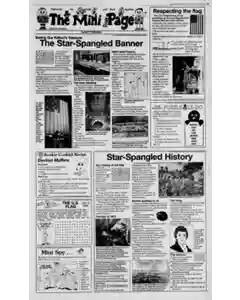
The Star-Spangled Banner flag, longtime Smithsonian display, will undergo three years of preservation in a public viewing lab at the National Museum of American History in Washington. The project, the museum’s largest textile study, aims to stabilize wool and cotton fibers with a multistage cleaning and backing removal planned over time.
MENTIONED IN THIS ARTICLE
Smithsonian Institution
Smithsonian
National Museum of American History
Washington, D.C
NASA
Flag etiquette and half staff guidance explained
The text outlines flag protocols including daytime hoisting, nighttime lighting in public places, lowering the flag in severe weather, and the rule that no other flag may be placed above the national flag except at the United Nations where the UN flag takes precedence.
MENTIONED IN THIS ARTICLE
United Nations
Fever Penguin Puzzle Hidden Word Found
A puzzle line lists numbered clues where letters hidden in each sentence spell a word. Examples include arriving at a house, Jeff lagging behind, and Dad playing the piano, with other clues referencing Jill in England Cliff Tommy Bess George Susan and a final flag.
MENTIONED IN THIS ARTICLE
Fever Penguin
Jeff
Dad
Jill
England
Cliff
Tommy
Bess
George
Susan
The Star Spangled Banner Origin and Journey
A Baltimore maker Mary Pickersgill and daughter Caroline stitched the flag for Fort McHenry in 1813, ordered by Lt. Col. Armistead. Francis Scott Key watched bombs in 1814 and wrote the Defense of Fort McHenry, later becoming the national anthem in 1931.
MENTIONED IN THIS ARTICLE
Mary Pickersgill
Caroline
Baltimore
George Armistead
Fort McHenry
Pickersgill
Tts
Maryland
William Beanes
Dr. Beanes
Washington
Francis Scott Key
Congress
Land of the Free
Brave
For McHenry
Francis & Key
Also Mentioned on This Page
Sm__sonian
U.S
Sas
Egam
NWA
MDA
Mini Spy
Mber
America
France
Lonnwood Taylor
Division of Social History
Mini
Siedus
Lev It
Scott
The
White House

 This is just the beginning! Our collection holds over 300 years of history, including rare newspapers, obituaries, marriage records, birth records, and so much more—most of which you won’t find anywhere else!