War of adornment and fur fashions through time
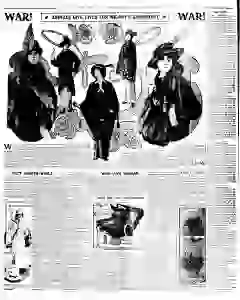
The prose critiques warfare among humans for ornamentation, comparing it to the natural food chain. It then details luxurious fur coats and accessories, describing moleskin, ermine, sealskin, fox, and Russian fitch trims and hats as showcased in a fashionable display.
MENTIONED IN THIS ARTICLE
Milady
Candid View Of Women And Car Culture In A Gym Crowd
The piece notes women often invited for rides due to lack of their own cars while many relatives own autos. It depicts envy from those without transport and hints at carefree country club outings and dinners. The tone reflects social observation and light satire about mobility and leisure.
A Pretty Bath Robe and the Motoring Guest
A guide on how a woman should behave as a regularly invited motor guest. It stresses poised talk, timely arrival, minimal distraction to the driver, light refreshments, proper attire for driving, and returning hospitality, ending with a note on wholesome revenge referencing Marcus Aurelius.
MENTIONED IN THIS ARTICLE
Miss Smith
Food values for dairy and cereals show 200 and 600 calorie combinations
A table classifies dairy portions and cereal servings by 100 calorie units. It notes milk, butter, cheese, eggs, and cereals with specific portion sizes and asserts that combining one glass of milk and one cereal serving yields 200 calories, while adding a bread slice, a square of butter, and a quarter glass of cream raises total to about 600 calories.
MENTIONED IN THIS ARTICLE
Vienna
Wiebark
War and Women in War Time Addressed in Public Tone
The piece argues that women dread war and suffer its costs. it urges two actions to ease wartime pressures. Women should organize locally to resist food price increases and refuse burdens, informing themselves about feed and diet to counter inflation.
War’s toll on women and rising costs threaten home life
A wartime reflection notes gray haired mothers crying over lost lives and households facing higher living costs. It laments wage declines, job losses, and price inflation that strain families as they await harsher winters and greater burdens.
MENTIONED IN THIS ARTICLE
Europe
Beads You Can Make at Home From Simple Dough
Instructions describe making beads from salt and cornstarch dough with olive oil to prevent sticking. Color with dyes, add perfume, wrap to dry, then string after overnight setting. A mold or pin helps form holes. use small steel or glass beads for contrast.
Curiosities and Household Hints From an Old Text
A fragment lists curiosities about plants and substitutes for spinach followed by rough instructions on washing, cooking, and cleaning. It mentions using beet tops, dried orange peels, woolen steam, and a strong borax solution for sinks. It also references making castor oil solutions and basic sewing tips with knives.
MENTIONED IN THIS ARTICLE
Leon
Pinvey
Lake Castor
Gull Gah Ag
Etiquette Rules Emphasize Personal Touch in Service
The article discusses etiquette rules based on kindness and unselfishness, noting that women prefer personal acknowledgments over generic praise. It suggests avoiding generic phrases when thanking favors and mentions that a man’s calling card is smaller, bearing the prefix Mr before the name.
Meat bones used in various nourishing feed and dishes
An article from the Pittsburgh Press notes many uses for fowl and beef bones. It cites USDA experts noting bones can be fed in soup, with meat largely in broth, and bones browned, broiled, roasted, or braised into palatable dishes. It mentions bones baked, boiled, and served on toast, with proper cooking and seasoning adding variety.
MENTIONED IN THIS ARTICLE
United States Department of Agriculture
Bat
Passing of the Romany Dialect in North Wales Woods
The Htumany dialect wanes as the Woods family, famed Gypsies of northern Wales, preserve legends of their ancestor Koowa about the early eighteenth century. Traditions describe a blond horseman who refused rest unless gold laced attire and silver accessories, illustrating a vivid yet fading image.
MENTIONED IN THIS ARTICLE
Horrow
North
Wales
London Chronicle
Uses For the Nose
The narrator recalls the nose as a curious feature and the childhood habit of storing objects in it. A country doctor once removed a bean with a loud blast. A later accident sharpened nasal acuity enabling comical tricks at juvenile circuses for small payoffs.
MENTIONED IN THIS ARTICLE
Lune Bean
Uly
Lucy Eliot ‘Keeler
Atlantic
Scotch Not to Blame on Bagpipes History
An English writer asserts the harp preceded the bagpipe among Highlanders and a Scotsman once argued the pipes are English. Shakespeare references pipes in general but not in Macbeth. Journal notes English rulers and courts from Edward I to Elizabeth kept pipers, and Englishmen widely accept bagpipes crossing the border.
MENTIONED IN THIS ARTICLE
Jord
Shakespeare
Mac Wich
Lincolnshire
Yorkshire
James TV
Edward I
Elizabeth
Carlyle Portrait Painting Lessons and a Wink
A Carlyle tale centers on Sir John Millais painting Carlyle in 1877 at Millais home. Carlyle and his niece marvel at furnishings and art. A witty remark about Tunis hints why the portrait remained unfinished after three sittings.
MENTIONED IN THIS ARTICLE
Carlyle
John Millais
Millais
Carlyles
Tunis
Clothed Storekeeper Meets Irritated Customer
A distressed customer complained about clothing quality and fit as he approached the store proprietor. The proprietor responded with a sharp retort about the current stock and its rugged condition.
Also Mentioned on This Page
Wwe
Marcus Aurelina
Oman
Cinginnat Buguines

 This is just the beginning! Our collection holds over 300 years of history, including rare newspapers, obituaries, marriage records, birth records, and so much more—most of which you won’t find anywhere else!