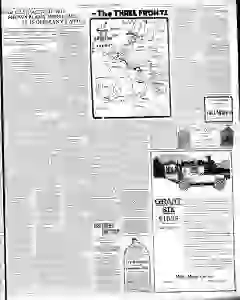
War campaign of 1918 shows many problems and plans
The article outlines three theories on Germany's strategy in 1918. It suggests a colossal attack on the Western Front or potential moves toward Italy or the Balkans. An expert says victory may come only in the West, with Central Powers risking another offensive this year or facing a stronger, fresher Allied counterattack in 1919. America is described as bearing a full share of the burden.
MENTIONED IN THIS ARTICLE
Germany
Western Front
Kaiser
Italy
Balkans
West
America
Taree Theomies UK
ERMAN
Poland
Romost
Prussia
Galicia
Roumania
Transylvania Alps
Thether
Dobrudja
Fnally
Cadorna
Duliai Alps
Udine
Isonzo
Tranders
Artois
Lille
Cambrai
Lnes
Reims
Ambrai
Vikilish
Somme
Verdun
Switzerland
Balkan
West Front
Thaly
Valkans
Marne
Adige
Venice
Padua
Venetia
Piave
Mt. Tormmba
Russia
Brenta
Arras
France
Thallaus
Plave
Tagliamento
The
Berlin
Reichstag
Belgium
United States
Rou- Titania
Salonica
Roumanian
Bulgaria
San Stefano
Dobradja
Kavala
Greece
Monastir
Valona
Bari
Brindisi
Strait of
Otranto
Dover
Constantine
Macedonia
Mitteleuropa
Western
Asia
Suez
Gibraltar
Germart
Oher
Britain
Lorraine
Mets
Austria
Trieste
Stures
Des
Europe
Lilley
Napoleon
Isis
Leipsig
German Offensive Theaters Shift to Italy Balkans Says Simonds
Frank H. Simonds assesses WWI strategy as of March, arguing three German Western front options and the Italy and Balkan avenues. He warns a west attack costs heavy casualties, while gains in Italy or the Balkans could boost German morale without decisive victory.
Germany faces two fronts in 1918 strategic choice
The article argues Germany must attack in the west this year or risk a decisive Allied counteroffensive next year. It compares potential gains from Balkan and Salonika actions with the risks of failing in the west, urging a decisive westward strike to avert a drawn-out war and preserve German leverage.
Rash covered Biby’s body heals after soap treatment
Mrs Edna Burt of Fenton Michigan recalls her six week old baby suffering a severe skin rash with blisters. After trying various treatments the child improved within two weeks with Caticura Soap and Ointment. The ad urges exclusive use of Caticura for skin complaints and provides a testimonial signed by Mrs Burt dated August 31 1917.
MENTIONED IN THIS ARTICLE
Edna Burt
Fenton
Mich
Pace to Face with Kaiserism in German Press
A discussion on Kaiser's handwritten notes and their use by Ambassador Gerard. The Tages Zeitung and Reventlow critique German censorship and government denial of an imperial telegram text. The piece notes claims that Gerard transmitted imperial notes to Washington word for word and hints at a possible facsimile headed to the president.
MENTIONED IN THIS ARTICLE
Washington
Gerard
Wilson
Mir
Germany
Tages Zeitung
William
Hall's Catarrhal Deafness Cure Claim
Patent medicine advert claims Hall's Catarrhal Medicine cures deafness caused by catarrh by acting through the blood on mucous surfaces. It offers a $100 reward for any case not cured, with the remedy sold by C. Grueeler’s tree and various druggists.
MENTIONED IN THIS ARTICLE
Hall
Eulers
Ali Drogenita
Cheney & CO
Toledo
Also Mentioned on This Page
Frank H. Simonds
McClure Newspaper Syndicate
Sucherman
Noyon Salient
Ypres
Ermans
Salonier
Mitteleuropy
Cheever
Spain
Morocco
Paris
Lgeria
Warsaw
Wienwa
Buda-Peet Stria
Hungary
Tecwkholn
Belcrag
Malta
Val
Ariga
Pingie
Roum Leukarest
Gqhofia
Biby
Columbia, Records
Cal J. Miler
Redision
Minneapolis
Dar
Allen
Pisttuborg
Manna
Kondon's
NDOT
STX. Duc Fie
Miller Motor Car Co
Sycamore Street
Grant Motor Car Corporation
Cleveland