The Interdependence Of Citizens In An Industrial World
A discussion on how ordinary meals reveal society wide cooperation. It argues that no single person produces all needs and that millions of workers in farming, manufacturing, transport, finance, and other sectors underpin daily life. The piece calls for broadening knowledge of others' problems to achieve shared benefits. Industrial Conservation, N. Y.
MENTIONED IN THIS ARTICLE
N. Y
Speed in production essential to victory
Industrial efficiency and economy will determine war outcome says Frank A. Scott of the War Industries Board. He notes the preparatory stage has passed and resources must be placed at government disposal. Troops in France and home mobilization are under way. efficiency now equals courage in battle.
MENTIONED IN THIS ARTICLE
Maih Cording
Frank A. Scott Clima
War Industries Board
Mr. Scott
France
Coens Reo
New York
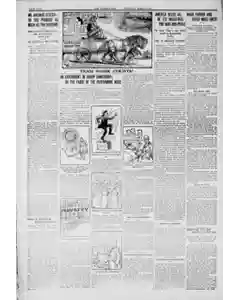
Team Work Counts An Experiment In Group Ownership
In this fable a Showman Wage-Payer trains a Mule Industry to perform to boost gum and peanut sales. Laborers agitate for bigger take while Agitator inflames envy, leading to strikes and a collapse of Industry. Moral: you cannot shift scenes and run the show at the same time. Industrial Conservation New York.
MENTIONED IN THIS ARTICLE
Vodeviel
Agitator
Mysteries
Who Is the Employer in Industry According to a New View
A passage from Industrial Conservation in New York argues that manufacturers and contractors are not the true employers. They act as directors employing manual workers for the sake of product buyers, who are the real employers. The text reframes the employer-employee relation as fellow craftsmen serving the purchaser.
MENTIONED IN THIS ARTICLE
New York
Economic War Time Order Encourages Full Employment
A New York letter argues for preserving all industries during wartime to avoid idleness and demoralization. It urges munitions production, export focus, and keeping workers employed while warning against hoarding and panic-driven cuts. It stresses national economy and sustained labor for war and postwar prosperity.
MENTIONED IN THIS ARTICLE
England
McGarrah
The
Mechanics and Metals Bank of New York
New York
Wage earners and payers unite for wartime industrial harmony
The Industrial Conservation movement urges unity between wage earners and wage payers to support a national war effort without internal class conflict. It calls for truthful campaigns against agitators, a cooperative industrial environment, and public officials to sustain industry, labor, and wartime financing.
Industrial Deserters Urge Duty in Wartime
Industrial conservation urges patriots to stay at post amid national effort. The statement condemns workers who abandon their jobs as traitors, noting millions serve with risks and hardships while earning up to 385 dollars monthly for pay and board.
Dividends From Pleasure On Work And Happiness
A short piece argues that work can feel like play when approached positively and that happiness lies in embracing effort. It suggests most people see work as a curse and fail to reach success by maintaining that attitude. Written under Conservation in New York.
MENTIONED IN THIS ARTICLE
Neloly
Fidustyia
New York
Doings of the railroad scrap heap and waste in industry
The piece argues railroads salvage old locomotives for war material and efficiency, calling the scrap heap the largest American waste. It cites reclamation as a precedent and warns that waste extends to industrial labor and manufacturing methods.
MENTIONED IN THIS ARTICLE
New York
Also Mentioned on This Page
Hes Pueces
Koi
Tor
America
United States
Michael J. Hickey
National Association of Manufacturers
National Industrial Conservation Movement
Boards of Trade
Industrial Conservation
Dabor
Grews
Prowne & Ieee
Otttes
Trey

 This is just the beginning! Our collection holds over 300 years of history, including rare newspapers, obituaries, marriage records, birth records, and so much more—most of which you won’t find anywhere else!