Sheep and time myths mingle in rural notes ads
A scattered Northern region column laments low sheep values and land prices pushing ranchers toward speculative shifts like coyote farming. It contrasts time systems across Maine and New Brunswick, contrasts equal rights zeal in San Francisco, notes Spanish wines seeking U.S. markets, and critiques cocoa processing claims while promoting Walter Baker Breakfast Cocoa as pure.
Up to Date Hints on Soil Cultivation and Boundaries
A detailed column covers English agriculture history and soil improvement plants like crimson clover and cowpea, plus warnings on nutrient depletion. It notes a New Jersey Delaware river boundary dispute, historical grants to Duke of York, and the role of stenographers in modern legal practice.
MENTIONED IN THIS ARTICLE
New Jersey
Delaware
Delaware River
New Castle
Charles II
James
Duke of York
Delaware Peninsular
William Venn
English Agriculture in Decline and Soil Reform
The excerpt laments eighteenth century English farming, noting poor soils, scarce fertilizers, and costly nitrogen. It cites narrow roads in Essex, livestock issues, and the shift toward crop rotation and legume plants like clover and peas. Ohio farmers Gould and Agee praise Southern peas for soil improvement, urging wider trials.
Grass is King and Grass Mixtures for Farmers
A mixed old column urges grass over wheat as the farmer’s main value and advertises Salzer Grass and Clover Mixture seeds. It touts large yields per acre, lists seed varieties, and offers a free seed sample and catalog for sending in a postal request to Salzer Seed Co. Gardeners in Texas and the South are noted for potato varieties and land offers appear from Missouri and Arkansas promoters.
MENTIONED IN THIS ARTICLE
Salaer
Salzer
Texas
Great South
Joan A. Salzer
America
Missouri
Arkansas
Kansas City
Gulf of Mexico
James Donohne
Delaware
Missouri and Arkansas
Pierce
Beneft
World’s Dispensary Medical Association
Buffalo
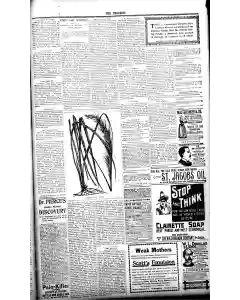
Bushy Blue Stem Andropogon nutans description
South Dakota station bulletin describes Bushy Blue Stem as a perennial grass with robust root stocks, unbranched stems two to five feet high, green to purplish color, broad rough leaves, and panicles six inches to a foot long. It yields abundant hay, stocks eat it greedily, and it thrives best on rich prairie bottoms though dry seasons reduce seed. The analysis shows water 7.75, ash 40, crude protein 0.85, nitrogen 1.67.
MENTIONED IN THIS ARTICLE
South Dakota
Also Mentioned on This Page
Regen
Reons
Oregon
New Brunswick
Nova Scotia
Maine
Pacific Coast
Women's Equal Rights League of
San Francisco
New Zealand
Madrid
United States
Missouri Leavenworth
Erman
Ina Cocoa
Stutzer
Germany
Walter Baker & Co
Dorchester
Mass
Leguir
Middle States
South Atlantic States
Prof
Tracy
Agricultural Experiment Station of
Mississippi
Mississippi Valley
Alleghanies
Ohio
Swins Suivides
Geneva
Australia
Brown
Arthur Young
Essex
John Gould
Alva Agee
W. F. Massey
U. S
Lesa Sssens
M. Woolley
Atlanta
Raligiom
S. F
Ore
Dee
Hopkins Place
Baltim
Temely
Mae Miron
Winaton
Apa Mall
Mckinney Pex
Dr. Pierce
Golden Medical Discovery
Burbank
Orlun
Louisiana
Rockport
Dallas
Ata
Wathin
Great Atlantis & Pacific Teacoma
Henry
General Foun
DRS
Ate
Pairs
As. Mosher Mf Co
Fort Worth
Slishman
Union Stock Yards
Chicago
National Stock Yards
Lils
Ial
Anf Expositi Senna
Carl
Walter Baker
McGrew
Hain St
Thenk Fairbank Company, Stans
Scott & Bowne
Douglas
Pest Dongol Foote
V. L. Douglas

 This is just the beginning! Our collection holds over 300 years of history, including rare newspapers, obituaries, marriage records, birth records, and so much more—most of which you won’t find anywhere else!