Hearst Papers propose peace, governance, and world order terms
The Hearst Papers outline proposals including equal basis for English-speaking peoples to preserve peace, proportional U.S. Senate representation, unified national defense under a secretary, aggressive literacy abolition, January inaugurations, a federal sales tax to cut other taxes, a thirteen-month calendar with weekends on holidays, the Nicaragua Canal, and potential Caribbean acquisitions as debt settlement with France and Britain.
MENTIONED IN THIS ARTICLE
United States Senate
Army and Navy
Air Forces
United
Secretary of National Defense
Education
United States
Congress
Nicaragua Canal
Hearst Papers
French West Indies
English West Indies
France
England
Taxing Minds Like Mines: Depletion and Human Energy
A editorial argues that tax policy should apply depletion concept to human labor, not just natural resources. It contends workers age and exhaust energy and intelligence, deserving relief similar to mine owners who deduct depletion from income taxes to avoid confiscation of productive assets. It asserts current tax law unjustly taxes earned income at the same rate as passive wealth.
MENTIONED IN THIS ARTICLE
Jess
Theatre Critics and Hoaxes Shake Broadway Scene
The piece critiques theater reviews and hoaxes dampering the Broadway scene, noting critics bands, agency influence on ticket sales, and a wave of sensational quotes. It cites Percy Hammond and Alan Dale in examples, mentions staged invitations and bold misquotations, and laments the effect on theatregoers and honest art.
MENTIONED IN THIS ARTICLE
Percy Hammond
Wrate
Nda
Alan Dalé
Minita
Alan Dale
Tie
Gear
New York
Godip
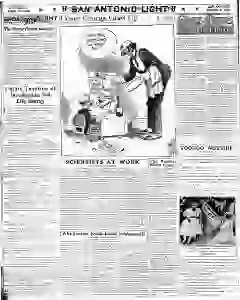
Science at Work and the Edison Era
A discussion on pure versus practical science anchored by Thomas A. Edison’s celebrated birthday and Henry Ford’s gift. The piece argues science is a single field driven by usefulness, highlighting Edison as the living genius who bridged theory and application and influenced American scientific work.
MENTIONED IN THIS ARTICLE
Thomas A. Edison
Henry Ford
Eudden
Edison
Eilison
Ife
America
Why Certain Foods React Unpleasantly By Royal S Copeland M D
Copeland describes rare cases where foreign proteins cause negative reactions rather than protection from disease. He explains anaphylaxis as an immune failure to tolerate certain foods or emanations, with examples including egg albumin sensitivity and varying reactions among individuals and hereditary factors.
MENTIONED IN THIS ARTICLE
Royal S
Copeland
M.D. Copprighty
Sersler
Tne
Ahock
The Books Were Crazy By Herbert Kaufman Coprslkt
An excerpt discusses Herbert Kaufman Coprslkt and his brother’s anger over a new inventory system at National Cash Register. Patterson critics label the books and publicity as intriguing while reviewing the corporation’s marketing, censorship, and leadership dynamics amid a shift to innovation and monopolistic practice.
MENTIONED IN THIS ARTICLE
Herbert Kaufman
Dany Mirror
Korbert Kaufman
John W. Patterson
Europe
Fia Brother
National Cash Register
Prelterson
Aleedyn
Thatterdon
Patterson
Holiiaire
Keto
Watanta
Voodoo Worship and Queen Ti Meminne in Haiti’s Island La Gouave
The article surveys voodoo practices seen in Haiti and beyond, noting the reverence for a powerful queen on La Gouave island. It cites Sergeant Wirkus’ limited control there and contrasts voodoo with monotheistic belief, describing fear, sacrifice, and the belief that devils govern rather than a distant good God.
MENTIONED IN THIS ARTICLE
Ti Meminne
la Gouave
Haiti
Wirkus
Himsell, Foodn
Porsesy
Also Mentioned on This Page
THE
Hearst Papers Advocate
Ks San Antonio
By Hatlo
Sie
Tatthoat North
Evan
Manhattan
Lefo
Becauer Bé
Graidma
Joto
McNaught Syndieate, Inc
Acentint
Africa
Taden

 This is just the beginning! Our collection holds over 300 years of history, including rare newspapers, obituaries, marriage records, birth records, and so much more—most of which you won’t find anywhere else!