Exclusive Leased Wire Day Report
Exclusive AP wire summary entered at San Antonio post office as second class matter.
MENTIONED IN THIS ARTICLE
The
Associated Press
San Antonio

 This is just the beginning! Our collection holds over 300 years of history, including rare newspapers, obituaries, marriage records, birth records, and so much more—most of which you won’t find anywhere else!
This newspaper page contains 25 articles. Subscribers can read the full text of each article.
Newspaper
San Antonio Light
Location
San Antonio, Texas, United States of America
Date
Jun 09, 1916
Page
6
Exclusive AP wire summary entered at San Antonio post office as second class matter.
The readable text references incorrect or damaged data about new addresses and an office. It implies a deadline or action linked to submitting or identifying addresses but the specific entities and dates are unreadable.
The San Antonio Light reports May 1916 daily average circulation of 21,009 and Sunday edition 24,836. Net paid averages were 19,325 daily and 22,686 on Sundays. Audit Bureau of Circulation certified the figures, endorsing the paper’s claimed higher paid distribution to homes in San Antonio.
The piece questions Colonel harmony claims by recalling 1912 statements against the Republican and Democratic machines and asks why a 1912 stance against compromise is softened now. It argues the real motive is beating Wilson and notes Republican delegates may doubt backing a candidate who reconsiders past denouncements.
The piece argues the current year offers major parties a last chance to ally with suffragettes. It notes suffragists plan to form an independent party if ignored and highlights campaigns in the West and the withdrawal of campaign support by suffragists to pressure politicians. Republicans meeting in Chicago are said to have shown increased respect for suffrage efforts.
Steadfast opposition to votes for women is worn down by the looming power of 5,000,000 potential voters. As suffragists gain, both major parties risk losing influence if they ignore equal suffrage. If no party adopts a suffrage plank, women in states with votes may run and win, altering state and national politics.
The Socialists of San Antonio display political shrewdness by nominating a woman for lieutenant governor as a strategic move toward equal suffrage. They acknowledge they cannot win now due to Texas restrictions, but aim to sway suffragists, test tactics used by major parties, and plant seeds for future influence as the suffrage movement shifts.
Experts at the eighth national convention in Cleveland report advances in city beautification and cutting wasteful, obsolete government methods. They promote scientific city building, focus on traffic solutions, and claim traffic losses reach about a hundred million dollars monthly nationwide. Improvements stem from planners' work.
Commission government faded as an experiment and the city manager form grew popular. About seventy towns are under managers who are expert, answerable to taxpayers, and push cooperation, debt reduction, lower taxes, efficiency, cleaner streets, and beautification as city builders expand nationwide. The phrase what is everybody's business is losing force as management improves.
The piece cites a prominent scholar urging Roosevelt unity while lampooning excessive warnings about speed. It mocks sensational auto accident reports and argues steady driving at twenty miles per hour or less avoids incidents.
The Chicago delegations shift from Favorite Sons to Favorite Buns reflecting changing preferences. The item weighs whether the sea fight was a German victory or a costly British success, inviting readers to choose which interpretation fits the record.
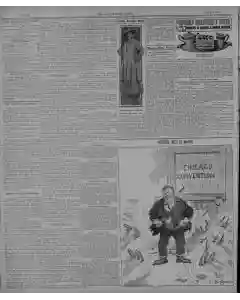
In the Chicago scene John D. Rockefeller Jr. chose not to attend the local conventions. He reportedly surveyed the gatherings and found ample rhetoric on naval strength but few solid oil prospects, deeming the labor and travel time not worthwhile.
One man refused to take part in San Antonio preparedness parade citing a wish to avoid war while several thousand others joined the march for the same stated reason. The event drew mixed responses as residents weighed national security concerns against peaceful protest.
The Fort Worth Record notes Lloyds set odds on the war lasting beyond 1916 and 1917 and on US entry and Sweden joining Germany. Bets include 3 to 1 war not ending before end of 1916, 7 to 6 not before 1917, 20 to 1 end before 1919, 2 to 1 against US entry, and 4 to 1 Sweden stays out six months.
A decade ago James J. Hill urged spending by the nation on railway improvements including double and four tracking and terminal facilities. Now experts estimate one billion dollars per year for five years is needed for railway improvements, excluding new line construction.
The Chicago suffrage parade prize goes to a slogan reading Give a Woman a Man's Choice. Critics, including laborers, warn suffrage risks men losing livelihood gains and becoming more dependent. Tom Dixon and The Clansman author cited as warning voices on gynecocracy.
The Galveston Tribune interprets President Wilson's Saturday speech as signaling readiness to join any feasible plan for permanent peace while denying a commitment to enter war or join a specific bloc. The piece contrasts Washington and Jefferson's guiding ideals with contemporary European conflicts and stresses avoidance of entangling alliances.
The Vossische Zeitung reports a bill to authorize a fifth German war loan of 10,000,000,000 marks, lifting total war borrowings to 60,000,000,000 marks. The move implies higher taxation and strained productive power, with unrest possible. Europe and neutrals share a grim outlook as indemnities fade.
The Galveston News reports Secretary Kirk asserts his tally shows Judge Poindexter won more votes than Mr. Love for national committee man at San Antonio, claiming the election is closed. Delegates dispute the tabulation, raising questions about the convention's integrity and Poindexter's title amid accumulating credible testimony.
The season brings tussah fabric from the mills with gay border effects and fashion evolves to include coordinated sport suits and hats. Designers, once unsure, now see this fabric adapted into smart suits and dresses as well as matching millinery.
A description highlights border accents on a tan tussah suit with a black and yellow border. It notes careful use to avoid repetition, mentions a border trim on the collar cuffs and coat bottom, and shows a matching flat sailor hat. The coat’s straight lines and button trim give a youthful look.
A family of mice hid in a closet until one hungry mouse disobeyed her mother and approached a kitchen cheese trap. She nearly fell prey to the device before her mother intervened, saving her and teaching caution.
A Peach shortcake recipe by Constancé Clarke describes a vintage dessert method. Separate egg yolks and whites, whisk whites to stiff peaks, mix yolks with sugar and lemon peel, fold in flour, bake two square pans, then layer cake with whipped cream and peaches, finishing with peaches and cream on top.
The Utica Observer notes that over 15,000 German women operate street cars and many women fill roles in France and other industries. It cites German scientists led by Professor Ernest Francke claiming women will stay in industry due to a long-term labor shortage from war casualties, with men seeking only pay and comforts.
Chairman Burnett of the immigration committee denounces proxy marriages as sordid despite romance. He cites 1800 brides entering the U S last year and compares the practice to a man on a pier waving farewell with a field glass, prompting lunch plans.
We want people to find what they are looking for at NewspaperArchive. We are confident that we have the newspapers that will increase the value of your family history or other historical research. With our 7-day free trial, you can view the documents you find for free.
People find the most success using advanced search. Try plugging in keywords, names, dates, and locations, and get matched with results from the entire collection of newspapers at NewspaperArchive!
You can also successfully find newspapers by these browse options. Explore our archives on your own!
Browse by location and discover newspapers from all across the world.
Browse by date and find publications for a specific day or era.
Browse old newspaper publications to find specific newspapers.