Decomposition of Ficed Foods in Poultry Storage
The article explains two main pathways of decomposition in foods, one affecting proteins and the other fats, with rancidity tied to acid formation. It notes enzymes can cause fat breakdown in dressed poultry, enzymes slowed by low potencies, and recommends strict temperature controls from packers to retailers, including 32 F in chit rooms, under 10 F in refrigerator cars, 40 F or below at wholesalers cold storage, and under 45 F at retail. Home storage should stay below 40 F for short terms, dry wet packed birds quickly, and avoid placing birds on ice.
MENTIONED IN THIS ARTICLE
Waterloo
Iowa
Herrick
Jung
Fruits and cold storage guidance from USDA notes
The article explains how fruit storage depends on humidity and temperature, with delicate fruits decaying above 50 degrees F and slowed below 60 degrees. It recommends 40 to 50 degrees F for berries and small fruits, instructs proper berry handling, and warns about mold and odor control in refrigerators.
Preservation methods for fish in early practice
The text explains historical fish preservation, including brining in ice, washing, drying, and sealing. It notes bacteria from scales and gills can contaminate flesh if not kept cold, and suggests freezing fillets at 50 degrees F below zero. It contrasts fat content's effect on shelf life and mentions storing frozen fillets beside butter.
Also Mentioned on This Page
M. E. Pennington
M. D
Stowers
Ranney
Bohn
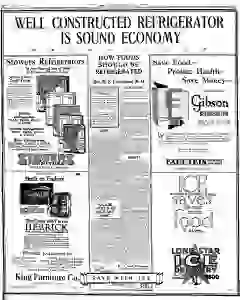
BSS Better Home Furnishers
King Furniture Co
the Friendly House
Commerce
Ibe
Con Haute
United States Department of Agriculture
Mars
Elere
Gibson Refrigerator
Gibson
Furnita Company
West Commerce Street

 This is just the beginning! Our collection holds over 300 years of history, including rare newspapers, obituaries, marriage records, birth records, and so much more—most of which you won’t find anywhere else!