Mini Page celebrates International Pirate Month with Blackbeard tale
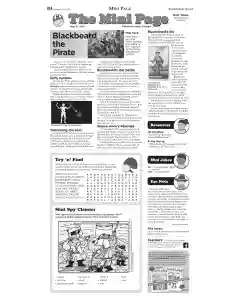
Jean Leon Gerome Ferris painted Capture of the Pirate Blackbeard in 1920. Pirates thrived in the early 1700s as Atlantic outlaws chasing merchant ships. Blackbeard and his crew based in the Bahamas operated roughly 1713 to 1720, taking booty and evading authorities.
MENTIONED IN THIS ARTICLE
Jean Leon Gerome Ferris
Blackbeard
Atlantic Ocean
Atlantic
Bahamas
Blackbeard and Queen Anne’s Revenge Shipwreck Tale
A historical account of Blackbeard the pirate in 1717 1718 with the Revenge renamed Queen Anne’s Revenge after capturing a French slave ship carrying 516 slaves. It covers his North Carolina base near Bath and Ocracoke, Governor Eden, Lt. Robert Maynard’s battle that killed Blackbeard on November 22 1718, and the later 1996 Beaufort Inlet search that identified Cannons and anchors linking to Queen Anne’s Revenge now on the National Register of Historic Places since 2004.
MENTIONED IN THIS ARTICLE
Blackbeard
Chesapeake Bay
Philadelphia
New York Harbor
Caribbean
North Carolina
Bath
Ocracoke
Charles Eden
Virginia
Alexander Spotswood
Robert Maynard
Maynard
Beaufort Inlet
Discovery
Mini Spy Classics Pirates and Hidden Pictures
Mini Spy and friends pretend to be pirates in a playful scene. The prompt invites finding hidden pictures within a coloring activity and then coloring the illustrations.
MENTIONED IN THIS ARTICLE
Mini
Mini Spy
Blackbeard: the Pirate Edward Thatch and His Legend
The article outlines Blackbeard born Edward Thatch around 1680 in England. He joined Benjamin Hornigold in the Bahamas in 1713 and led his own pirate ship by 1716. His imposing look featured a long beard and smoke from slow-burning coils during battles. Some historians argue he rarely killed, while many in Britain and the colonies saw him as a Robin Hood figure opposing cruel rulers.
MENTIONED IN THIS ARTICLE
Blackbeard
Edward Thatch
England
Bahamas
Benjamin Hornigold
Hornigold
Thatch
Britain
Colonies
Blackbeard Exhibition and Library Feature Announced
NUL theony on the Web links artifacts at bit.ly/MPQARartifacts and bit.ly/MPBlackbeard. In-library display highlights Tim Cooke's "Blackbeard: A Notorious Pirate in the Caribbean" at local library.
MENTIONED IN THIS ARTICLE
Blackbeard
Caribbean
Tim Cooke
Why are pirates called pirates
The ocean has become more acidic in the past two centuries due to absorbed carbon dioxide, harming shell-forming sea creatures like oysters and mussels. Without less acidic water, minerals needed for shells are harder to use, so ocean chemistry matters for marine life. For students, look for International Pirate Month events in your newspaper.
Also Mentioned on This Page
Pirate
Bath, Battle
Edward
Blackbeard’s
Benjamin Cole
Pat
Pam
Eco Note
Facebook
MiniPageBooks
Andrews McMeel Universal
Walnut
Kansas City
Sui Pages
Vinthitha

 This is just the beginning! Our collection holds over 300 years of history, including rare newspapers, obituaries, marriage records, birth records, and so much more—most of which you won’t find anywhere else!