From Mufti to Khaki An American Soldier in Britain
An American sergeant recounts his voyage from Jersey City to London to join the British army during WWI. He tests recruiting offices, faces neutrality rules, and tries to spur Britons to enlist, with mixed success and a vivid tour of Zeppelins and London streets.
MENTIONED IN THIS ARTICLE
L. Tt
Jersey City
Jersey National Guard
France
New York
Lusitania
Washington
Fulton Street
Brooklyn
England
Tilbury
London
St. Pdmeras Station
Tottenham, Court Road
Lord Kitchener
Tommy Atkins
Tommy
Royal Fusiliers
Condon
Lansing
O. T. CG
Officers’ ‘Training Corps
Ogden
Utah
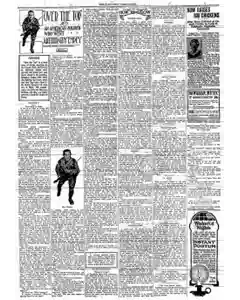
Over the Top true story of trench warfare front
Foreword summarizes Sergeant Empey’s firsthand World War I experiences as an American soldier two years before U S entry. The account promises grim, thrilling battles told with a humorous, human tone and vivid frontline detail.
MENTIONED IN THIS ARTICLE
Empey
Empey Encounters Gunfire in France in New Installment
In training quarters Empey recalls hearing big guns booming somewhere in France and makes the acquaintance of the coc ties as he describes experiences in the next installment.
MENTIONED IN THIS ARTICLE
France
Empey
Newport News Named After Captain Newport Arrival
In Virginia early days communication with Britain was by ship and when Newport was due home from England colonists gathered for news from home. The place now known as Newport News earned its name from that event, a gathering on the expected return and the town's association with Captain Newport.
MENTIONED IN THIS ARTICLE
Newport News
Virginia
Newport
England
Early Garden Peas Grow With Rich Loam and Care
The article advises planting early peas in rich, well drained loam with nitrogen withhold before planting. It recommends Alaska or modified varieties for early quick growth, then taller Telephone types for later harvest. Plant two parallel rows six to eight inches apart, with spacing to suit dwarf and tall varieties, and stagger plantings by about two weeks for continuous yields.
MENTIONED IN THIS ARTICLE
Alaska
Home Garden Onions Grown From Sets or Seed
Onions thrive in good garden soil with rows spaced to suit cultivation. Plant sets early in autumn or in spring after the frost. Potatoes or multiplier onions may yield early greens. Onions can be grown from seed via hotbeds or direct sowing, with shallow cultivation and hand-weeding as needed. Remove seed stalks to protect bulb size.
Muskmelon Culture in Sandy Loam Soils
The article discusses muskmelon planting in sandy loam with well rotted manure, noting a long growing season of about four months and need for warm ground. It suggests starting plants in boxes or on sod and transplanting after soils warm, spacing plans, drills, thinning, and frequent cultivation to keep weeds down. It also warns of common diseases affecting muskmelons.
MENTIONED IN THIS ARTICLE
United “States
Insect and disease control for muskmelon growers
Guidance directs farmers to Farmers' Bulletin 856 for detailed methods on managing insect pests and diseases affecting muskmelons. The bulletin covers integrated controls and practical steps for home garden vegetable plants.
Spinach Growth and Planting Tips for Varied Climates
Spinach thrives in cool weather reaching best development in the middle South. In the north protect plants with straw or leaves during winter. Fall planting is advised where possible to reduce bolting. One ounce of seed covers 100 foot row. spacing about one foot apart yields good yields. Harvest by lifting entire plant rather than cutting leaves, selecting larger plants first to allow others to mature.
MENTIONED IN THIS ARTICLE
Middle South
Cauliflower Cultivation Tips From Historic Garden Text
The guide explains cauliflower needs rich moist soil and steady irrigation. It warns against frost and heat sensitivity, recommends sowing around the last spring frost with hotbed or window box plants, and details spacing for horse and hand cultivation and leaf-tying to keep heads white.
Watermelons Cultivation Rules and Disease Bulletin Reference
Watermelons require warm soil and space. plant in hills with manure, then thin to four plants per hill after establishment. Seeds: eight to ten per hill. sow about one month after last hard frost in sandy soil. For disease and insect control see Farmers Bulletin 8562 titled Control of Disease and Insect Enemies of the Home Vegetable Garden.
MENTIONED IN THIS ARTICLE
Farmers’ Bulletin
Kale Cultivation Notes From Agricultural Page
Kale is hardy and suited for autumn planting across the southern United States. It thrives in good soil with stable manure, can be sown in drills or broadcast, and ¼ ounce of seed covers 100 feet. Successive plantings yield greens from the first harvest through the season, with thinning once plants are large enough.
MENTIONED IN THIS ARTICLE
United States
Hand Tilling by Hand for Small Plots and Soil Lightening
The article notes hand work for small plots is practical though labor intensive. Spading should be done early to ease ground preparation and crop planting, with dry ground allowing earlier planting. It suggests adding coal ashes to loosen soil and lime to correct acidity for better crop establishment.
Plan Your Garden Early For A Successful Growing Season
Diagram your ground and allot space to the vegetables you want to grow. Buy seeds, have tools ready, and prepare for the opening of the growing season. This guide emphasizes early planning and organized steps to start gardening efficiently.
Lydia Pinkham Remedy Promises Health Restores Work Ability
A farmer cites six hundred chickens and farm labor as reasons to seek health help. An advertisement for Lydia E. Pinkham's Vegetable Compound claims to restore health and ease complications, featuring Mrs Alters and a general nationwide call for advice based on forty years of experience.
MENTIONED IN THIS ARTICLE
Lydia E
Lydia E. Pinkham
Elephant and microbe riddle from Yonkers Statesman
A Yonkers Statesman joke exchange features a thin boarder and several workers riffing on the difference between an elephant and a microbe. Various punchlines involve sizes, arrival times, and items carried, culminating in a wry misdirection about what each carries.
MENTIONED IN THIS ARTICLE
Tye
Tractor Versus Mule in Harsh Labor Comparison
The piece contrasts animal power with mechanized work noting ten mules move about two tons in ten hours while a tractor hauls 25 tons and runs twenty miles in the same period. It also questions social pressures about honesty and respectability tied to marriage choices for women.
Also Mentioned on This Page
Ran Ff
Arthur Guy Empey
Mufti
Tottenham Courts Road
Ain
Wheat Sa
Abe
Guy Empey
Fies
Kale
Uetail
Lydia E. “Pinkham
Mpoun
Ersten Leowen
Yonkers
Erie

 This is just the beginning! Our collection holds over 300 years of history, including rare newspapers, obituaries, marriage records, birth records, and so much more—most of which you won’t find anywhere else!