The Tie That Binds Divorce Parable in Weary Parting
Two lovers drift toward separation as a domestic rift unfolds during a farewell. A child’s presence and mounting tensions frame a tense, conflicted scene of departure.

 This is just the beginning! Our collection holds over 300 years of history, including rare newspapers, obituaries, marriage records, birth records, and so much more—most of which you won’t find anywhere else!
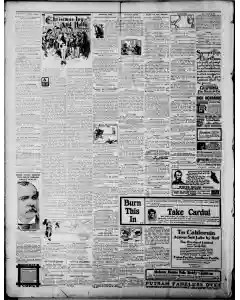
This newspaper page contains 31 articles. Subscribers can read the full text of each article.
Newspaper
Oxford Eagle
Location
Oxford, Mississippi, United States of America
Date
Dec 10, 1908
Page
4
Two lovers drift toward separation as a domestic rift unfolds during a farewell. A child’s presence and mounting tensions frame a tense, conflicted scene of departure.
Fragmented OCR notes discuss a whiskey based tonic with Turis Compound and Sarsaparilla sold by Globe Pharmaceutical Co. Claim it cures torts and rheumatism, with other stray quotes showing local dialogue and eye salve advertisement amid scattered anecdotes and rural life scenes.
Fragmentary notes discuss a misread list of names and terms including Capuchine and Hellenes. The text references a store, studies, and a claim about a bard student. The passage lacks coherent facts and clear event details.
A damaged OCR fragment discusses a sick man forgiving enemies with the notion that it does not bode well. It references names like Stevenson and mentions a belief about fortune and foreign terms. The readable text is sparse and context unclear.
David Price of Corydon Iowa describes severe kidney trouble and back pain. After using Deans Kidney Pills his health improved, he walked without a cane and remained well for seven years. Claim includes sale by all dealers 50 cents a box Forter Milburn Co Buffalo NY.
A garbled excerpt presents fragmented verses with archaic spellings and nonsensical phrases. It lacks clear events or subjects, offering only disjointed lines without identifiable people or places.
The essay traces holly and ivy as enduring Christmas symbols from ancient pagan rites to Christian festivity. It notes holly's resilience, associations with friendship and immortality, and its prominence in English and American decorations while detailing linguistic and cultural variations of the plant's name and meaning.
A garbled dialogue fragment portrays nosy-ness and misreading over a Christmas gift. It mentions Mrs. Gramercy and Mrs. Park with hints of suspicion and a decorative chorus about Christmas bells and home dinners.
Dialogue shows Mrs. Caller joking about giving her husband the same Christmas necktie every year while Mrs. Athome notes their mutual Christlike gifts. The gag underscores a lighthearted social exchange among neighbors.
A reflective note critiques diary keeping as a waste while suggesting true stories are those you dare not write and the written words may seem foolish yet hold value in time.
A neighbor’s four sons attend church with their parents. During a Sunday sermon one boy senses discomfort and leaves early due to a toothache. His younger brother asks where he went and the mother quietly says he has a toothache. The boy mutters a quip as he resumes listening.
An advertisement cites a case where eczema on a boy’s face and limbs persisted for six months despite two doctors treatment. After trying Cutiura Remedies the child slept better within a week and by two months showed a clear face, with no recurrence to date.
The report recounts Harry Paine Whitney and other noted horsemen shipped from London aboard the Minnehaha. A jockey recalls a sad tale of misfortune, noting sympathy yet limited help for a fallen man. He laments few hands, but many feet.
An elderly woman was accosted by a well dressed refined man who claimed to be a former friend, insisting he had changed his name. He patted the lady’s purse and spoke casually, prompting concern as the encounter suggested a possible deception.
A young woman recounts indigestion from rich foods and fatigue. After trial with Grape Nuts, she reports full recovery and improved digestion, able to eat anything again.
A 19th century cure claims two ounces of Glycerine and one ounce of Virgin Oil of Pine, mixed with a half pint of Straight whiskey, to be shaken and taken every four hours. It asserts the genuine oil is prepared by The Chemical Company of Cincinnati Ohio and sold in half ounce vials in round wooden cases to ensure freshness and purity.
A clergyman and guests discuss the twelve sons of Jacob during afternoon tea. A man recites the names, while a jocular cleric is surprised by the biblical list. An Atchison couple provides a humorous vignette as a wife throws a stool and explains weariness from sniffling.
An OCR fragment contains endorsements for Hunt's Cure claiming to cure all forms of skin disease after a single box. Included are testimonials, quotes, and a Ruskin remark, with references to long known acquaintances and generic medical claims. The piece reads as an irregular drug advertisement with dubious assurances.
A professional comedian counters a remark about being gay by noting the burden of providing value and money worth to audiences, highlighting the contrast between public perception and financial expectations. The exchange underscores the seriousness behind entertainment and audience responsibility.
A collection of silhouettes from prose and poetry contrasts a cheerful man who presents a smile to every fortune with a quip about a chief and a hat, illustrating stubborn wit and lightness in the face of misfortune.
A collage of old magazine items and quips on trouble imaginary borrowed and real. It cites Calin Tubal Cain Eve and a joke about the Optimist and pessimist from Sunday Magazine. A brief note promotes Johnson's Chill and Fever Tonic Co. with a charity anecdote included.
In the Detroit Free Press fragment, a child reports Mary crying. a character wonders if she fears Jim will invite her to the theater or if she has nothing suitable to wear. The brief scene hints at domestic tension and social expectations.
A historical advertisement promotes Castoria as a safe and reliable remedy for infants and children. It emphasizes the product’s long use and urges readers to choose the familiar Castoria brand with its signature.
The passage states that about 33,033,093 people die yearly worldwide, equal to 91,964 daily, 3,720 hourly, 60 every minute, and one each second. It also notes an estimated annual population increase of about 14,500,000.
A humorous exchange in a Kansas City Journal snippet features a diner describing a steak as the toughest he ever struck and a waiter replying that the previous diner said the same. The dialogue highlights playful banter about a heavy meal.
A humorous cross between a domestic quarrel and a schoolroom moment unfolds. Ardyce and Wayne sing America at school while their father jokes about lineage and tragedy, prompting Wayne to ask gravely about “two of ’em.”
The page blends aphorisms and quips about Halley's comet, the devil, and the Turk with notes on virtue, success, and personal sentiment. It references 450 years of history, modern skepticism toward old foes, and notes on happiness found in daily effort alongside small jokes and advertisements for Hicks Capudine and Pettit's Eye Salve.
A Philadelphia Ledger item contrasts misuse of the word anxious with a sanitary warning in New York about botting water. The piece highlights public curiosity over drink safety and clarifies the term’s proper use.
Amid sultry race banter a speaker laments wasted effort noting the speaker could have won the marathon. The remark frames a boastful frustration in a competitive, sportslike moment.
A property man fitted a scene with handsome gold furniture and asked Mme Bernhardt for her view. She exclaimed bon bon, prompting the man to remove the furniture. He said she called it bum. A brief amusement item from Tit Bits.
An advertisement touts Hunt's Cure as a guaranteed remedy that relieves and cures all forms of itch from eczema to ringworm in one box. The copy claims instant relief and broad applicability, emphasizing its universal itch curing claim.
We want people to find what they are looking for at NewspaperArchive. We are confident that we have the newspapers that will increase the value of your family history or other historical research. With our 7-day free trial, you can view the documents you find for free.
People find the most success using advanced search. Try plugging in keywords, names, dates, and locations, and get matched with results from the entire collection of newspapers at NewspaperArchive!
You can also successfully find newspapers by these browse options. Explore our archives on your own!
Browse by location and discover newspapers from all across the world.
Browse by date and find publications for a specific day or era.
Browse old newspaper publications to find specific newspapers.