Conservation and Crops Spur Soil Protection in Kansas Farm
Diane Yeamans reports on the Sylvester family near Ottawa who win a 1989 Kansas Bankers Association Soil Conservation Award for Franklin County. Their terrace system, waterway work, and low tillage help protect topsoil and sustain a diversified operation including seed crops, cattle, and soybeans.
MENTIONED IN THIS ARTICLE
Diane Yeamans
Herald
Washe
Clyde Sylvester
Russ
Wesley
Kansas Bankers Association
Franklin County
Sylvester Ranch
Ottawa
Wes, Russ
Clyde Slyvester
Galen Wichman
Albert Wichman
Richmond
Rockwood Or
Rantoul
Franklin County Farm Bureau Association Farm Bureau Insurance
West Tecumseh
Ottawa Association
Soil for Seeds The Sylvesters Practice Conservation
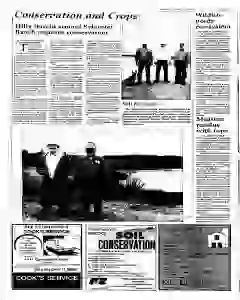
The Sylvesters father Wesley eight and his sons Russ and Clyde left and center have practiced soil conservation. They report benefits in their seed crops. Ponds like the one shown, built with Marais Des Cygnes Drainage District No. 1, help slow flooding waters.
MENTIONED IN THIS ARTICLE
Sylvesters
Ottawa
Marais Des Cygnes
Wesley
Russ
Clyde
Diane Yeamans
Wildlife habitat and soil conservation practices
Wildlife benefits from a conservation system on cropland. Practices include conservation tillage, cover crops, terraces, windbreaks, and field borders. Residue protection provides food and nesting for wildlife, while all species need food, cover, and water. Contact local Soil Conservation Service for guidance.
MENTIONED IN THIS ARTICLE
Gwen Handcock
Soil Conservation Service
Measure residue with rope technique for soil conservation
A simple rope method estimates crop residue cover by knot counts along a 100 foot rope laid across rows. Each knot covering residue equals one percent of ground. repeat in several field areas for accuracy and consult the local Soil Conservation Service for more guidance.
MENTIONED IN THIS ARTICLE
Kent Scott
Soil Conservation Service Office
Also Mentioned on This Page
Sylvester
Wes
Fort Riley
Cook's
Cook's Service

 This is just the beginning! Our collection holds over 300 years of history, including rare newspapers, obituaries, marriage records, birth records, and so much more—most of which you won’t find anywhere else!