Fragmentary OCR Note Highlights Missing Context
The readable fragments mention an isolated item with unclear references and no verifiable names or places. Details are insufficient to identify events, people, or locations from the text.

 This is just the beginning! Our collection holds over 300 years of history, including rare newspapers, obituaries, marriage records, birth records, and so much more—most of which you won’t find anywhere else!
This newspaper page contains 20 articles. Subscribers can read the full text of each article.
Newspaper
Mitchell Capital
Location
Mitchell, South Dakota, United States of America
Date
Oct 05, 1894
Page
3
The readable fragments mention an isolated item with unclear references and no verifiable names or places. Details are insufficient to identify events, people, or locations from the text.
Fragmentary OCR snippet includes garbled phrases about dating weather and stocks with unreadable names and numbers. No coherent event or entities clearly identifiable.
Fragmented OCR text describes winds, storms, and labor conditions with references to wages and workers. It notes money changes, period rates, and employment details tied to a port or industrial setting. Persistent garbled phrases hinder precise identification of event, location, or dates.
A fragment from a juvenile piece recounts a playful visit by a big brother with mischief and misbehavior, describing stumbles, chores, and pretend domestic scenes. It blends memories of younger days, family scenes, and imagined roles with childlike humor and sentiment. The piece includes a New York World mention and short comic vignettes about everyday life and a child’s view on growth and aging.
A short comic exchange features Freddy, a claim about fish schooling and bookworms as bait, and Mr. Bloobumper chasing with a slipper. Benny exits amid the decor. Verner notes Herbert's dog sniffing the air and declares the nose is loose.
Slang enriches language, with terms from Volta to cinch and race track slang now common in editorials. The piece notes expressions like inside track, winning hands down, and no more I guess not, along with a shift from I guess not to I dont think. It then surveys Maine's vast timber lands, citing lumbermen estimates that the wild lands could form thirteen Rhode Islands in size, with acreages by county and the rising value from pulp wood demand.
The passage argues the U S Senate is an eternal body that never dies and remains the same assembly since 1789 though its membership changes every two years. A tangential cartoonish exchange adds a joke about a thread on a finger as a reminder to remember tasks.
A Chicago Record correspondent describes Louisiana s sugar boom with Abbeville s J H Pitnam mill as a focal point. Northern equipment and coal fuel massive production while bayous, flatboats, and steamers move cane and sugar toward New Orleans and rail hubs.
Description of a large plantation route from bayous to mills covering about three thousand miles. Modern improvements are used on the plantation. Cane is moved by a sugar cane cart on rails pulled by a mule named Sarah Bernhardt as hundreds of workers cut, pile, and load the cane.
The text describes a sugar cane mill process from harvest in October to barreling, noting yields of two percent sugar and a 60 000 pound daily capacity, then shifts to Amherst College banjo and mandolin clubs touring Great Britain under Charles Terry with praise from Southport papers for refined banjo and vocal performances.
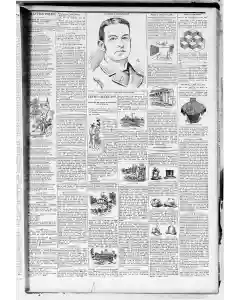
A trial run of new postal trolley cars designed to speed free mail deliveries in Parkville Bensonhurst New Utrecht and Gravesend has been tested with use already in St Louis and Lancaster PA. The white painted trolleys mirror a closed car design and are set to be adopted nationwide.
A postal car measured twenty eight feet long features two ten foot compartments with seating for smoking in one section. The interior mirrors a regulation postal car on a small scale with frames for mail bags on one side and a wide table plus a forty-hole pigeon case on the opposite side.
The description explains a postal car with one clerk per car who distributes mail into pigeon holes and then drops mail into bags for stations after departure. Mail bags are loaded from stations through open side windows, with the clerk handling both directions. Cars cost about 1900 dollars each and include patent electric heating and electric lighting.
The article describes refurbishing silk and felt hats, including silk hats built on muslin and re treated with shellac over blue flame. It notes this work is tied to better class hat shops offering good hats at low prices and explains the simple re forming process.
The text details stiffening water and hollow iron presses for hat shaping, silk covers sewn to form a bag, and bias cutting angles. It then shifts to a political note about Germany’s fight against anarchism, Emperor led bills, and warnings of European assassins coming to the United States.
The United States has produced about two thirds of the world’s cotton consumption for sixty seven years, underscoring American dominance in the global textile supply.
A curious optical trick features six cubes arranged in a pyramid with a star at the center. Viewers are told to stare a minute and observe a startling shift in the grid after time passes, creating a different pyramid orientation. The star appears in a new place, and explanations remain elusive.
The Cromwell collar is praised for elegant simplicity and regular lines. Lace with a full figure shoulder supports its hold pattern, offering a fine field for stick pins and brooches without Vandyke points or military epaulets.
A traveler notes Chinese and Japanese orange trees grown as low bushy shrubs for easier fruit gathering. California experiments show unpruned trees left straggling produced more than twice the fruit of pruned trees, suggesting labor savings may not explain the method.
Advice from Our Dumb Animals urges regular watering of horses even when driven long distances. It argues watering hourly if possible keeps animals healthier, boosts work output, and extends life, countering critics who fear overwatering. The piece also notes childlike snippets from Brooklyn Life.
We want people to find what they are looking for at NewspaperArchive. We are confident that we have the newspapers that will increase the value of your family history or other historical research. With our 7-day free trial, you can view the documents you find for free.
People find the most success using advanced search. Try plugging in keywords, names, dates, and locations, and get matched with results from the entire collection of newspapers at NewspaperArchive!
You can also successfully find newspapers by these browse options. Explore our archives on your own!
Browse by location and discover newspapers from all across the world.
Browse by date and find publications for a specific day or era.
Browse old newspaper publications to find specific newspapers.