Change of address plan noted in paper delivery
The notice discusses changes to delivery and potential delays or failures in getting the paper. It advises sending the change of address in advance to avoid missed issues.

 This is just the beginning! Our collection holds over 300 years of history, including rare newspapers, obituaries, marriage records, birth records, and so much more—most of which you won’t find anywhere else!
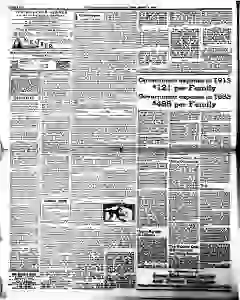
This newspaper page contains 12 articles. Subscribers can read the full text of each article.
Newspaper
Malvern Leader
Location
Malvern, Iowa, United States of America
Date
Mar 08, 1934
Page
1
The notice discusses changes to delivery and potential delays or failures in getting the paper. It advises sending the change of address in advance to avoid missed issues.
The piece notes improved business in most lines despite earlier gloom. It urges leniency for small business amid NRA codes and new Iowa liquor measures, critiques Fortune magazine's arms expose, and lists major arms producers in Europe and Asia as influential figures shaping world peace and war.
An excerpt discusses how armament producers and powerful European financiers influenced war dynamics. It highlights Francois de Ven de of France and the Banque de France, plus German and English connections, arguing profits from weapons fueled conflicts. The piece cites profiteering officials and media ties across nations, feeding disillusionment with war origins and governance.
A Washington letter describes cold prairie weather and heavy snow while Congress considers the Department of Agriculture appropriation and a conference report on the Post Office Department. A vote on the Agriculture bill is expected soon with adjournment over the weekend. The writer notes busy congressional offices, committee hearings on public lands conservation, and remarks by Secretary Wallace and Secretary Ickes. The House held a high session debating private bills before next week’s War Department funding decision.
A panoramic 1930s snapshot covers Roosevelt pushing for NRA wage and price adjustments, tariff powers, and labor-capital tensions. Japan and China clash over Manchukuo as Henry Pu Yi’s puppet rule begins. Also noted are Gina Rasputinlibel suits involving Princess Irina Youssoupoff, and John Dillinger’s jail escape antics amid a country in economic and political flux.
The town’s major event last week was Mansfield’s furniture store drawing hundreds of visitors who wandered amid a large stock of new furnishings. Patrons pictured how pieces would fit their homes, with many drawn to the modern lighting and automated displays.
Readers urged to keep letters brief and to the point, reflecting on Macaulay. The note emphasizes concise discussion to benefit both writers and readers.
A reader objects to divert federal bridge funds from Nishug Botna Buythegst project in Malvern to gravel county roads. They insist the money is legally designated for the bridge, urge direct labor hiring, and oppose contracting. They reference Secretary Ickea and a summer timeline tied to historical events.
Readable fragments discuss campaign methods and public behavior with references to Joe Wearth and Mr. Boebner. The text mentions old equipment, dances, front doors, and a wary tone about new techniques. It also references a Navy department order and a health claim about drinking water with meals.
The article traces 1913 to 1980s trends showing per family government costs climbing from 121 to 4285 dollars, with total expenditures outpacing tax revenue by about 4 billion annually. It notes rising taxes during 1933 to fund expanding government, and pegs sectors like electricity and gas as major burdens on taxpayers while urging fiscal restraint.
The article notes U.S. public utility companies paid 2714,809,000 in taxes in 1938, with a single company paying 317,148.72. After a September shift of the federal excise tax on electricity from consumers to the company, annual taxes now exceed 400,000,00. It discusses rising taxes, costs, and regulatory pressures affecting utility provision and charges.
A historical discussion argues that officials should cut government expenditures and oppose high wartime rates by shifting focus to reducing costs. It claims an 84 percent saving on government outlays could be passed to households as savings on gas and electricity, asserting domestic service value exceeds tax burdens. The piece cites current rates for lighting a five room home and cooking for a family to illustrate perceived efficiency of public power versus government costs.
We want people to find what they are looking for at NewspaperArchive. We are confident that we have the newspapers that will increase the value of your family history or other historical research. With our 7-day free trial, you can view the documents you find for free.
People find the most success using advanced search. Try plugging in keywords, names, dates, and locations, and get matched with results from the entire collection of newspapers at NewspaperArchive!
You can also successfully find newspapers by these browse options. Explore our archives on your own!
Browse by location and discover newspapers from all across the world.
Browse by date and find publications for a specific day or era.
Browse old newspaper publications to find specific newspapers.