Evolution of the apron for women and work
The article traces apron history from a mere cleanliness garment to a versatile fashion item. It highlights aprons for home and office use, notes how working women and housewives now view aprons as essential, and suggests practical patterns and materials for varied needs. It emphasizes self made designs and the apron as indispensable amid domestic challenges.
MENTIONED IN THIS ARTICLE
Dimity
Gingham Apron Described For Practical Everyday Wear
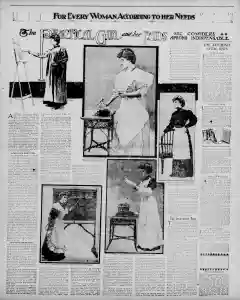
A detailed guide on making a blue and white or pink and white gingham apron. Describes front seam, large armholes for easy wear, bishop sleeves, neckband, collar, and buttoned wrist closures. Notes washable fabric limits and suggests plain or briar stitched hems for durable home use.
Practical aprons for office wear in early 20th century patterns
The piece describes linen and dimity aprons for working women, detailing styles, trims, and construction. It highlights practicality for stenographers and teachers, offering patterns with pockets, ruffles, beading, and banding in red sateen or cotton Oriental designs.
The Iron Gray Age and Youthful Friendship
The essay urges combating mental weariness from aging by engaging with younger people. It suggests joining their activities, listening to their stories, and offering support to feel renewed and truly happy. The piece emphasizes mutual learning and the joy of reciprocity across generations.
MENTIONED IN THIS ARTICLE
Tos
Apron Savvy Sewing Hints From Historic Cloth Repair
Practical guidance on mending and sewing clothes with emphasis on patience and proper materials. It discusses using woolen thread, correct color cotton, waxed paper supports, fine needles, and careful stitch placement. It also describes hanging clothes on a screen rack to save space and keep work organized for timely mending.
Knee protection for children's stockings saves time
The piece advises mothers to reinforce new stockings with an old fabric knee pad stitched on by invisible stitches. This prevents knee wear and protects delicate bones during play, reducing future darning and preserving appearance. It promotes early preventive mending to avoid unattractive repairs.
Novel Craft Tip Improves Embroidery Work with Pins
A reader suggests using a small safety pin as a fixation tool to drive through cases and loops, aiding in holding ribbon or tape. The note praises a safety pin supplier and describes making a simple, convenient holder from a book to assist in threading embroidery silks.
MENTIONED IN THIS ARTICLE
Hodkin
Sewing Aid for Silk Skeins and Cloth Feeder
Instruction describes constructing a skein-drawer using a wooden frame covered with fabric and stitched pockets at one inch intervals. It explains folding, stitching, and feather finishing to allow silk to be drawn from the top, keeping it clean and off the ground.
Also Mentioned on This Page
Gingham
Ateen
Sic
Holder
U Oh
Cose
Lin

 This is just the beginning! Our collection holds over 300 years of history, including rare newspapers, obituaries, marriage records, birth records, and so much more—most of which you won’t find anywhere else!