
 This is just the beginning! Our collection holds over 300 years of history, including rare newspapers, obituaries, marriage records, birth records, and so much more—most of which you won’t find anywhere else!
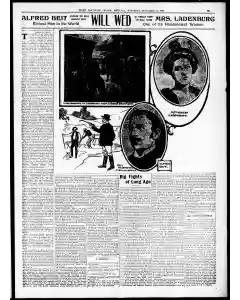
Marriage of Beit and Ladenburg Heir Noted in Fashionable Circles
Special Correspondence from Inter Mountain details Alfred Beit, head of De Beers interests in South Africa, and Adolph Ladenburg of New York, a famed American beauty, amid rumors of Ladenburg's widowhood and Beit's public romance. The piece outlines Beit's rise in mining, Barnato rivalry, Rhodes influence, and potential marriage arrangements in Paris London or New York, with questions over Ladenburg's death and legalities.
MENTIONED IN THIS ARTICLE
Inter Mountain
London
Alfred Beit
Adolph Ladenburg
New York
Alfred Holt
Hanbary
Young Belt
Ari
Ceril Rhodes
Wadenburg
Bell
South Africa
Cecil Rhodes
Rhodes
Alyo
Beit
Bret Harte
Hamburg
Barney Barnato
Rhodese
Rhodes and
Kimberley
de Beers
Gola
Johannesburg
Barnato
Barnato, Joel & Co
Barmato
Cape Town
Gibraltar
Ladenburg
Mere
Alfred Bell
Rand
Pnodes and
Transvaal
Domaul Kruger
Hons
Pretoria
Kruger
Belt
de Boers Company
Chamberlain
England
Africa
Thedes
Paris
Berlin
Mary Moore
Charles Wyndham
Mrs. Ladenburg
Mr. Ladenburg
France
United States
Park Lane
Robert Clarke