Dust Bowl: The Black Blizzard of 1934 Explained
The Dust Bowl formed from unchecked drought and soil depletion across Oklahoma Kansas Colorado Texas and New Mexico. The 1934 dust storms produced up to 300 million tons of topsoil lifting from ruined farms while families fled in migratory exoduses along crowded highways toward uncertain futures.
MENTIONED IN THIS ARTICLE
Missouri
Oklahoma
Kansas
Colorado
Texas
New Mexico
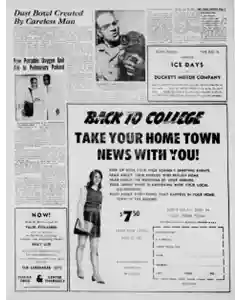
Portable Oxygen Unit Gives Mobility To Pulmonary Patients
Fordham Briggs, 74, previously bed-bound by pulmonary emphysema, demonstrates a portable oxygen unit. The Linde Walker provides a four hour liquid oxygen supply at cryogenic temperature with push button controls for adjustable flow up to seven liters, enabling home use after hospital discharge and improved mobility and morale.
MENTIONED IN THIS ARTICLE
Jor
Briggs
Deetors
Filoridan Flat
Fordham Briggs
Union Carbide
Dust Bowl recovery and Dust Bowl era programs
The 1930s Dust Bowl destroyed millions of acres of arable land, prompting soil experts to note extensive damage. The Civilian Conservation Corps began in 1933, enlisting 300,000 youths, the forest service planted a shelterbelt, and soil conservation rules limited grazing as efforts gradually revived livable land while losses remained immense. Hong Kong garment exports held large shares of the U S Britain and Australia markets in 1968 with substantial percentages in several countries.
MENTIONED IN THIS ARTICLE
Civilian Conservation Corps
Service
Also Mentioned on This Page
Careless Man
America
Encyclopaedia Britannica
Plains States
North Dakota
Tion
California
Roberta Roesch
Central Press Association
Hollywood
Fis
William J. Edwards
Doctors’ Hospital
Elecka
Mnherp
Pickle Paex
Ss International, Inc
Hong Kong
WPD
U. S
Britain
Australia
Canada
Sweden
Denmark
Norway
Switzerland
Kenneth
Owens
Tiger
Ogden
Utah
Kcfh Radio
Duckett Motor Company
Cuero Record
P.O. Box
Cuero

 This is just the beginning! Our collection holds over 300 years of history, including rare newspapers, obituaries, marriage records, birth records, and so much more—most of which you won’t find anywhere else!